
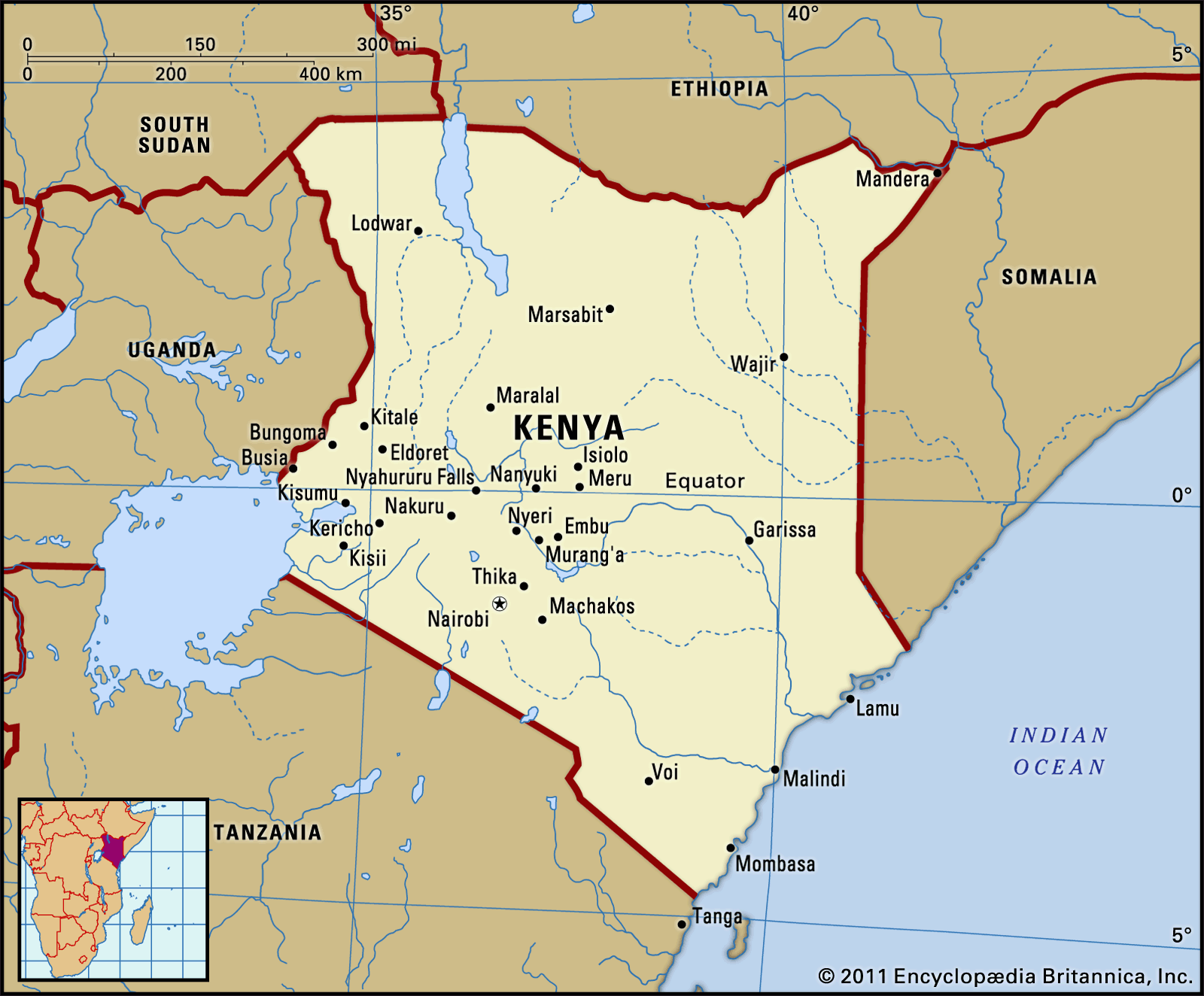
Kenya's Triumph Over Sleeping Sickness
Kenya has achieved a significant milestone by eliminating Human African Trypanosomiasis (HAT), commonly known as sleeping sickness, as a public health concern. This marks the country as the tenth in Africa to reach this important status, joining nations such as Benin, Chad, Côte d’Ivoire, Equatorial Guinea, Ghana, Guinea, Rwanda, Togo, and Uganda.
Sleeping sickness is a vector-borne disease caused by the blood parasite Trypanosoma brucei. It spreads through the bites of tsetse flies that have acquired the parasites from infected humans or animals. Individuals living in rural areas who rely on agriculture, fishing, animal husbandry, or hunting are most vulnerable to this disease.
There are two forms of HAT: gambiense and rhodesiense. In Kenya, only the rhodesiense form, caused by Trypanosoma brucei rhodesiense (r-HAT), is present. This variant progresses rapidly, affecting multiple organs, including the brain. If left untreated, it can be fatal within weeks.
Dr. Tedros Adhanom Ghebreyesus, Director-General of the World Health Organization (WHO), praised Kenya for its achievement. “Kenya joins the growing ranks of countries freeing their populations of human African trypanosomiasis,” he said. “This is another step towards making Africa free of neglected tropical diseases.”
The first recorded cases of HAT in Kenya were detected in the early 20th century. Since then, the country has implemented consistent control measures. No indigenous new cases have been reported for over a decade, with the last local case identified in 2009. The final two exported cases, which originated from the Masai Mara National Reserve, were detected in 2012.
Key Control Measures
To combat the disease, Kenya has focused on strengthening HAT surveillance in 12 health facilities across six historically endemic counties. These sites serve as sentinel locations for monitoring and early detection. Facilities have been equipped with diagnostic tools, and healthcare workers have received training in the most sensitive and practical tests for r-HAT.
Additionally, the country actively monitors the control and surveillance of tsetse flies and animal trypanosomiasis, both within and beyond historical HAT-endemic regions. This effort is supported by the national veterinary health authorities and the Kenya Tsetse and Trypanosomiasis Eradication Council (KENTTEC). These activities and related data provide essential support for confirming the elimination of HAT as a public health issue.
Dr. Aden Duale, Kenya’s Cabinet Secretary for Health, emphasized the significance of this achievement. “This validation marks a major public health milestone for Kenya,” he said. “The elimination of a deadly disease will protect our people and promote economic growth and prosperity.”
Dr. Patrick Amoth, Director General of Health at the Ministry of Health, highlighted the importance of collaboration among stakeholders. “This milestone reflects Kenya’s long-term efforts and commitment,” he added. “Sustaining quality care and surveillance in line with WHO recommendations remains a priority.”
Ongoing Support and Monitoring
Supported by WHO and partners like FIND, Kenya’s HAT elimination program will now implement a post-validation surveillance plan to detect any potential resurgence or reintroduction of transmission. WHO continues to monitor previously affected areas and maintains a stock of medicines, thanks to donations from Bayer AG and Sanofi, ensuring rapid treatment for future cases.
Dr. Abdourahmane Diallo, WHO Representative to Kenya, acknowledged the collaborative efforts behind this success. “This achievement was made possible by the Ministry of Health’s leadership, the dedication of health workers, and the support from key partners,” he said. “WHO encourages all stakeholders to remain involved in post-validation monitoring.”
A Broader Impact
HAT is the second neglected tropical disease (NTD) eliminated in Kenya. In 2018, the country was certified free of Guinea worm disease. This ongoing progress underscores Kenya’s commitment to improving public health and reducing the burden of infectious diseases.
By eliminating sleeping sickness, Kenya not only safeguards its population but also sets a strong example for other nations striving to overcome similar challenges. The success story highlights the power of sustained efforts, international collaboration, and scientific innovation in the fight against tropical diseases.