
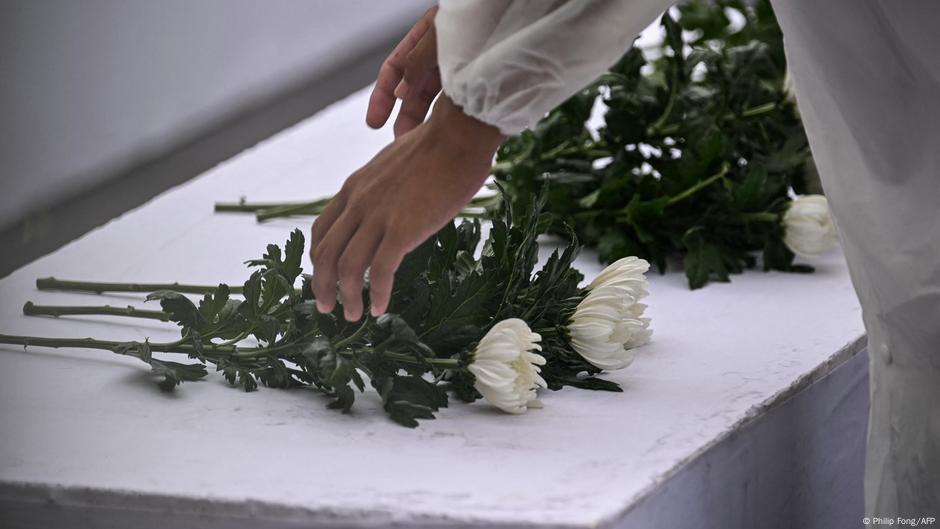
Commemorating the 80th Anniversary of the Atomic Bombing of Nagasaki
On the 80th anniversary of the US atomic bombing of Nagasaki, the city's mayor delivered a powerful message about the current state of global affairs. The event took place on Saturday, with a moment of silence held at 11:02 a.m. (02:02 UTC/GMT) to honor the exact time when the plutonium bomb named "Fat Man" was dropped by a US bomber over the southern Japanese city.
The ceremony included a symbolic act where twin bells from Urakami Cathedral rang together for the first time since the bombing on August 9, 1945. One of the bells had been lost after the attack but was later restored by dedicated volunteers. This gesture symbolized resilience and hope in the face of unimaginable destruction.
In his speech, Nagasaki Mayor Shiro Suzuki emphasized that humanity is currently facing an "imminent existential crisis." He warned that the world is trapped in a "vicious cycle of confrontation and fragmentation." His remarks highlighted the urgent need for global unity and cooperation to prevent future conflicts.
Prime Minister Shigeru Ishiba also addressed the gathering, reaffirming Japan's long-standing commitment to not possessing, producing, or allowing the introduction of nuclear weapons. He pledged to lead global efforts toward a world free of nuclear war and nuclear weapons. However, he made no public comments regarding Japan’s decision not to sign or participate in the Treaty on the Prohibition of Nuclear Weapons. This stance has been a point of contention among survivors and their families, who have repeatedly called for Japan to join the treaty, which came into force in 2021.
Japan's position as an American ally is often cited as a reason for its reluctance to sign the treaty, as it relies on US nuclear deterrence. Despite this, the voices of the survivors continue to echo through the years, urging the country to take a stronger stance against nuclear weapons.
Inclusivity and International Participation
The commemoration event attracted around 3,000 attendees, including representatives from 94 countries and regions, at Nagasaki Peace Park. Notably, Russia's ambassador to Japan and Israel's ambassador were expected to attend, marking a shift from previous years when these nations were not invited. This year, the city adopted a more inclusive approach, sending invitations to all nations with diplomatic missions in Japan.
Survivors and their families began paying tribute at the park and the nearby hypocenter park hours before the official ceremony. Their presence underscored the deep emotional and historical significance of the event.
Historical Context and Lasting Impact
Earlier in the week, Hiroshima marked 80 years since the US dropped an atomic bomb on it. The attacks on Japan remain the only instances in history where atomic bombs have been used in warfare. Japan surrendered a few days later on August 15, 1945, bringing an end to World War II and the country's aggressive expansion across Asia.
The aftermath of the bombings was devastating. By the end of 1945, it is estimated that approximately 140,000 people died from the uranium bomb detonated over Hiroshima. The explosion flattened more than two-thirds of the city. Another 74,000 people were killed by the plutonium bomb dropped on Nagasaki.
In the years that followed, survivors faced severe health challenges due to radiation exposure, including leukemia, other cancers, and chronic diseases. Today, about 99,130 survivors of the two atomic bombs are still alive in Japan, with their average age exceeding 86.
Preserving the Memory
Teruko Yokoyama, an 83-year-old member of a Nagasaki organization supporting survivors, emphasized the importance of preserving the records of the atomic bombing damages and the lifetime stories of the survivors. Her words reflect the ongoing effort to ensure that the lessons of the past are not forgotten.
As the world continues to grapple with the threats of nuclear weapons and global conflict, the messages from Nagasaki serve as a reminder of the human cost of war and the enduring need for peace. The annual commemorations not only honor the victims but also inspire a collective commitment to a safer, more peaceful future.