
The Transformation of Gbagi Market: A Struggle Between Progress and Preservation
In the heart of Ibadan, Nigeria, the Gbagi Market stands as a symbol of commerce and tradition. Known locally as Oja Gbagi, this bustling market has long been a vital hub for textiles, foodstuffs, electronics, and traditional crafts. It is one of the largest fabric markets in Nigeria, famous for its vibrant Ankara fabrics and diverse range of goods. However, the market is now undergoing a dramatic transformation that has sparked intense debate among traders and residents.
A New Era or a Displacement?
The Oyo State government has initiated a redevelopment project aimed at modernizing the market. While officials refer to this as “modernisation,” many traders view it as an attempt to displace them. The government has been demolishing old stalls and replacing them with new, more expensive shops. For many traders, this shift is not just about change—it's about being pushed out of their livelihoods.
Ahmed Alasepe, a 35-year-old trader who once ran a modest clothing business in the market, is one of many affected. He used to rent a shop for N100,000 per year. Today, he finds himself farming in Eruwa, far from the market he once called home. “They told me my shop would be demolished and replaced. They asked me to pay N2.5m. I just couldn’t afford it,” he said, his voice filled with bitterness.
Rising Costs and Financial Strain
For many traders, the cost of the new shops is simply too high. Wasiu Olawuyi, another long-time trader, recalls paying only N25,000 for a large container shop. Now, he faces a new challenge: paying N1.6m for a much smaller 5×10 shop. “My entire goods aren’t worth N500,000. How do they expect me to pay?” he questioned, his voice trembling with frustration.
Another trader, Moyosore, took out a N5m loan with a N1m interest just to retain her shop. “This is wickedness,” she said, holding back tears. “I was managing my life before. Now, after the construction, the shop is so small. But if I didn’t pay, they said they would give it to someone else.”
Protests and Public Outcry
Tensions have reached a boiling point, with traders taking to the streets to protest. Last Monday, the market erupted in demonstrations, with elderly traders, women, and apprentices carrying placards demanding action from the governor. Their messages were clear: “Governor Seyi Makinde, please come to our rescue” and “Save us from destroyers, they have taken the car park!”
A woman who wished to remain anonymous expressed her fears: “We were told there won’t be car parks anymore. They are building everywhere. Before, we paid N21,000, now it’s N1.6m for a small 5×10 shop and more if you want a bigger size. They said cars should park along the expressway. What if accidents happen?”
Chaos and Safety Concerns
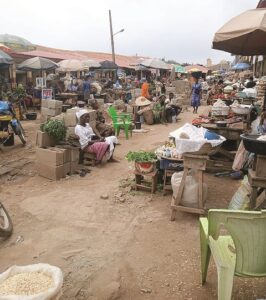
A visit to the market revealed a chaotic scene. Once-spacious walkways are now crowded with ongoing construction. Traders and customers are forced into cramped corners, while vehicles line the expressways, causing traffic congestion. Roadside traders set up makeshift stalls under umbrellas, selling goods inches away from oncoming traffic.
Mama Sukurat, a foodstuffs trader, explained why she had moved to the roadside: “I couldn’t afford the new shop. I am here because we must feed.” For these traders, the burden is compounded by safety concerns.
Mr. Adeoti, a long-time stakeholder, warned of the dangers of the new construction. “A market without car parks is like a house without doors. It endangers everyone.” He pointed out that emergency access is nearly impossible, with fire trucks and ambulances struggling to reach inner sections of the market in case of emergencies.
Government’s Perspective
The Oyo State Government has defended its actions, stating that the redevelopment is part of a broader initiative to modernize public infrastructure. In a statement, Commissioner Adeniyi Adebisi denied allegations of converting car parks into shops or extorting money from traders through secret allocations.
“No part of the main designated car park has been taken over or eliminated,” Adebisi said. He also claimed that the allocation of new shops followed a transparent process, with all interested traders informed of the fees ahead of time.
However, attempts to get further clarification from the commissioner on other concerns raised by traders—such as the high cost of shops, lack of proper foundations, and absence of designated car parks—proved unsuccessful. When contacted, the commissioner’s office denied access, and inquiries were redirected to the ministry’s press officer, who promised an official response.
As of now, no official response has been issued, leaving traders in limbo and the future of Gbagi Market uncertain.