
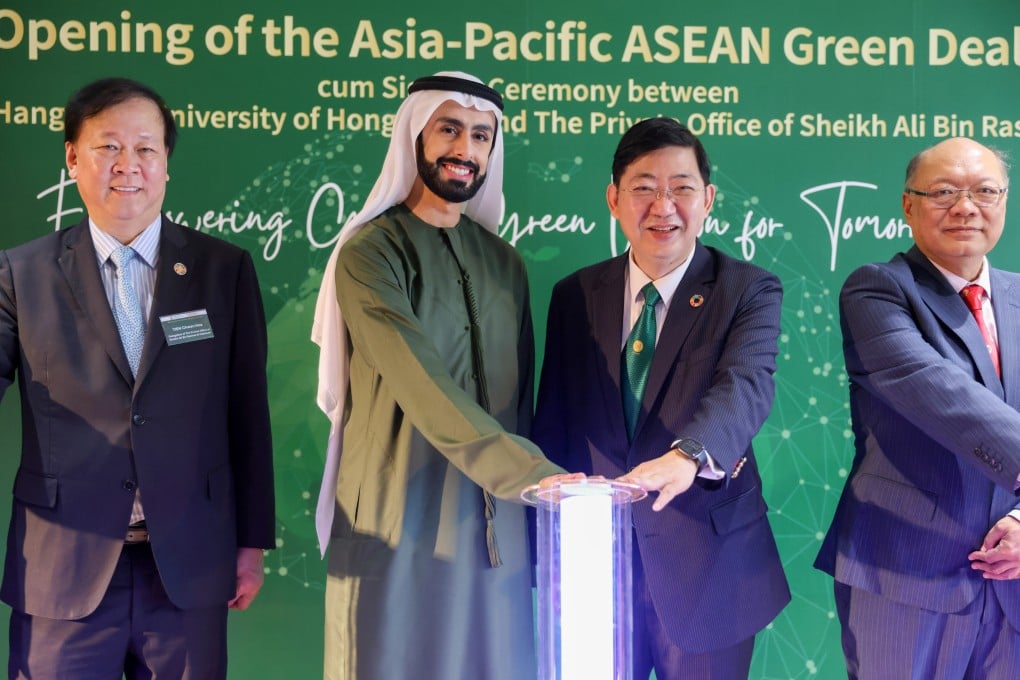
The Synergy Between Two Global Financial Hubs
Hong Kong and Dubai share more than just a global orientation; both cities are built on trade, transformation, and the free flow of capital. Their stories stretch back to the Silk Road, where merchants connected East and West driven by ambition and resilience. That same instinct to connect and grow defines both cities today.
The fit between Hong Kong and Dubai is clear. Hong Kong serves as the gateway to East Asia, while Dubai acts as a global superconnector bridging Europe, Africa, the Middle East, and India. Both cities are cultural mosaics and financial hubs powered by talent, capital mobility, and world-class infrastructure rather than natural resources. They continue to thrive by investing in connectivity, innovation, and people.
Dubai has seen remarkable success with its strategy. In 2024, the city ranked first globally for greenfield foreign direct investment for the fourth consecutive year, attracting 1,117 projects with FDI inflows rising 30 per cent. The Dubai International Financial Centre (DIFC) saw a 38 per cent increase in innovation companies in 2024, reaching 1,245 firms and thousands of new jobs, cementing its status as one of the fastest-growing fintech ecosystems globally.
Guided by the Dubai Economic Agenda D33, the city's ambition is to double the economy, expand trade, and rank among the world's top financial centres. For Hong Kong's tech founders, family offices, and small and medium-sized enterprises, this translates into speed and scale. Given the United Arab Emirates-Hong Kong double taxation treaty and multiple trade agreements, Dubai is one of the easiest jurisdictions to establish, operate, and grow a cross-border business.
Hong Kong firms are already scaling in Dubai: Hex Trust has launched HT Markets MENA; Kerry Logistics has cut Asia-Europe lead times by up to 40 per cent from its regional hub here; firms like Welwing Capital are raising capital from Dubai. These are long-term strategies, not tests.
Policy alignment is deepening ties. A memorandum with Hong Kong's Financial Services and the Treasury Bureau links regulators, exchanges, and financial institutions across fintech, green finance, and family offices. Agreements with HSBC, Standard Chartered, and the Hong Kong Monetary Authority add weight to this partnership.
For family offices, the result is a compelling twin-city model: Dubai provides unmatched access to the Middle East, Africa, and South Asia, while Hong Kong offers deep connections to China and East Asia. Together, they deliver seamless global coverage backed by regulatory clarity, investment channels, and lifestyle infrastructure.
At its core, this partnership is about more than markets. Dubai and Hong Kong are writing a new chapter in a story that began on the Silk Road.
A Significant Moment for Colombia
I am writing to express our sincere appreciation for your coverage of the public funeral of Colombian senator Miguel Uribe Turbay in Thursday's edition. This moment of national mourning has deeply touched Colombians across the globe. Amid our sorrow, the people of Colombia—along with the president of the republic—are calling for unity, reconciliation, and justice. There is a collective demand for the arrest and prosecution of those responsible for this heinous crime.
President Gustavo Petro Urrego, speaking from Bahia Solano on August 13, issued a powerful appeal to the nation: "We must not fall into the trap of violence. Senator Uribe's murderers—like those responsible for the deaths of so many Colombians over the decades—must not prevail. When hatred is ignited in the heart of a Colombian, the murderers are winning. And that hatred becomes another form of killing."
Thank you once again for giving visibility to this moment of national significance. Your coverage contributes to a broader understanding of Colombia's pursuit of peace and justice.
The Human Cost of Endless Conflict
I recently listened to an interview with the mother of an Israeli soldier deployed to Gaza. Representing a group of soldiers' mothers, she explained that after two years of trauma, the soldiers were "broken" and "finished." She said they desperately needed time to heal.
What this distressed mother recounted reminds me of clinical psychiatrist Jonathan Shay's powerful book, Achilles in Vietnam: Combat Trauma and the Undoing of Character. The book is about Vietnam veterans and the psychological and moral wounds of war. He wrote: "Time and safety to mourn were built into ancient warfare and were absent in Vietnam."
Added to this is the immense suffering of Palestinians. Psychiatrist Samah Jabr has explained that, for the children of Gaza, there is no "post" in "post-traumatic stress disorder."
Our leaders should be deeply ashamed of the paths they have so often taken to address our world's problems. The US defence budget edges toward US$1 trillion, while the Trump administration slashes funding for foreign aid. Moreover, the world's top five arm manufacturers are US-based companies.
Let us choose justice and compassion to break cycles of violence before future generations are also lost to war.