
A Historic Summit and the Enigmatic Invitation
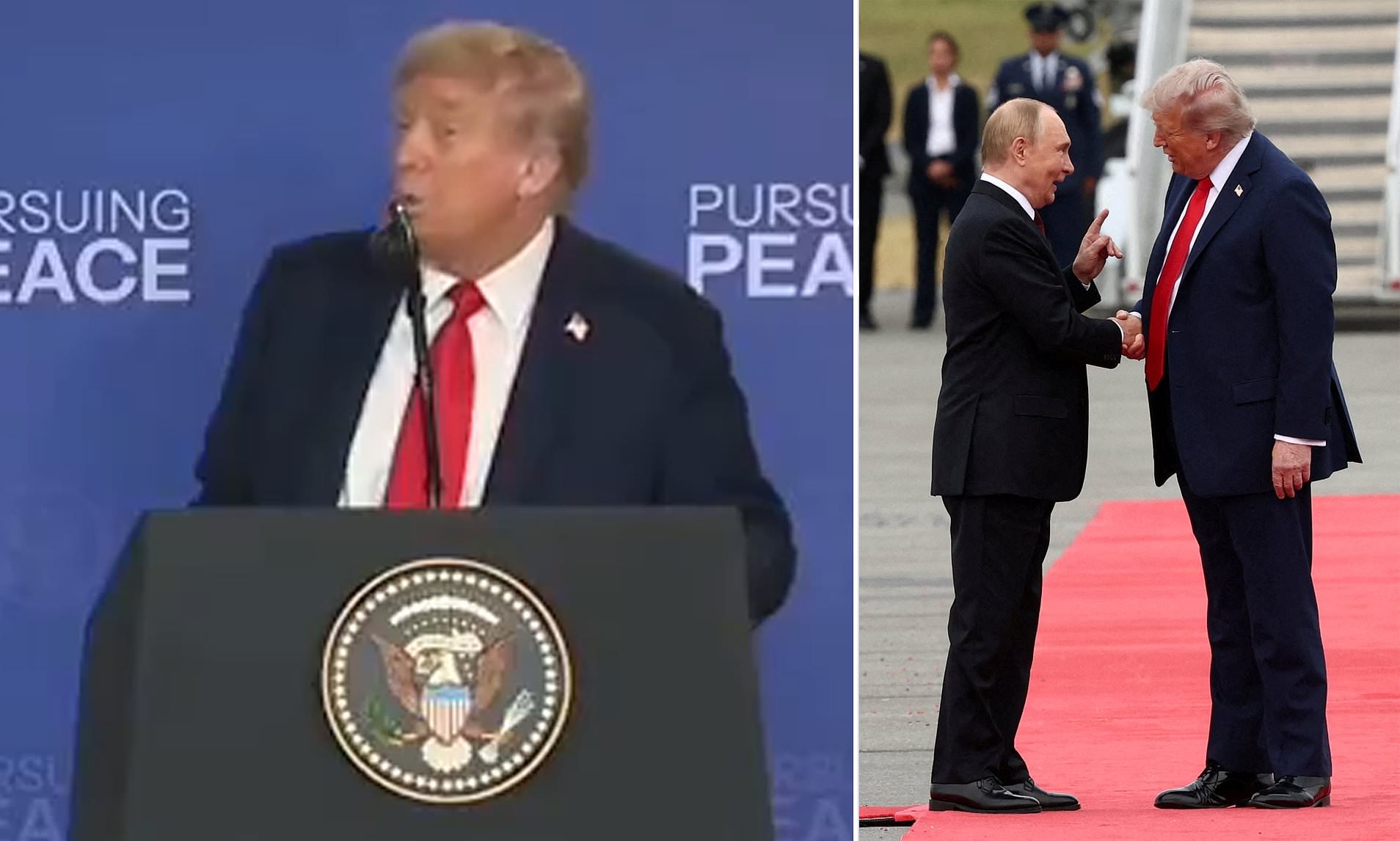
At the end of a high-profile meeting between Russian President Vladimir Putin and former U.S. President Donald Trump in Anchorage, Alaska, a simple yet significant statement was made: "Next time in Moscow." These four words, spoken by Putin in English, appeared to catch Trump off guard. The exchange highlighted an unusual moment during what was supposed to be a bilateral press conference.
Trump, who admitted that the peace talks in Anchorage "didn't get there," responded with a mix of humor and ambiguity. "That’s an interesting one, I’ll get a little heat on that one," he said with a laugh. "But I could see it possibly happening." This response left many wondering about the implications of the invitation and whether it might lead to a future visit by a U.S. president to Russia.
Since the last American president visited Russia, which was Barack Obama at the G20 Summit in St. Petersburg in 2013, no U.S. leader has set foot in the country. The recent overture from Putin to Trump has sparked a range of reactions, from curiosity to skepticism. Some observers have called the moment historic, while others have questioned its significance.
A Brief History of Presidential Visits to Russia
Several U.S. presidents have visited Russia throughout history. For example, Bill Clinton, George H.W. Bush, George W. Bush, Ronald Reagan, Gerald Ford, and Richard Nixon all made trips to the country. Franklin Delano Roosevelt attended the Yalta Conference in 1945, where he discussed postwar reorganization with Joseph Stalin and Winston Churchill.
In more recent times, Joe Biden met with Putin in Geneva in June 2021, just months before the war in Ukraine began. However, relations between the United States and Russia have deteriorated significantly since then, largely due to events such as Russia's annexation of Crimea in 2014, allegations of election interference in 2016, and the ongoing conflict in Ukraine.
Putin's Comments and the Outlook for Peace
During the summit, Putin claimed that the conflict in Ukraine would not have occurred had Trump been president at the time. He also criticized the previous administration for allowing the situation to escalate. "I'd like to remind you that in 2022, during the last contact with the previous administration, I tried to convince my previous American colleague that the situation should not be brought to the point of no return when it would come to hostilities," Putin stated.
Despite these comments, the summit did not result in any immediate ceasefire or peace deal. Trump acknowledged that the talks "didn’t get there" but expressed hope that there was still a chance to reach an agreement. The entire press appearance lasted only 12 minutes, following over three hours of private discussions.
The Unusual Press Conference
One of the most notable aspects of the summit was Trump's uncharacteristic behavior during the press conference. Instead of taking the lead, he allowed Putin to speak first, and then did not answer any questions. After shaking hands with Putin, Trump quickly left the stage, leaving many to speculate about the nature of their discussions.
When asked about the remaining issues, Trump remained vague. "Some are not that significant. One is probably the most significant," he said. During a later interview with Fox News host Sean Hannity, Trump refused to disclose the details of the issue, stating, "I'd rather not."
The summit, while brief, has generated considerable interest and debate. Whether it leads to meaningful progress in the Ukraine conflict remains to be seen. For now, the world watches closely, waiting for further developments.