
Dark, stylish, and menacing in look, the SR-71 Blackbird stood as the pinnacle of Cold War technological achievement.
Capable of flying faster and higher than any fighter jet, this stealthy surveillance aircraft could gather intelligence without fear of detection. Although it first took to the skies over six decades ago, its capabilities still surpass those of manned air-breathing aircraft today. With its menacing elegance and nearly supernatural performance, the Blackbird was truly remarkable.
To develop such a machine, innovative technologies and concepts had to be created; filled with creative ideas and undertaking high-risk missions of significant strategy, here are 10 amazing characteristics of the SR-71 Blackbird:
10: Monarch of the Cold War
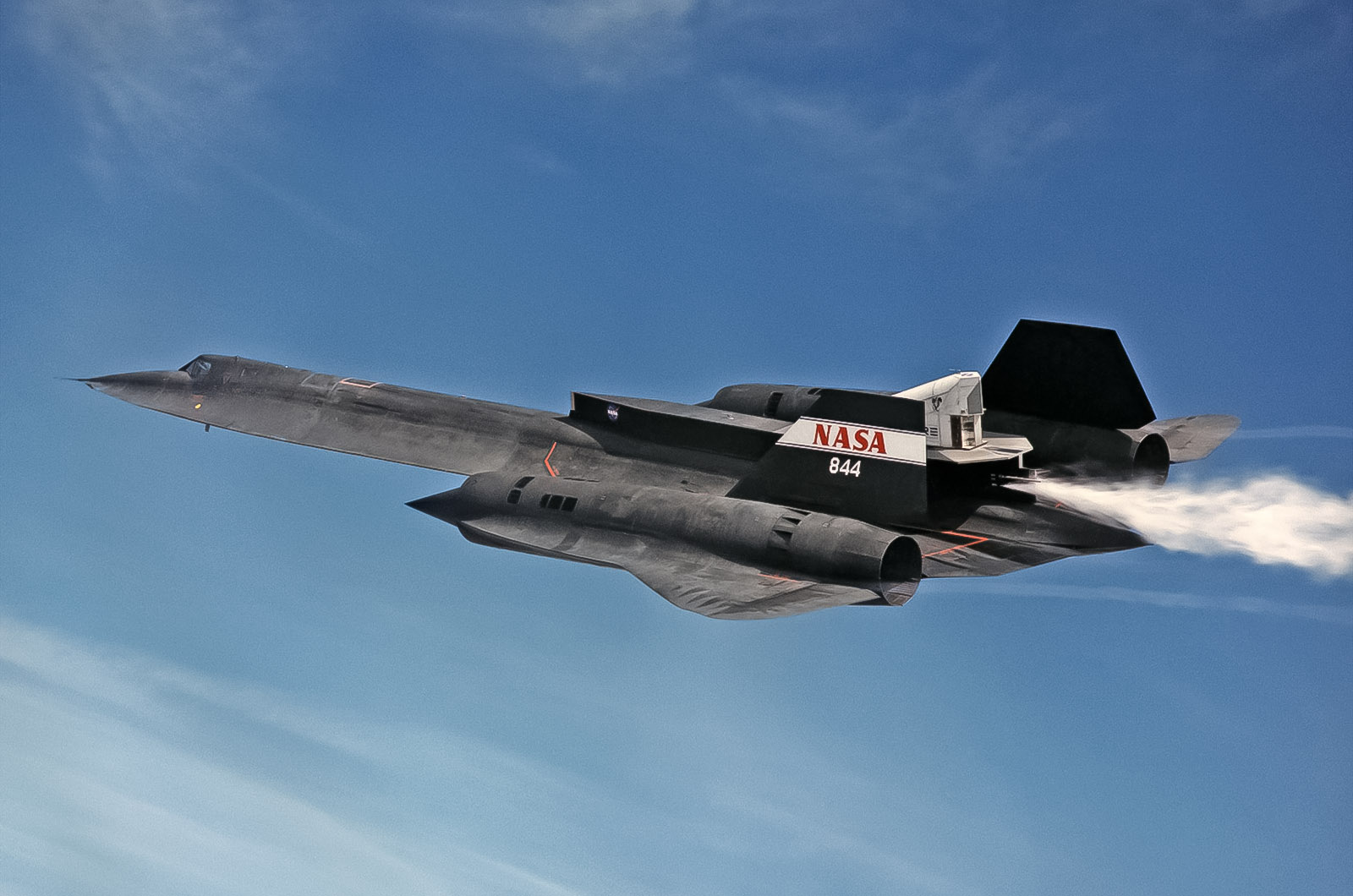
The Cold War, which took place approximately from 1947 to 1991, was a conflict over control between the United States and the Soviet Union. Both superpowers were heavily equipped with nuclear weapons and engaged in numerous proxy conflicts around the globe, making it a period of intense anxiety. The SR-71 served as an effective strategic reconnaissance aircraft during the Cold War.
When I inquired of former SR-71 Blackbird pilot BC Thomas about the significance of the SR-71, he stated, "The SR-71 is rightly known as the most distinctive air-breathing aircraft ever constructed. No other aircraft could fly at such speeds, reach such altitudes, or transport thousands of pounds of equipment above 80,000 feet."
10: Monarch of the Cold War
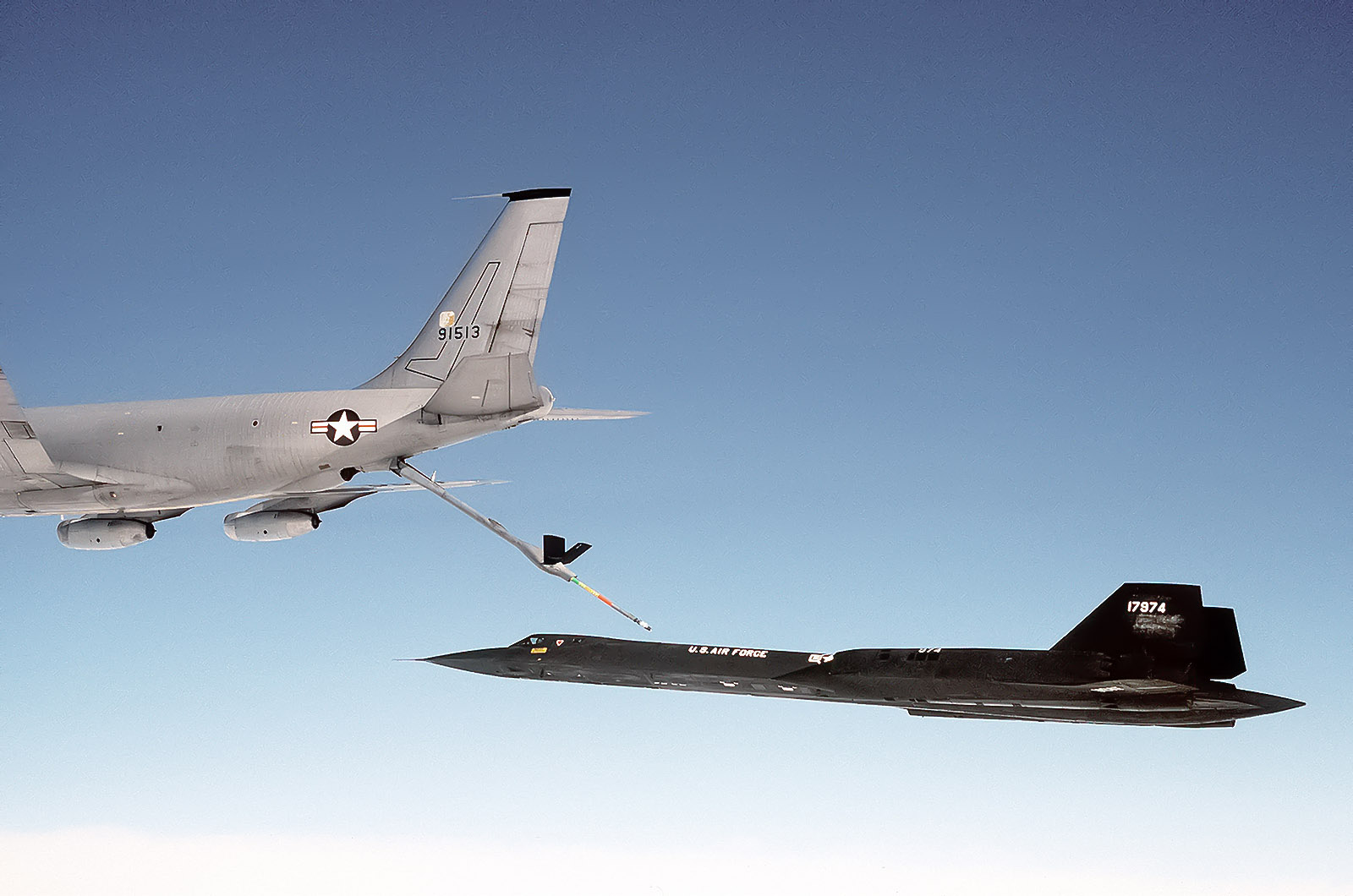
It served as the main strategic intelligence-gathering tool for the 'West' throughout the last 25 years of the Cold War. The SR-71 was capable of maintaining sustained Mach 3+ flight for more than an hour, collecting top-tier intelligence data through various sensors, and with mid-air refueling (as shown), the plane could have flown around the globe in a single journey.
The plane was among the pioneers in using stealth technology, making it nearly undetectable by radar. Its speed and high altitude further concealed its presence. In an era when there was limited satellite surveillance over possible enemy locations, the SR-71 could approach, collect crucial data, and depart without being detected, often going unnoticed.
9: Speed
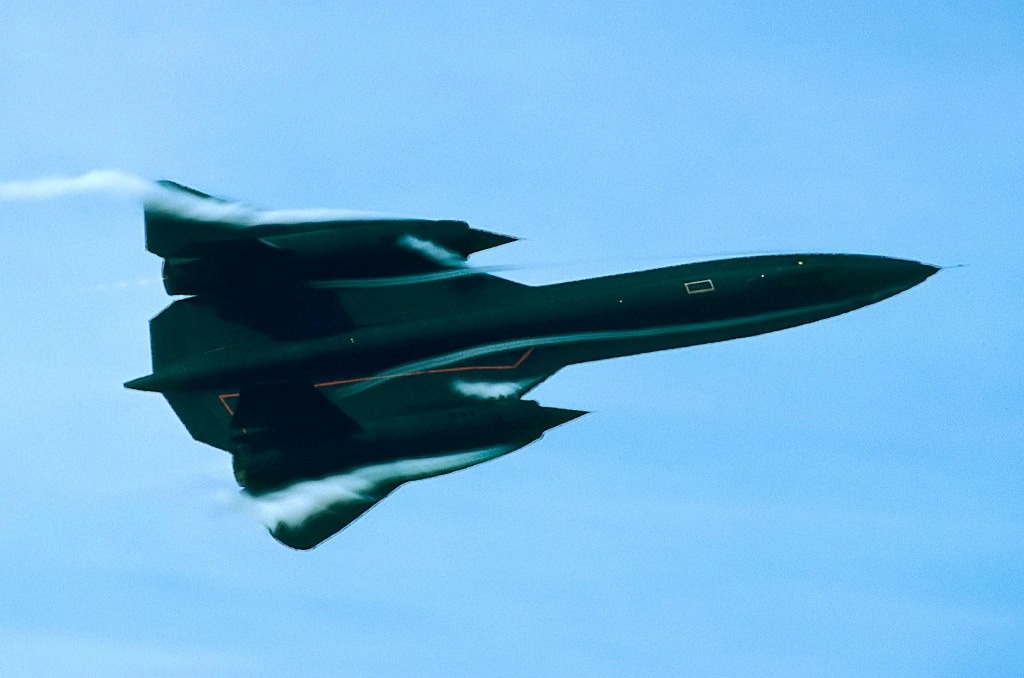
The SR-71 held the title of the fastest air-breathing manned aircraft, capable of traveling at three times the speed of sound. For comparison, this is roughly double the speed of the fastest U.S. Navy carrier fighter currently in service.
The highest speed allowed, according to the Flight Manual, was Mach 3.3, yet the SR-71 wasn't restricted by power, meaning it had the capability to go faster; however, this would surpass the compressor inlet temperature threshold, along with other heat and structural constraints.
9: Speed
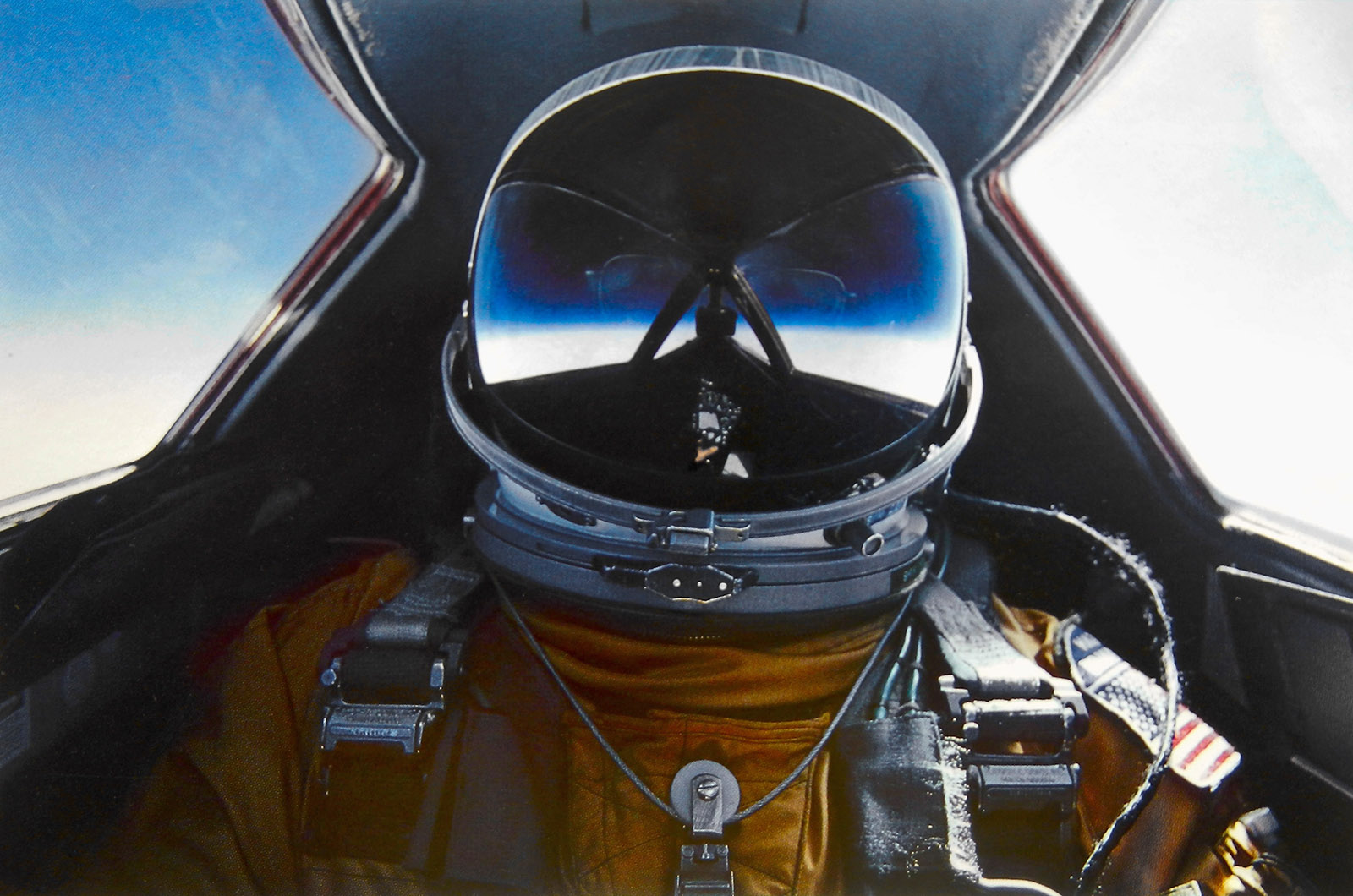
I am confident that no pilot ever engaged both throttles to maximum afterburner and allowed the aircraft to speed up just to see how fast it could go. This would be against military regulations, the flight manual guidelines, and basic reasoning. I, along with likely all other pilots, never intentionally exceeded any established limits while operating the SR-71.
The SR-71 was capable of reaching Mach 3.5, but this would take it into an untested and forbidden region beyond its operational limits, potentially causing significant damage to the aircraft. The SR-71 was specifically designed to maintain continuous flight at Mach 3.2, which is a remarkable accomplishment, although it was not built to have much extra capacity above that speed.
8: Survivable
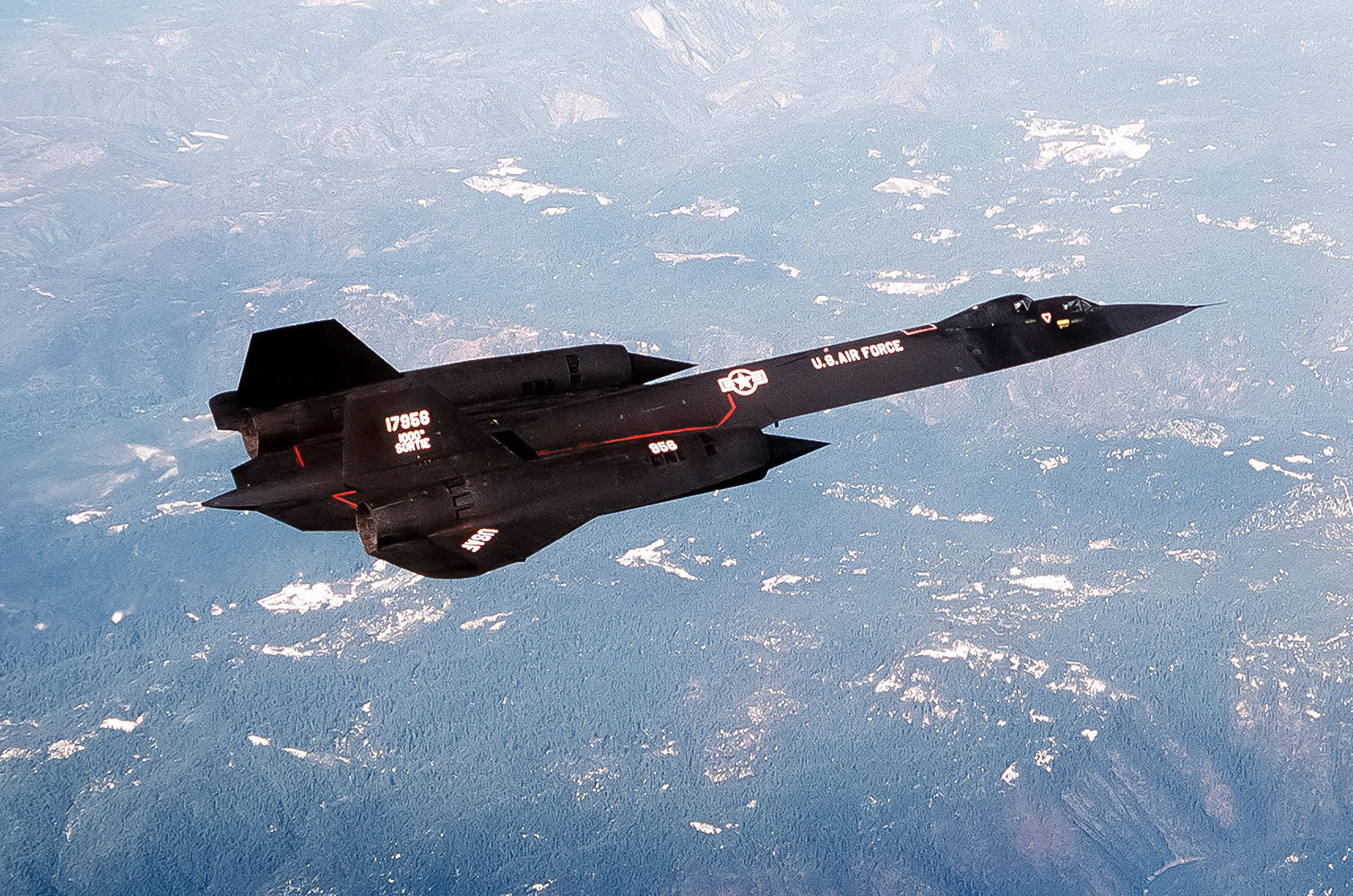
The SR-71 offered speed, stealth, and high-altitude capabilities for survival, but it also possessed additional advantages, as noted by BC Thomas, "The SR-71 was never effectively intercepted by surface-to-air missiles or aircraft. It featured an advanced electronic defense system that could neutralize an incoming missile's guidance and maneuvering."
Detectors aboard would immediately notify the crew of a missile launch, and as the SR-71 typically did not operate at its top speed or altitude, the aircraft's defense involved jamming the missile's guidance system while speeding up, ascending, and turning with a 45-degree bank.
8: Survivable
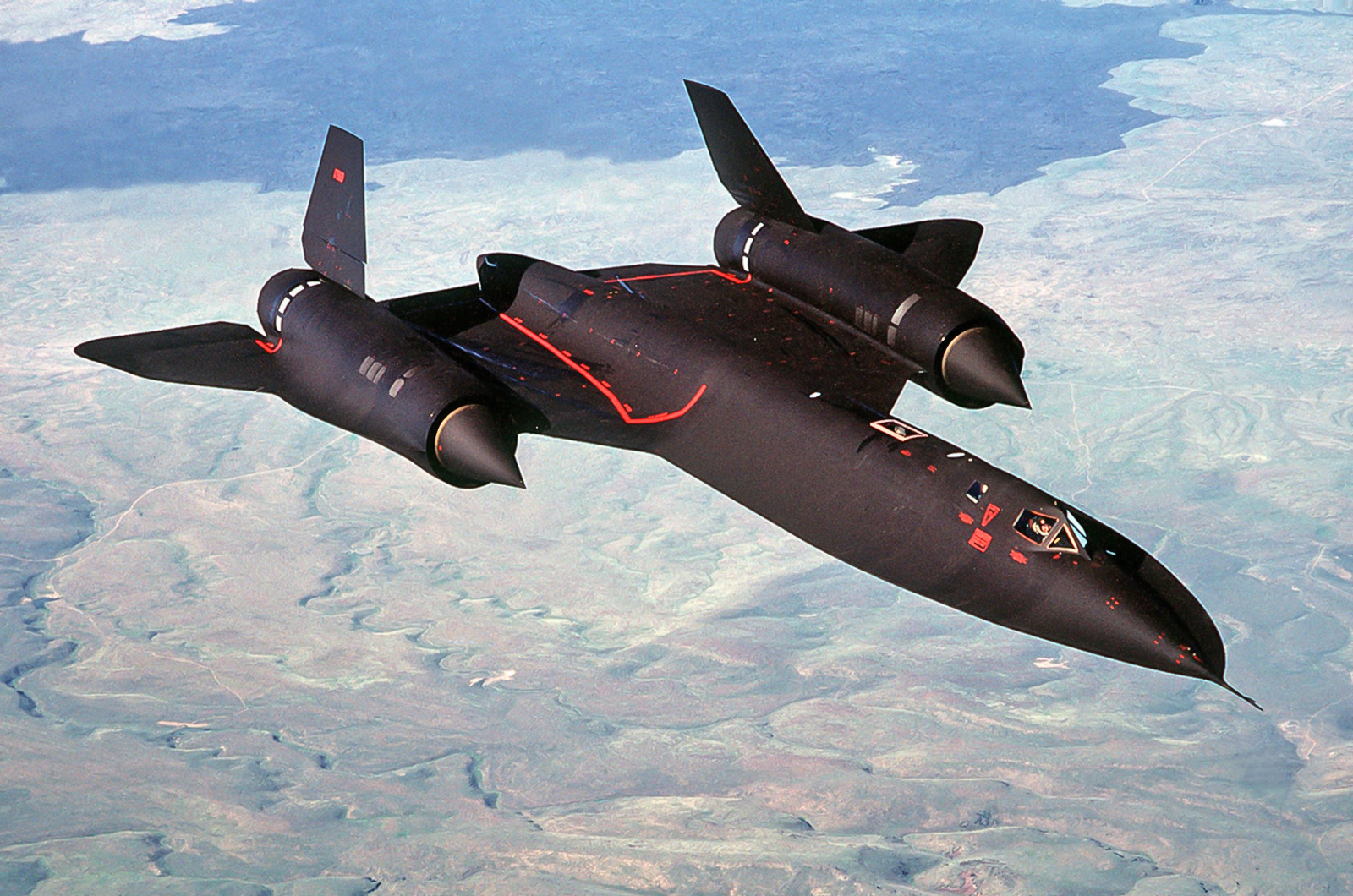
No surface-to-air missile could outmaneuver, and therefore strike, an SR-71, a truth proven multiple times, particularly during the Vietnam War. Efforts to down an SR-71 persisted until August 25, 1981, when it was the final instance a hostile force (North Korea) launched a surface-to-air missile against an SR-71; the flight was conducted by Maury Rosenberg, the pilot, and Ed McKim, the Reconnaissance Systems Officer (RSO). The missile failed to hit.
The SR-71 had no true equivalent, with the most similar option being the more traditional Soviet MiG-25R. While the Blackbird incorporated a significant amount of titanium to withstand the heat from high-speed travel, along with an unusual engine, the MiG-25 relied on steel and a more standard power system. The MiG-25R was slower, had a shorter range, and was more susceptible to being shot down: at least nine were lost in such incidents.
7: Missions
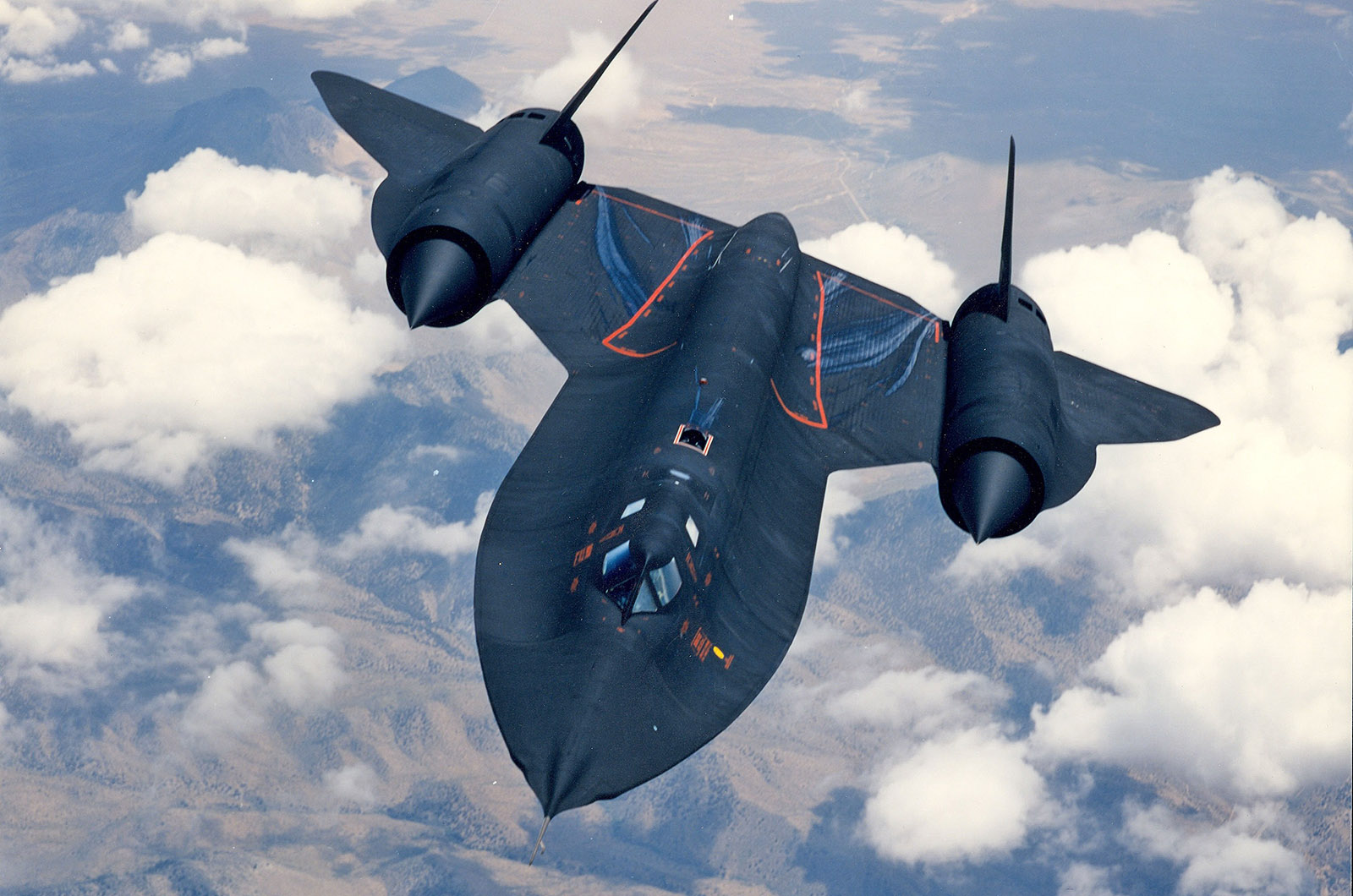
Reconnaissance missions entered Soviet airspace, flew over the territory, and numerous ones were shot down. The Los Angeles Times stated in December 1992 that 40 reconnaissance planes were lost and 200 American aircrew members died during these missions. This figure of lost personnel was verified by Paul Glenshaw in the Smithsonian Air & Space Magazine in 2017.
Therefore, aerial intelligence-gathering missions targeting possible adversaries (the Soviet Union, China, North Korea, Cuba, the Middle East) were a key focus. Such missions needed to be carried out regularly and had to ensure safety. The SR-71 was created to meet this requirement.
7: Missions
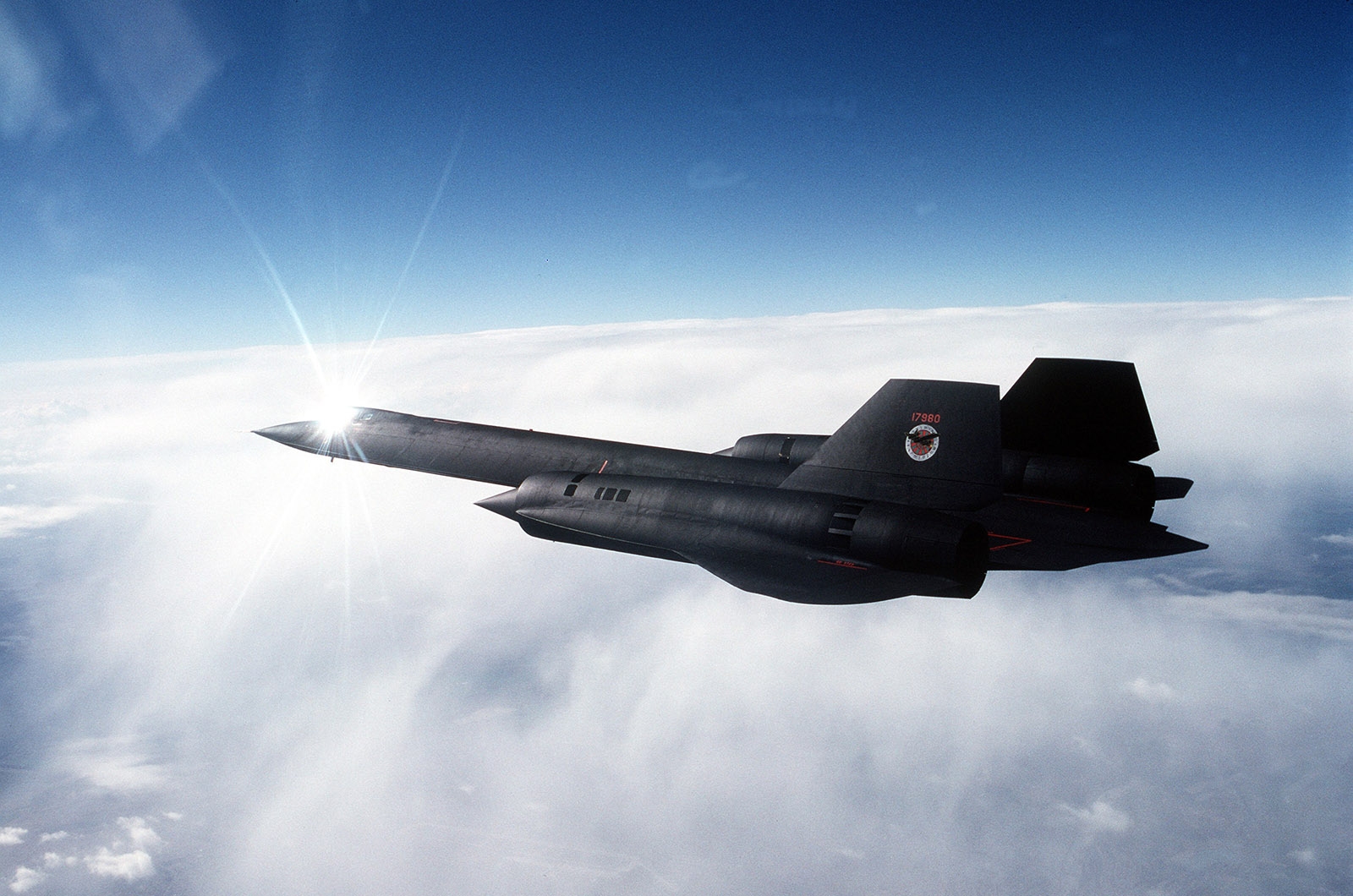
Between 1966 and 1990, the SR-71 carried out more than 3,500 operational reconnaissance flights, accumulating 11,000 hours in a highly challenging flight environment: the aircraft's skin temperature reached an average of 620 degrees Fahrenheit (327 degrees Celsius), the external air pressure was 0.4 pounds per square inch (psi), the altitude ranged from 15 to 16 miles (79,200 to 84,480 feet), aerodynamic damping was minimal, and the true airspeed usually varied between 2,000 and 2,100 mph, which made pitch control extremely important.
"The SR-71 was among the most secure military aircraft in terms of operational survival, as no Air Force personnel were killed while operating it, reflecting exceptional aircraft maintenance and crew training. This impressive record is notable considering its extreme flight conditions and possible threat exposure." (One pilot - Jim Zwayer - died during testing of the SR-71 in January 1966, but he was employed by Lockheed, not the air force).
6: YF-12 Fighter
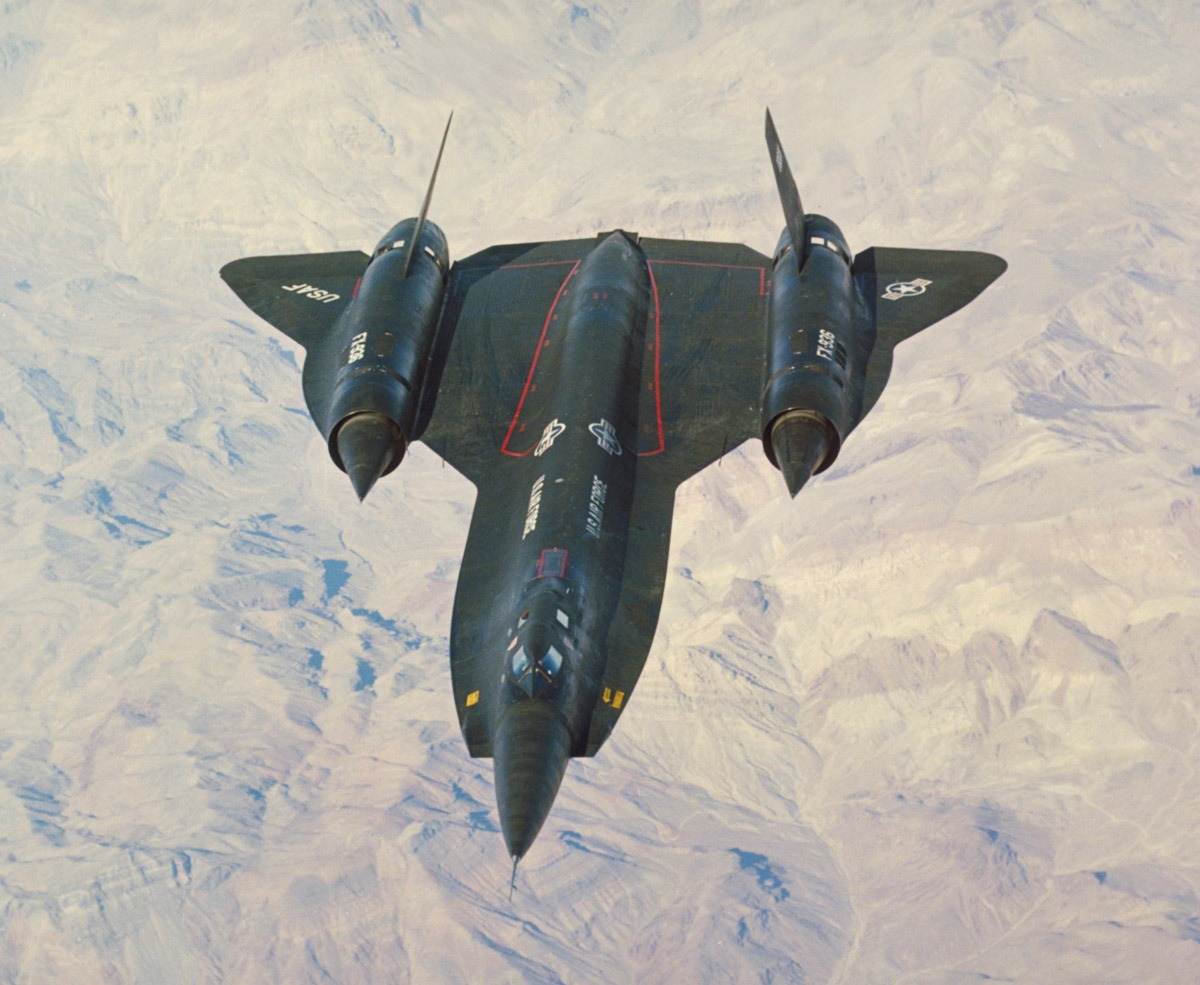
The Lockheed SR-71 was a two-seater reconnaissance plane and the most renowned aircraft in the Blackbird series. The initial model of the series was the single-seat A-12, which made its first flight on 26 April 1962. It evolved into the M-21, designed to deploy the D-21 drone, and notably, the Lockheed YF-12 fighter-interceptor (as shown) that first took to the air on 7 August 1963.
Throughout the late 1950s, every new generation of fighter interceptors outperformed the previous one in speed. It was logical to expect that the F-106, capable of reaching Mach 2.3, would be succeeded by an even faster model: the F-108 Rapier. However, it was not surprising that a fleet of Mach 3 fighters, each weighing twice as much as a fully loaded Lancaster bomber, turned out to be too costly to develop.
6: YF-12 fighter
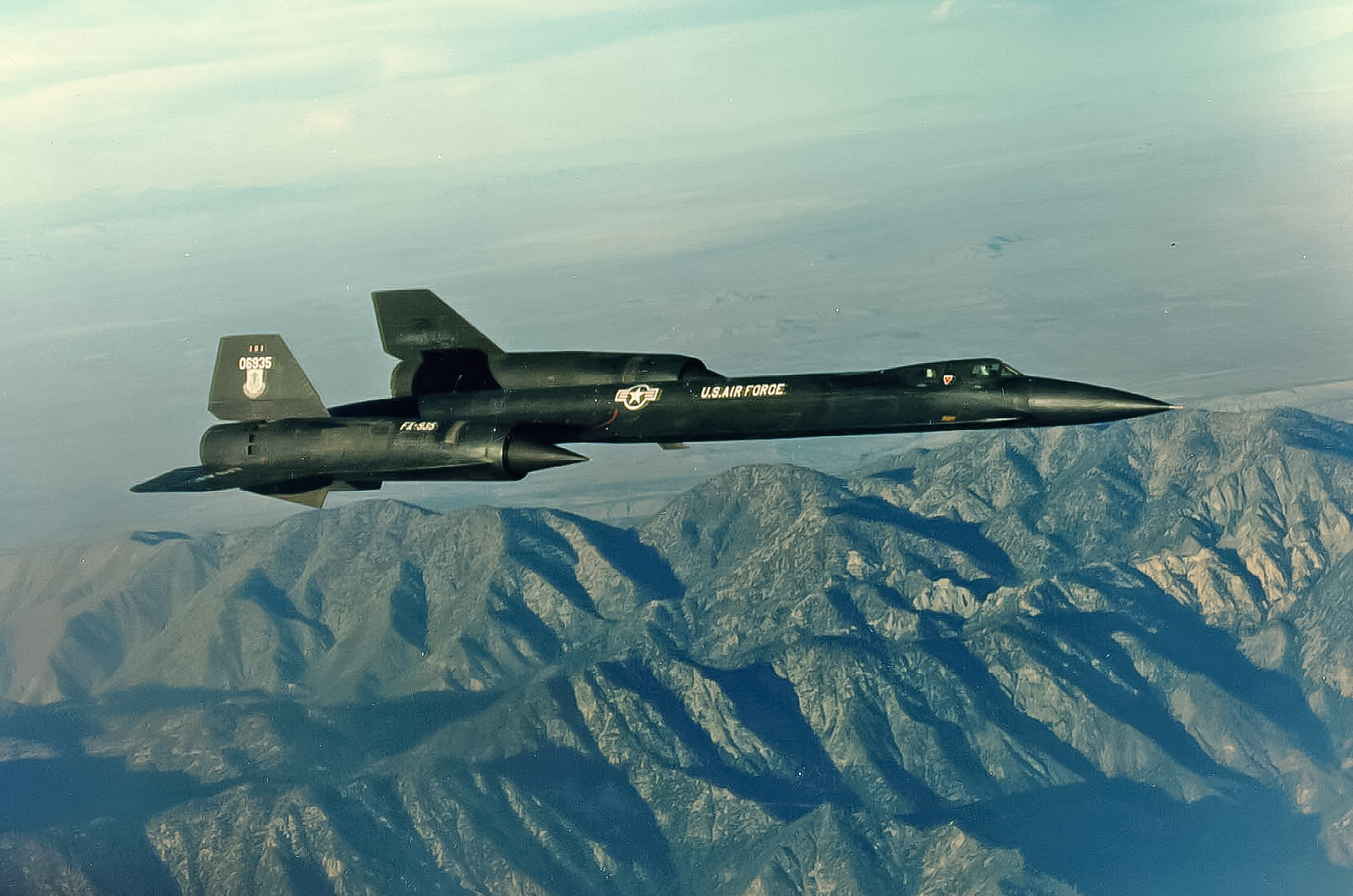
It was a pity to let the costly radar, missiles, and fire control system designed for the F-108 go unused, so they were installed on the only suitable airframe with similar performance, the highly classified Lockheed A-12 reconnaissance plane.
The expense of the Vietnam War and a more relaxed military approach led to the cancellation of funding for the 93 aircraft the USAF had planned. Components of this system later appeared on the F-14 Tomcat.
5: Kit
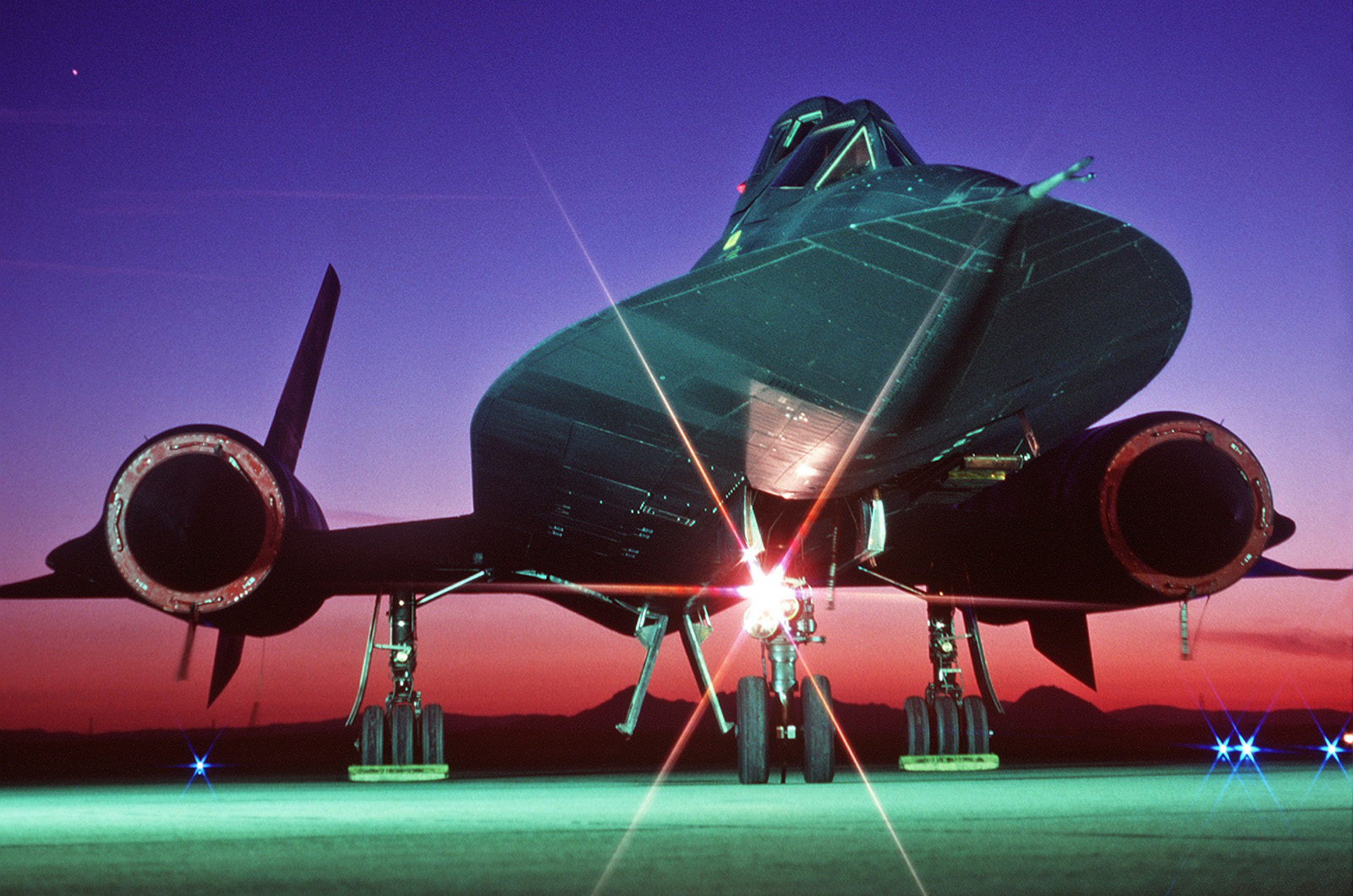
Although operating at very high altitudes, the Blackbird could capture highly detailed images of objects on the ground. It was also capable of discreetly monitoring enemy electronic communications. It was equipped with the most sophisticated aerial intelligence-gathering technology available.
We interviewed Blackbird pilot BC Thomas, who mentioned, “We were equipped with a range of advanced sensors and recorders that could collect reconnaissance information using cameras able to capture high-quality images from horizon to horizon. We also had radar imaging capable of one-foot resolution.”
5: Kit
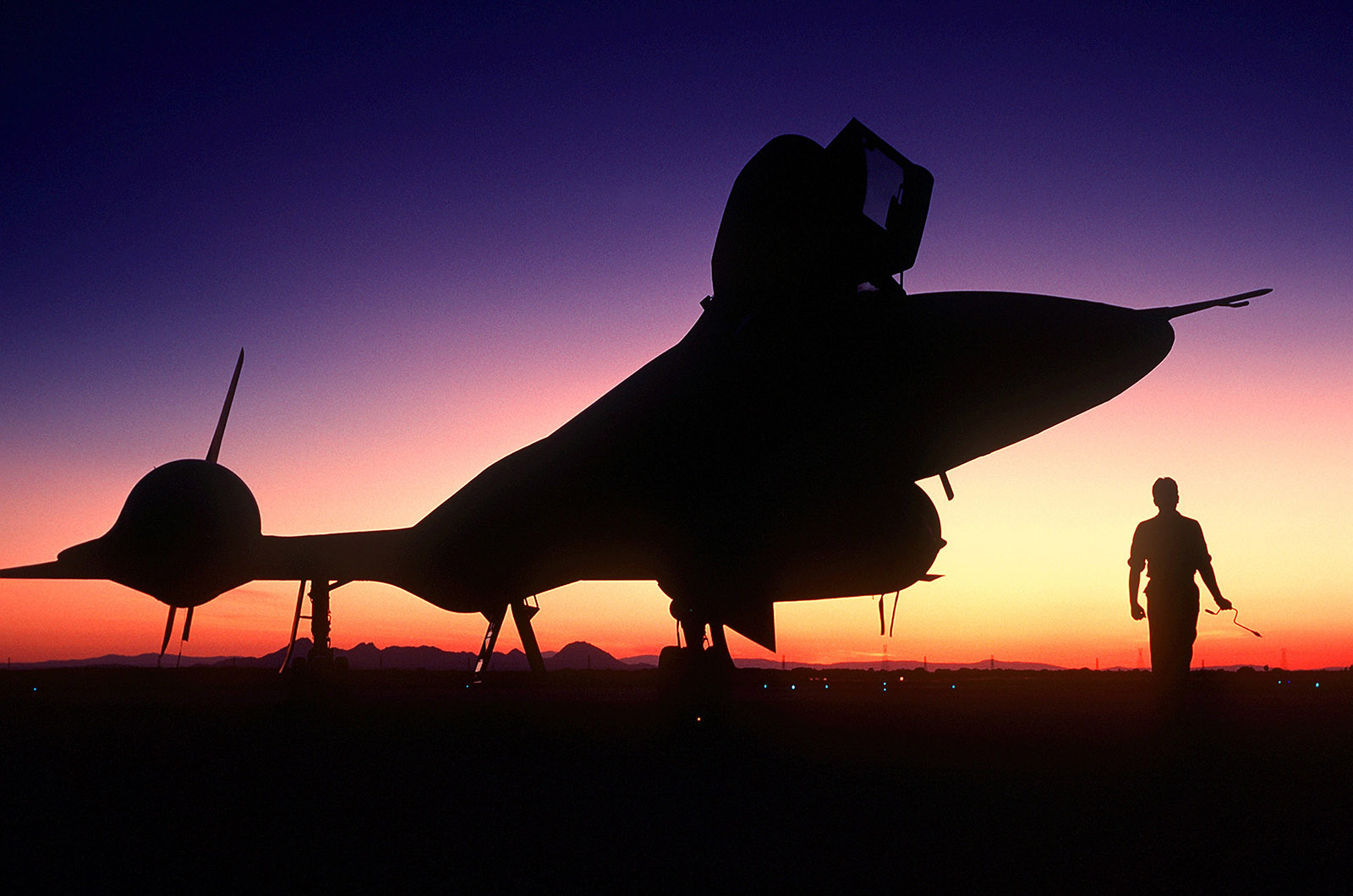
This was the Advanced Synthetic Aperture Radar System (ASARS), capable of producing clear radar images regardless of time of day or weather conditions. I may not be a photo interpreter, but even I could recognize what was shown. The SR-71 also had electronic intelligence (ELINT) systems that remain classified.
We claimed that the SR-71 could reach any target worldwide within 24 hours and was able to scan 100,000 square miles of land per hour. It was not a hollow claim.
4: Navigation
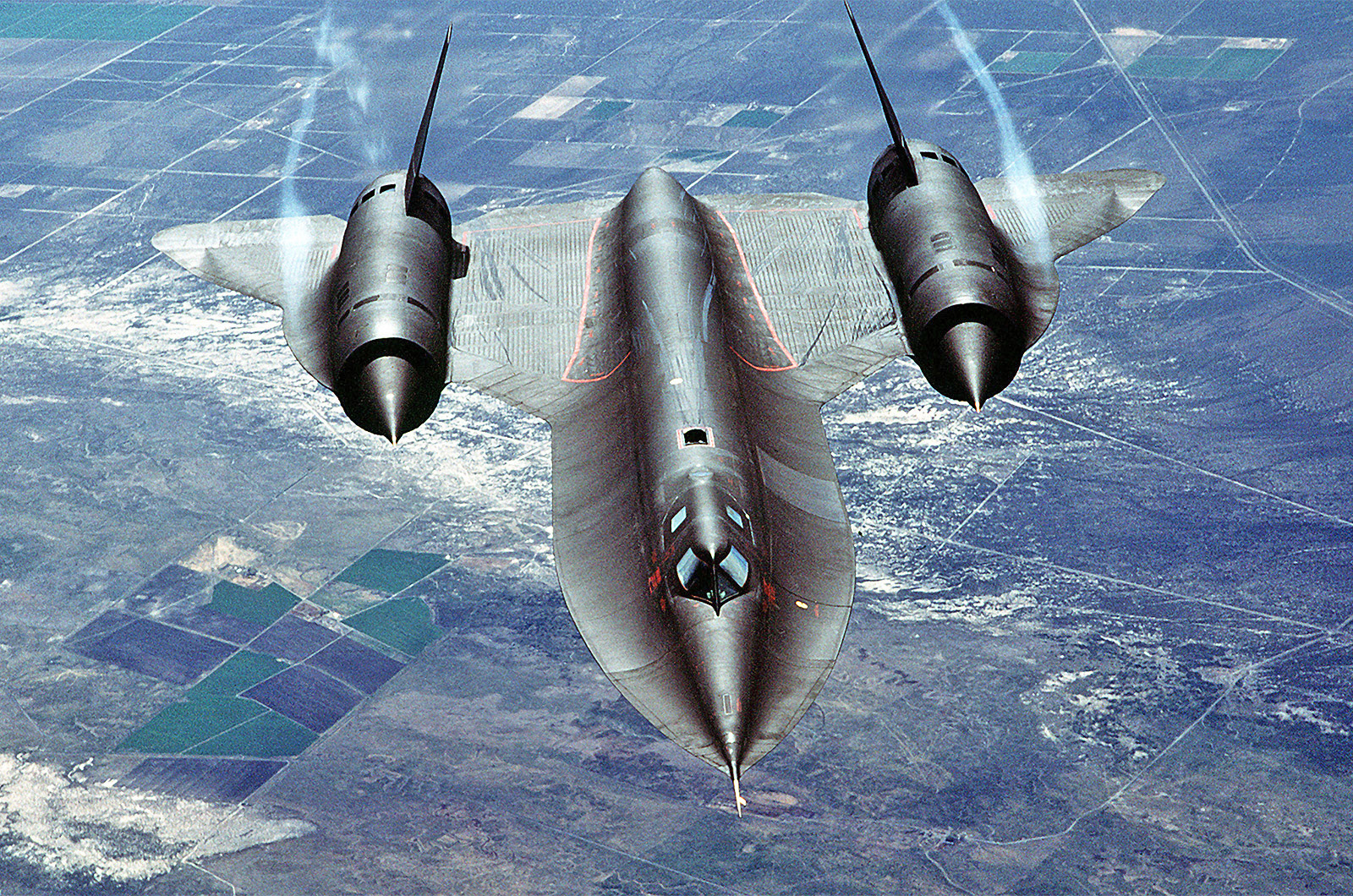
An SR-71 operating in an incorrect area of airspace might lead to diplomatic issues or even more severe outcomes. However, achieving precise navigation at speeds surpassing 2000mph (3218 km/h) before the advent of GPS was a significant challenge. The answer was astro-inertial navigation.
A system was created for the large Skybolt air-launched missile. The system, called the Nortronics Division Astroinertial Navigation System, was modified for use in the SR-71 and labeled NAS-14V2. This allowed for precision within half a mile following thousands of miles of high-speed travel, an impressive accomplishment during the era before satellites.
4: Navigation
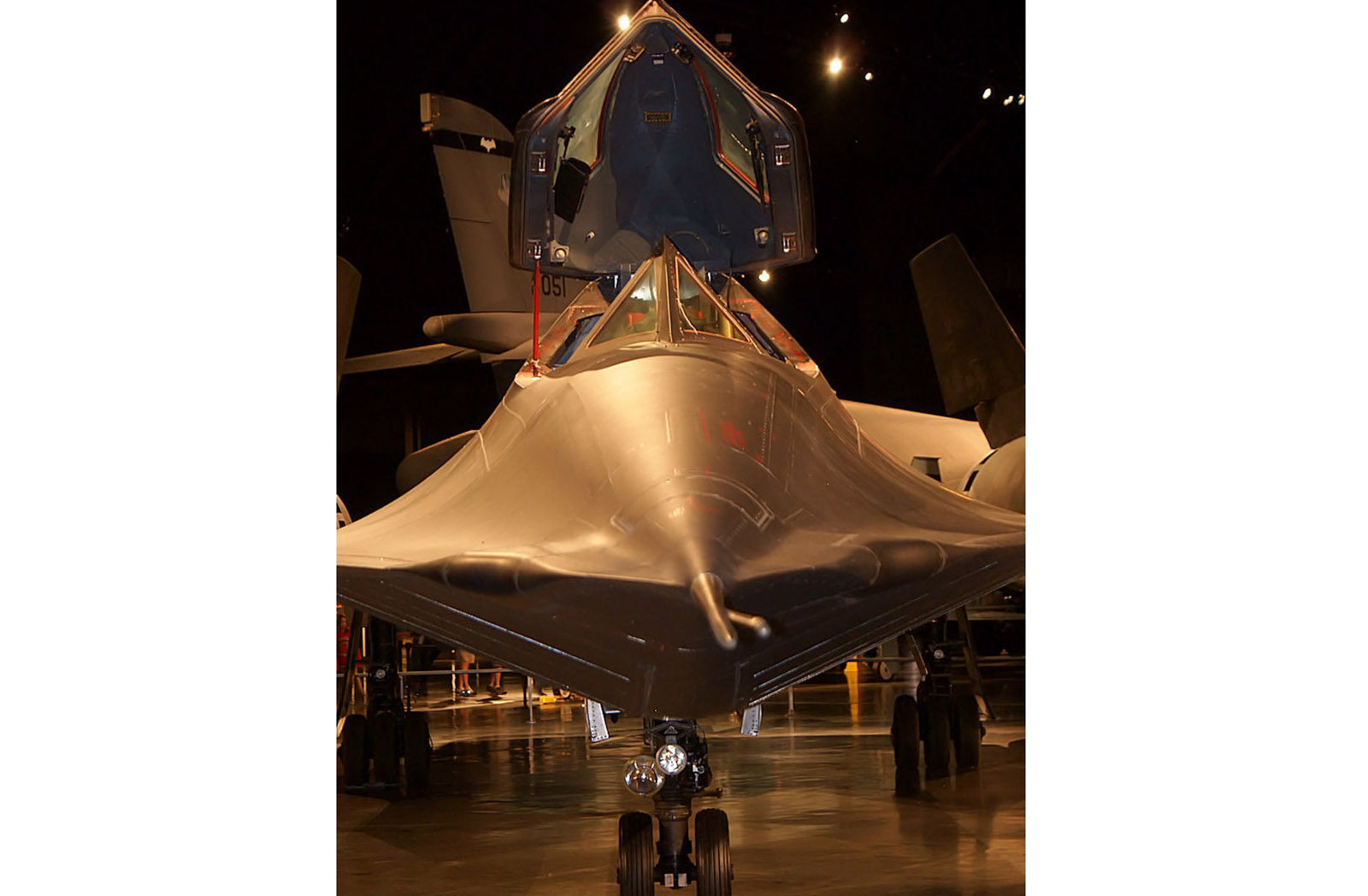
As per BC Thomas, "The Astro-inertial navigation system (ANS), after being calibrated, can autonomously locate 61 stars from a database, determine their positions, and using an intricate formula, rapidly calculate the aircraft's altitude, orientation, velocity, and ground path."
It would constantly update the aircraft's location while directly managing the aircraft's ground path (when activated by the pilot) and offering automatic alignment and control of the cameras and sensors. Even at top speed, the ANS could offer course guidance within a quarter of a mile—remarkable technology prior to the development of GPS.
3: Exotic powerplant
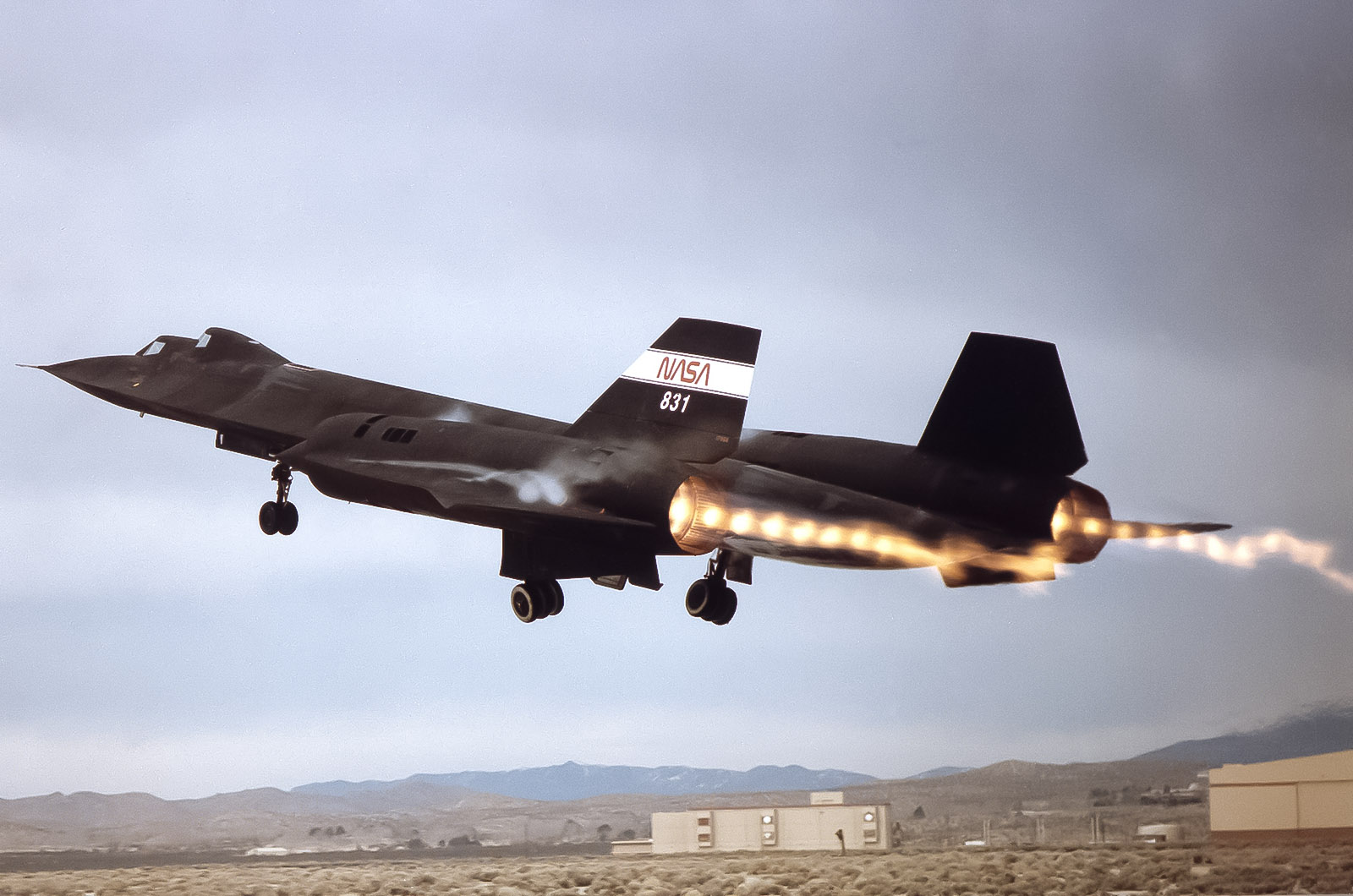
The Pratt & Whitney J58, referred to as the JT11D-20 by the manufacturer, was a remarkable engine, and the SR-71 featured two of them. At lower speeds, they operate like standard turbojets, supplying the aircraft with the necessary power. The inlets include movable cones called spikes.
At higher velocities, air that enters the inlet bypasses the engines and is directed straight to the afterburners and ejector nozzles, forming a ramjet. One of the most impressive aspects of the SR-71's propulsion system is how minimal the thrust generated by the engine itself was at high speeds.
3: Exotic powerplant
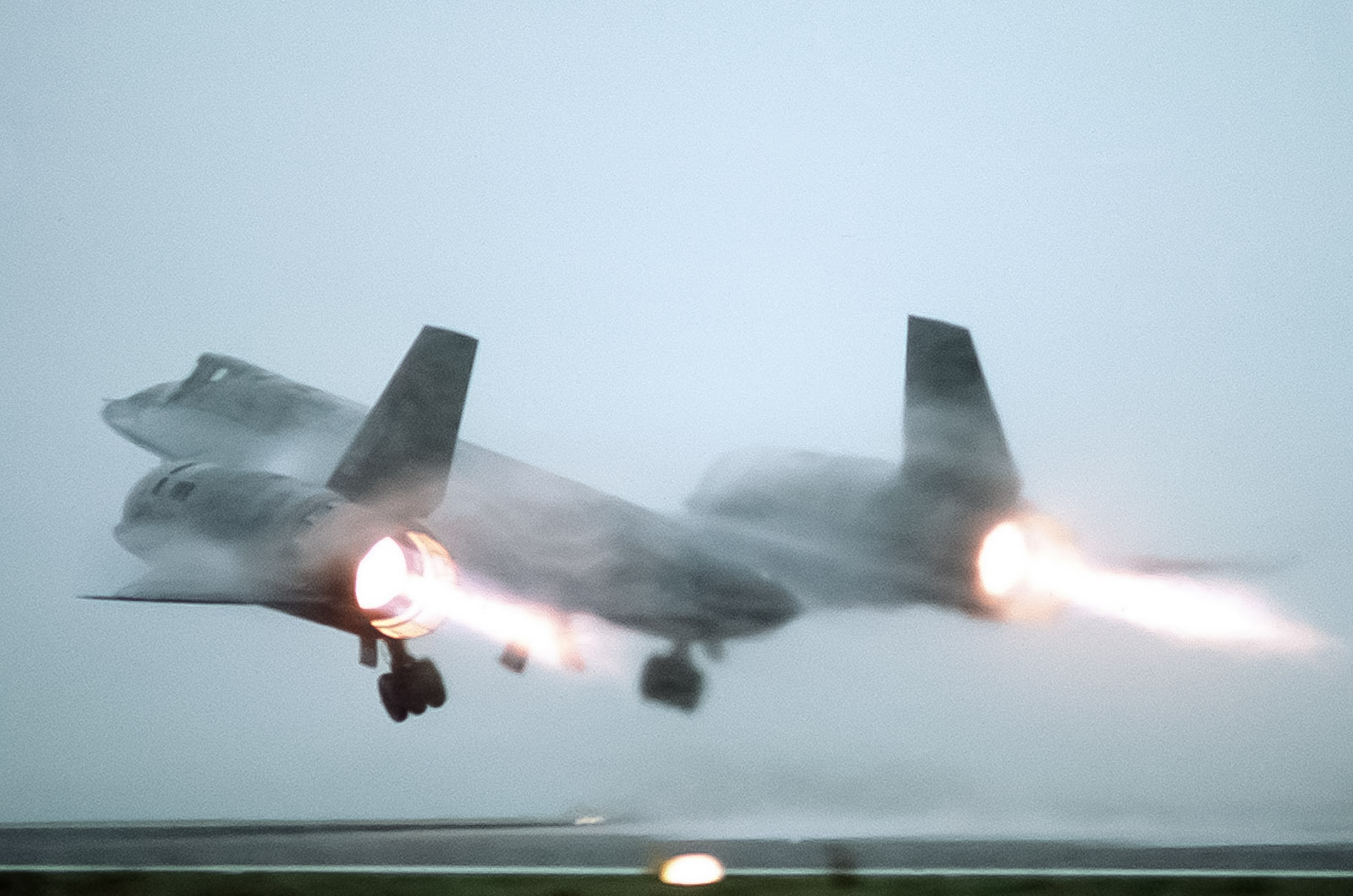
At Mach cruise, the J58 engine contributed only 17% of the Blackbird's thrust: the rest came from the inlet, which provided 54%, and the ejector, which supplied 29%!
The engine introduced multiple technological advancements. It was the initial dual-cycle engine, combining a turbojet and ramjet. An afterburner injects fuel into the rear part of the engine to provide additional thrust; while this is typically used infrequently in fighter planes, the J58 was the first engine designed for constant afterburner operation. The afterburner was also groundbreaking, featuring spray bars with variable geometry, a pioneering feature. The aircraft utilized a specific fuel, JP7, which had a higher flashpoint compared to regular jet fuel, ensuring safe usage at elevated temperatures.
2: Don’t blame friction!
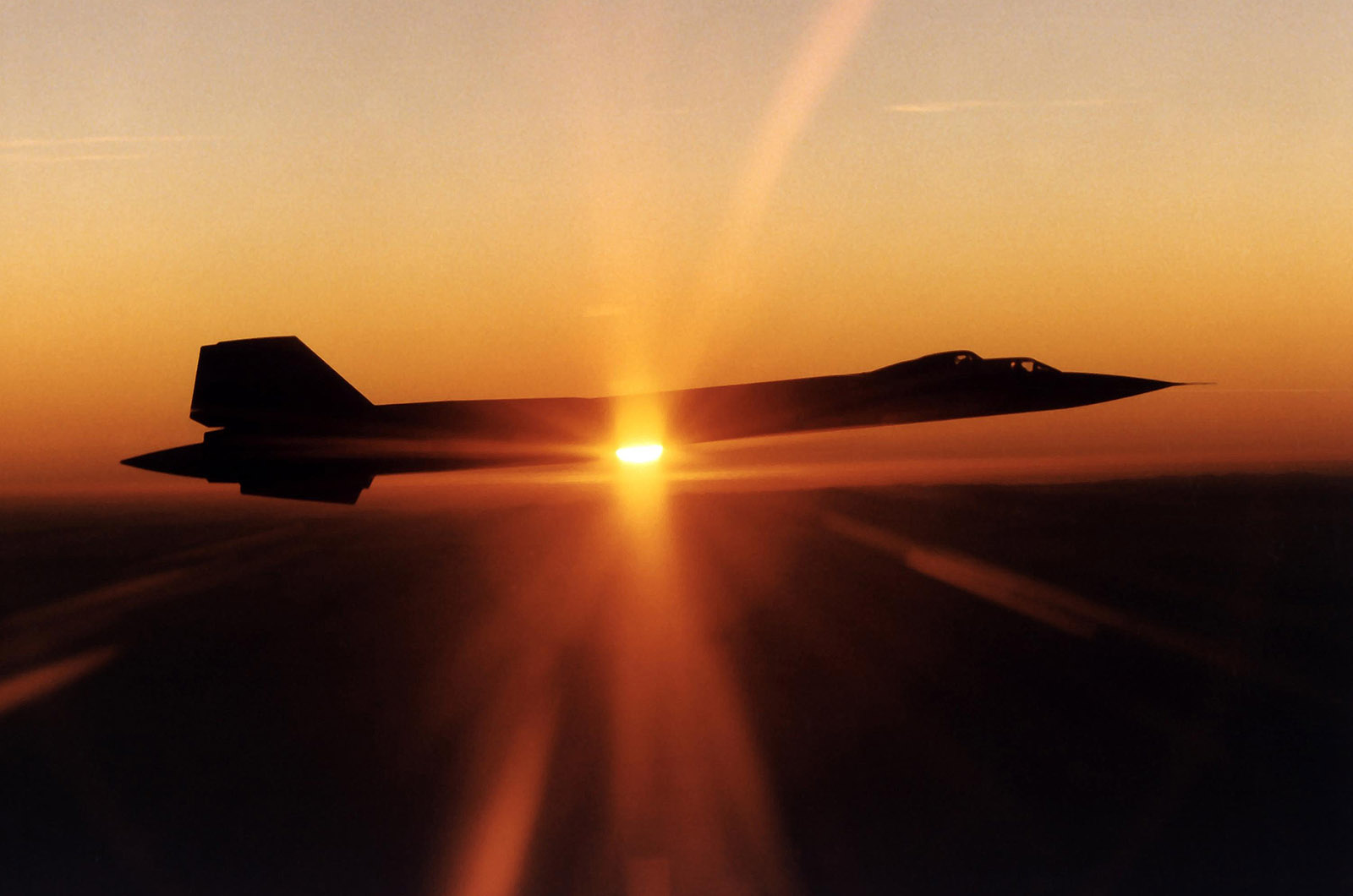
We inquired with hypersonic specialist Dr Chris Combes about his perspective on why the surface of extremely fast aircraft becomes so hot, and you might be surprised to find out it isn't due to friction: "This is somewhat of a small annoyance, but it's something I often come across. It's widely known that high-speed flight results in aerodynamic heating."
Known for experiencing surface temperatures over 212 Fahrenheit (100 degrees Celsius), the Concorde was followed by the SR-71, which faced temperatures surpassing 570 degrees Fahrenheit (300 degrees Celsius). This doesn't even include spacecraft returning from space, where re-entry temperatures can easily go beyond 1800 Fahrenheit (1000 degrees Celsius). But what causes this heating?
2: Don’t blame friction!
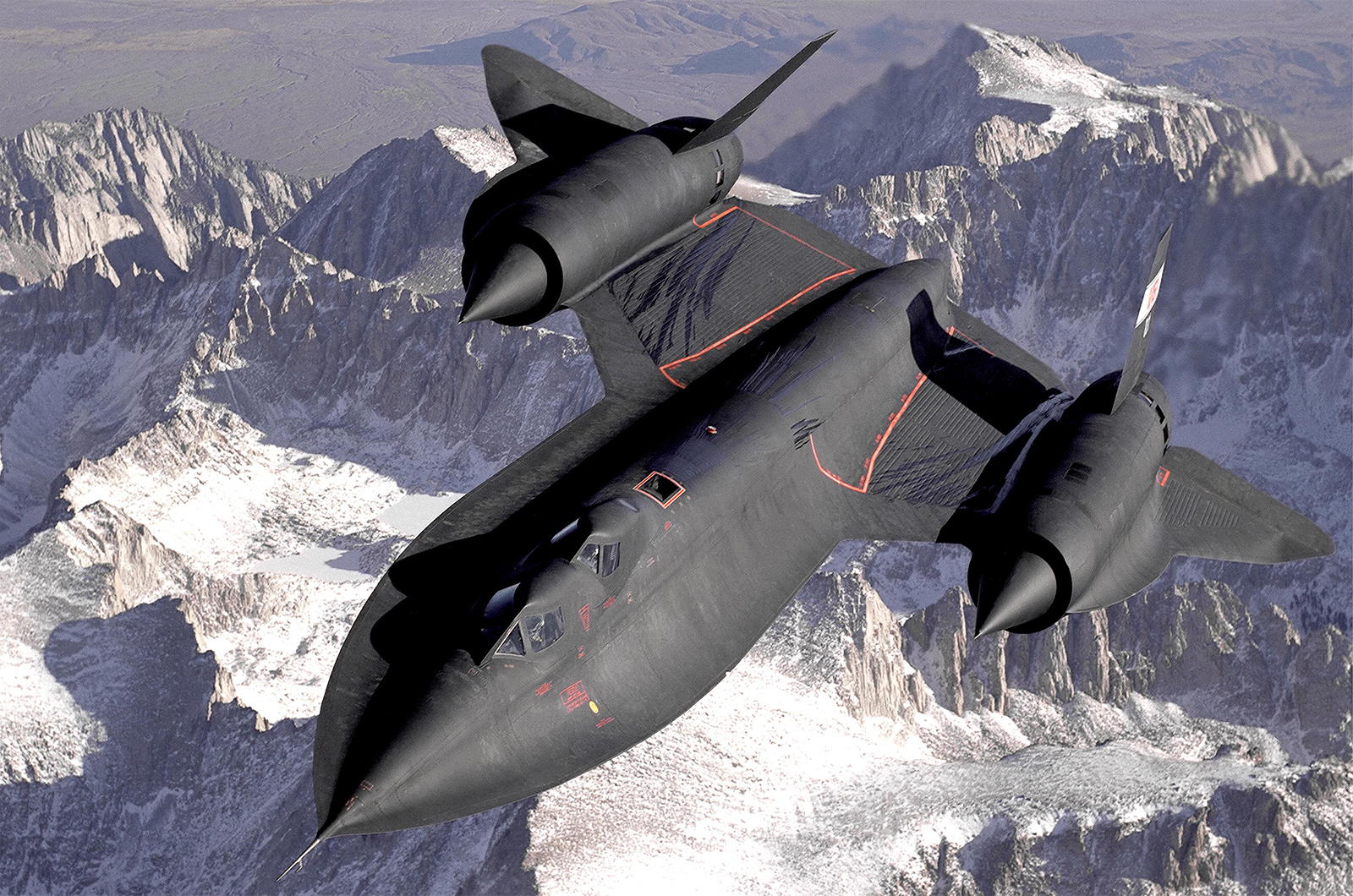
From our daily observations, several people point to friction as the primary reason for heating, yet this is not accurate. Just as air cools when it expands, it warms up when compressed.
Traveling at supersonic speeds generates shock waves that quickly compress the air, resulting in significant heating. This phenomenon increases with the square of the Mach number, meaning that air in the atmosphere can reach approximately 480 degrees Fahrenheit (250 degrees Celsius) when exposed to a shock wave at Mach 2, and nearly 2732 Fahrenheit (1500 degrees Celsius) with a shock wave at Mach 5.
1: Stealth
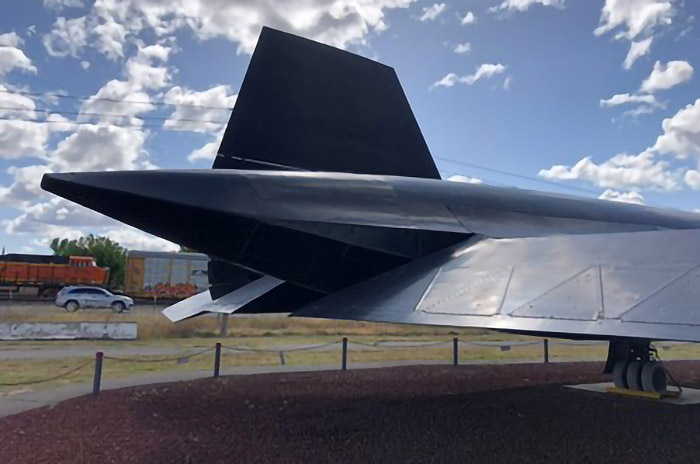
The Blackbird had a speed and altitude capability that made it difficult to catch, but Lockheed wasn't taking any risks, and the plane was also a trailblazer in radar stealth. This method sought to reduce an aircraft's likelihood of being picked up by radar through meticulous focus on design and materials.
The combined design and smooth surface of the SR-71, along with its extended fuselage chines (a chine refers to a sharp change in the cross-section of the fuselage along its length), enhances stealth. The rudders are angled inward to prevent creating a 90-degree angle with the fuselage, which could otherwise increase the radar detection. The sharp sweep of the wing directs radar signals away from the source.
1: Stealth
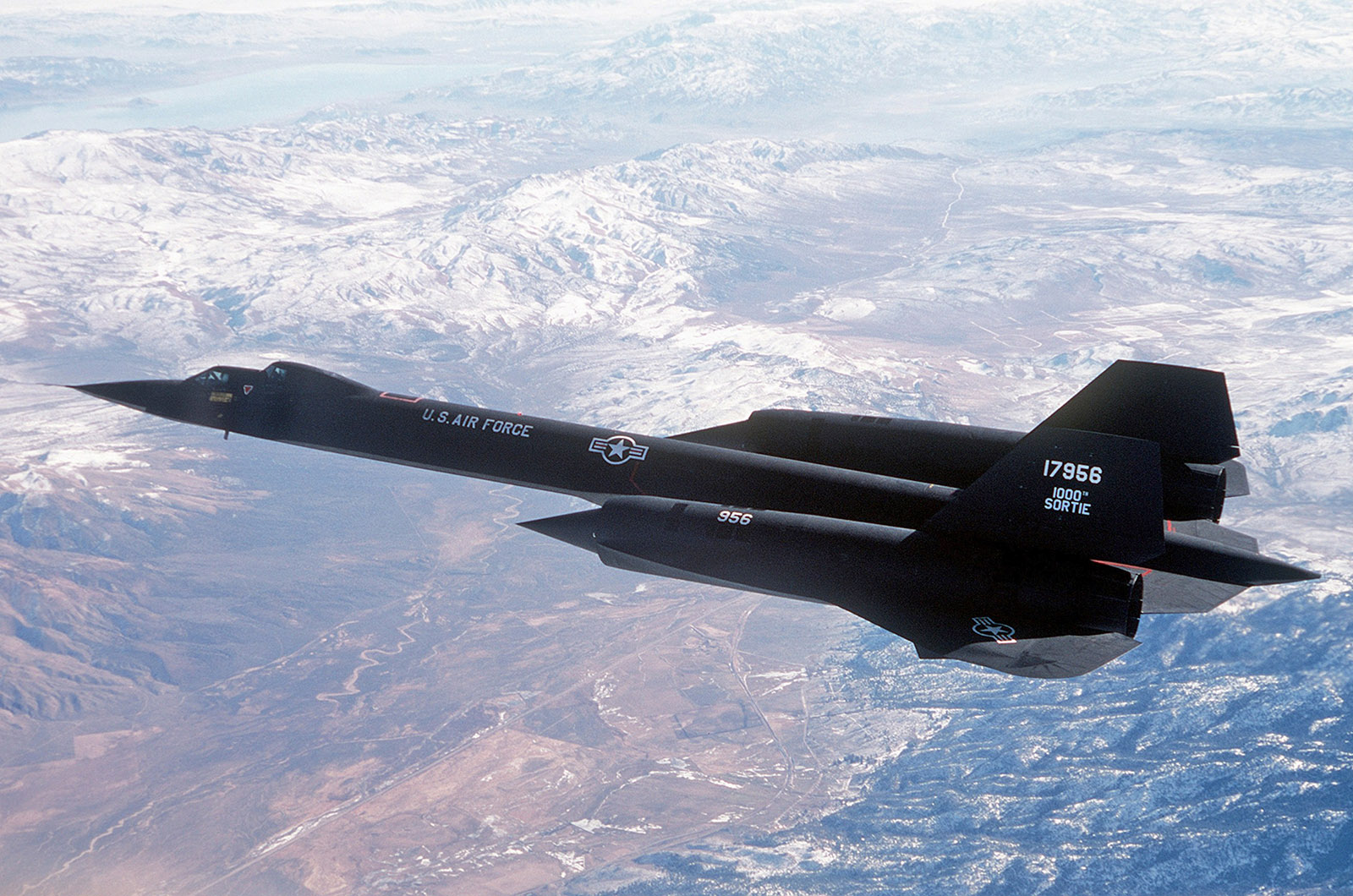
Inside the Blackbird's dark paint, iron ferrite balls were suspended. When radar waves struck the paint, it led to molecular vibrations, transforming the radar energy into heat. This heat was then released into the airframe. The dark color of the paint also helped with visual stealth by blending the aircraft into the deep-black sky at very high altitudes.
This 'iron ball paint' is a type of Radar Absorbent Material (RAM). Different types of RAM were applied to the Blackbird's chines, the leading and trailing edges of the wings, the inlet spike, and the nose. The Blackbird was the first stealth aircraft in use long before the term and idea became well-known.
The Blackbird Today
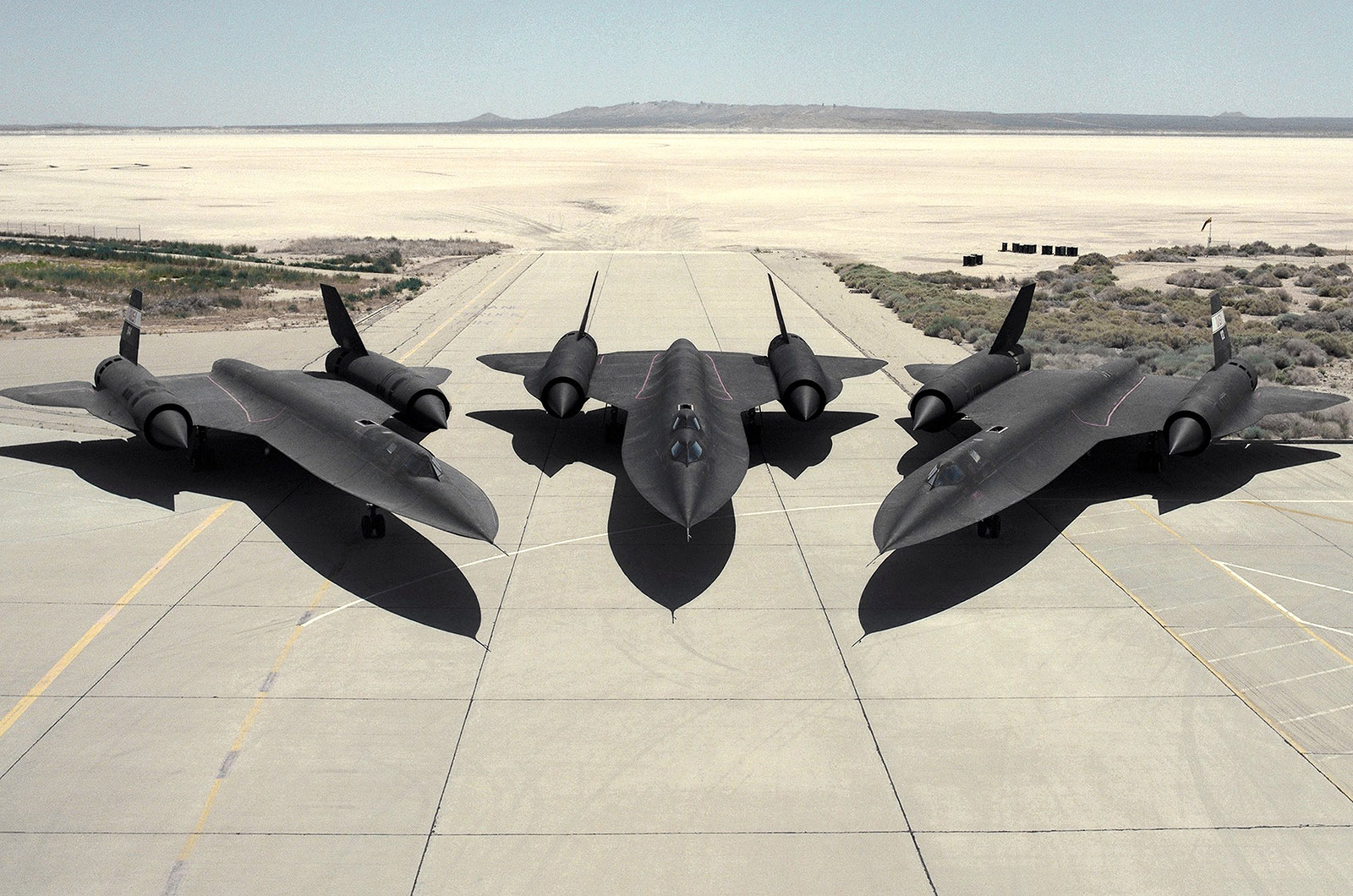
A total of 32 SR-71 aircraft were manufactured, with 12 of them lost due to accidents. It initially became operational in January 1966 and was first withdrawn from the US Air Force in 1989. Three SR-71s were temporarily brought back into service in 1996 following funding allocated by the US Congress, but they were eventually permanently retired from the USAF in 1998. NASA utilized two SR-71s (loaned from the USAF) between 1991 and 1999, conducting various experiments related to altitude and speed.
The Blackbird Today
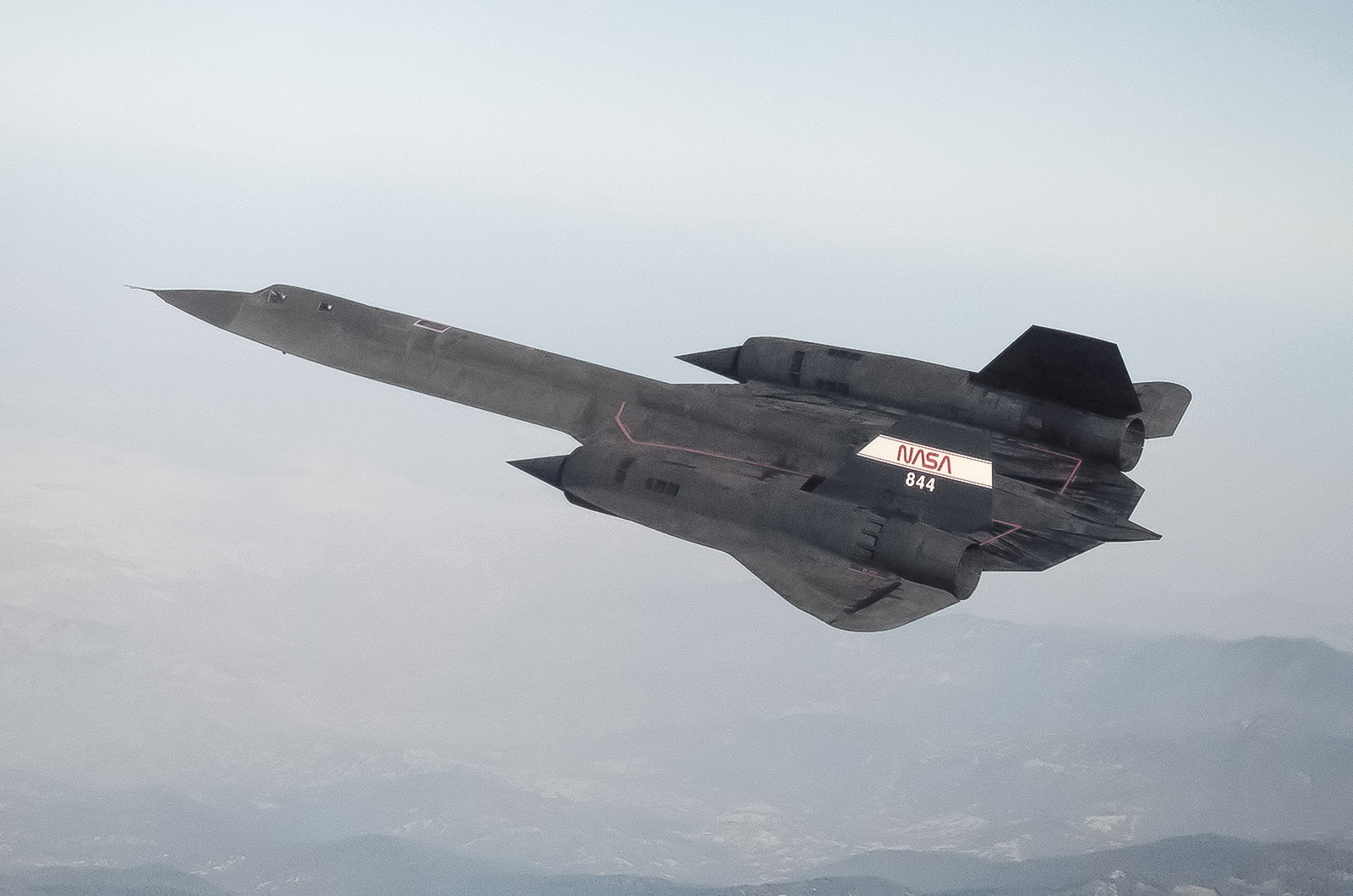
There are still 20 SR-71s left in the world, displayed in various museums. Some of the best locations to view one include the National Museum of the United States Air Force, located near Dayton, Ohio, and the Smithsonian Institution's Steven F. Udvar-Hazy Center, situated near Washington, DC. For those in Europe, the American Air Museum in Duxford, close to Cambridge in England, is a recommended destination.
It's amazing that this remarkable plane is being kept for coming years.
Follow Hush-Kit's remarkable aviation tales onSubstack and X
If you liked this story, click the Follow button above to discover more similar content from zaianews.
Photo Licence: https://creativecommons.org/licenses/by/4.0/deed.en