
Three astronauts who had been trapped in space for more than a week have safely returned to Earth — but their escape strategy has left a fresh team of explorers without a means of returning.
Astronauts Chen Dong, Chen Zhongrui, and Wang Jie were stranded on the Chinese space station Tiangong for nine days following an unidentified object causing significant damage to their spacecraft, which resulted inwas considered too dangerous to operate in the air.
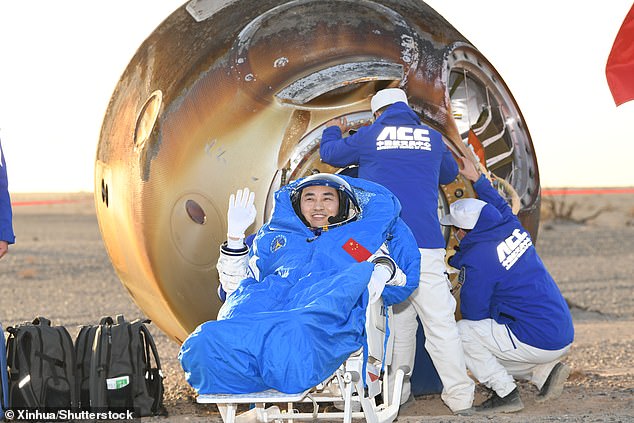
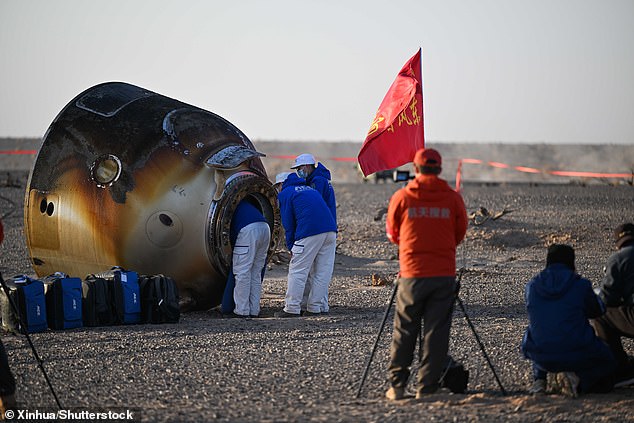
The crew members of the Shenzhou-20 mission were observed landing securely in the Gobi Desert in the north.Chinaearly Friday morning following their six-month assignment aboard the space station.
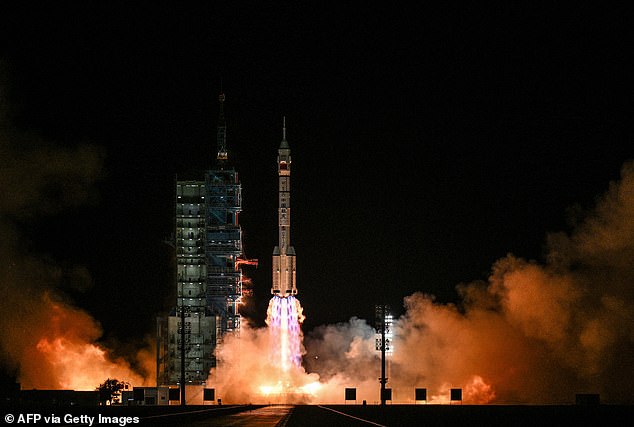
When the crew discovered cracks on the window oftheir Shenzhou-20 capsule, officials chose to return the three men using the Shenzhou-21 spacecraft – the vehicle that delivered their successors to the station on October 31.
Nevertheless, this choice has currently resulted in the crew of Shenzhou-21, astronauts Zhang Lu, Wu Fei, and Zhang Hongzhang, being without a spacecraft to return to Earth in the event of another space crisis.
Following the debris collision, well-established procedures mandated that the Chinese astronauts evacuate using the operational spacecraft at the station.
On Friday, the China Manned Space Agency (CMSA) stated that the Shenzhou-22 spacecraft will be launched "at a suitable time in the future," with the probable objective of sending new crew members to replace those from the Shenzhou-21 mission.
That upcoming mission was not planned to take off until April 2026, however the space agency has not indicated whether this schedule has been modified since Shenzhou–21 was expected to stay in orbit for six months.
The present circumstances resemble the 286-day ordeal of NASA astronauts Suni Williams and Butch Wilmore earlier this year, when technical issues rendered their spacecraft unsafe for reuse, preventing them from returning home.
The crew of Shenzhou-20 who were stranded were scheduled to return home on November 5 aboard their own spacecraft, but just before their departure, an object thought to be space debris struck their return capsule.
The crew aboard the station initially reported observing a visible mark on the hull of Shenzhou-20, but the CMSA later stated that small cracks were found in the spacecraft's window.
"The Shenzhou-20 spacecraft fails to satisfy the conditions for the astronauts' safe return and will stay in orbit to carry out further experiments," CMSA stated, according tostate–run news outlet Xinhua.
Even though the crew of Shenzhou-21 was not expected to depart from Tiangong station for six months, the current circumstances may now create a worrying cycle of astronauts being stuck on the Chinese research facility.
Prior to Shenzhou-20 returning the previous crew's spacecraft back to Earth, aerospace specialist and science writer Yu Jun proposed that CMSA consider a 'plan B,' which would include sending a spare return vehicle from Earth.
'Shenzhou-22 and the Long March 2F [launcher] were already prepared. This is our rolling backup system,' Jun said to his over five million followers on Weibo.
They are in 'emergency response' mode and prepared to safely return our astronauts if necessary.
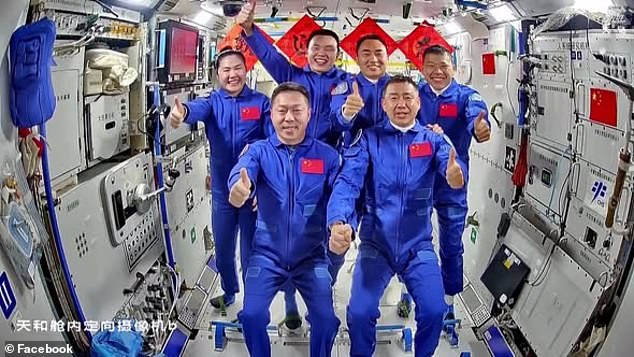
The team from Shenzhou–20 separated from Tiangong on Thursday, with their compromised return capsule remaining connected to the space station.
The Shenzhou-21 spacecraft, which transported three explorers, re-entered Earth's atmosphere and landed safely in China around 3:20 am local time on Friday.
The crew came out in good condition, waving at the recovery teams, and later explained how they utilized the additional time in space to carry out extra scientific experiments with the arriving team before departing the station.
It remains uncertain what caused the permanent damage to the Shenzhou–20 spacecraft, but space debris can consist of various items such as fragments from broken satellites, lost tools from past spacewalks, or large remnants of discarded rocket components.
This drifting waste is circulating the globe at astonishing speeds reaching 17,000mph, which is the typical speed for items in low Earth orbit.
This could pose a significant risk for crewed spacecraft, much like driving through a storm of bullets.
Currently, approximately 19,000 items of space junk are being monitored in Earth's orbit by the US, excluding the operational satellites.
Nevertheless, specialists from NASA believe there might be more than half a million tiny fragments that are difficult to monitor.
A major collision has long been a concern, as space debris has been hitting human spacecraft and stations for many years, resulting in considerable damage to both the International Space Station and Russia's Mir station.
Read more- How did a deadly impact from unknown space debris trap the Shenzhou 20 crew in orbit?
- Is space junk the unknown danger causing Chinese astronauts to be stranded in orbit?
- Are astronauts in danger as space debris and unseen cracks pose a threat to make the ISS the next major accident in space?
- What potential dangers could small space debris and micrometeoroids pose to the aging International Space Station and its courageous crew?
- Is there a risk to astronauts' safety due to an open glass of water on China's space station?