
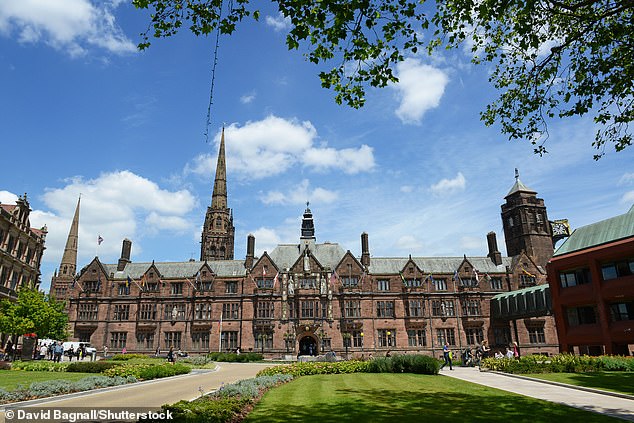
Coventry City Council has failed in a High Court attempt to prevent an "unreasonable" number of refugees from being accommodated within the city.
The official had taken theHome Officeto take legal action against plans to relocate additional asylum seekers to the city, claiming it was already housing significantly more than similar regions.
It emphasized that it was "proud" of its track record in providing voluntary housing to those seeking refuge, but noted that the rate of new placements had become "excessive" and unmanageable.
The legal representatives argued that the Home Office had acted illegally by not accelerating the reduction of asylum seekers in Coventry and by keeping on admitting new arrivals.
However, in a comprehensive 32-page ruling issued today, Mr Justice Eyre rejected the challenge entirely.
He pointed out that although the Home Office acknowledged that figures in Coventry would decrease over time, it was implementing a broader national strategy to distribute asylum seekers more uniformly throughout the UK.
In his decision, he stated: "The defendant acknowledges that the number of asylum seekers housed in Coventry needs to be decreased."

She argues that she is working to introduce a policy that would spread asylum seekers across different areas of the United Kingdom, but she rejects the idea that any of her previous actions have been illegal.
Mr. Justice Eyre stated that the council was prepared to contribute to addressing the requirements of asylum seekers, yet had concerns about taking on an excessive portion of the responsibility.
The judge further stated that the claim was "driven by a desire to ensure that the responsibility of housing asylum seekers is distributed more evenly throughout the nation."
In the decision, he stated that the Home Office aimed to decrease the number of asylum seekers housed in Coventry, but also mentioned that there is a legal obligation to accommodate those seeking asylum.
Mr Justice Eyre stated: 'She (the Home Secretary) also mentions that the requirement to offer such housing can emerge suddenly, and at times, the specific location of the accommodation may have minimal influence on the decision.'
The conflict arose from a Home Office action in November 2024 to utilize the Ibis Hotel as a shelter for asylum seekers, a choice that the council claimed violated a set ratio of one asylum seeker for every 200 residents.
However, Mr Justice Eyre dismissed that claim, stating that the numbers were intended as planning guidelines rather than rigid limits.
The council's legal representatives also claimed that it was unreasonable to provide housing for asylum seekers beyond the specified ratio, but the judge rejected this argument, stating that the actions were logical considering the legal obligation to house asylum seekers, the unexpected and pressing nature of their housing requirements, and the scarcity of appropriate living arrangements.
The decision was made just days following Mr Justice Mould's ruling that asylum seekers could remain accommodated at the Bell Hotel in Essex, as he declined to issue an injunction requested by Epping Forest District Council to prevent their residence there.
The local authority initiated legal proceedings against the hotel operator, Somani Hotels, alleging that housing refugees at the property violates zoning regulations.
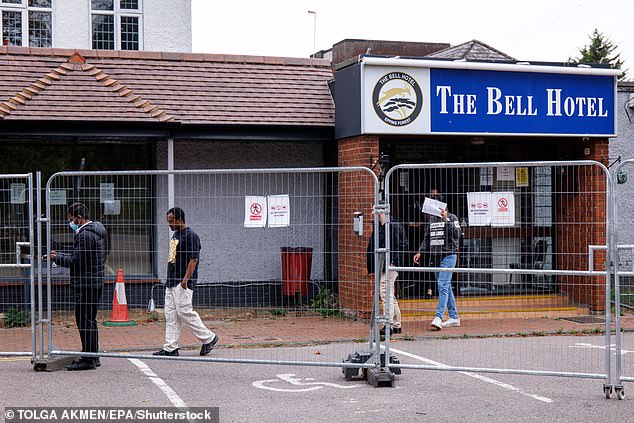
Mr. Justice Mould rejected the claim on Tuesday and stated in his ruling that it is "not a situation where it is fair and appropriate for this court to issue an injunction."
The choice comes amid a previous detailed report from the Daily Mail, which showed how thethe asylum system changed the way local authorities in Britain operated over the past decade.
Data showed Three-quarters of local authorities have experienced a doubling or greater increase in the number of asylum seekers they currently accommodate., a major transformation that has caused certain regions to have difficulty keeping up.
In a striking example, one council has experienced an increase in its asylum seeker population of over 600 times, as reported by the Mail's analysis.
For instance, in Northumberland, official data indicates that nearly 21 asylum seekers are now present among every 10,000 people. Only one was reported there in 2014 – a rate of 0.03, which is almost negligible since the start of modern records.
Home Office statistics show the nationwide situation: 110,000 asylum seekers were being accommodated throughout the UK by the end of 2024 – similar to the population of a town like Cheltenham, Worthing, or Oldham. The increase is mainly due to the rise in small-boat crossings across the Channel, causing the daily accommodation cost to triple to £4.2 million, with almost 40,000 individuals still staying in hotels.
However, critics argue that the responsibility is not distributed fairly. Fifty-nine out of Britain's 361 councils have none at all, forcing others to take on a greater portion than they should.
Read more- Why are local authorities throughout the UK preparing for an increase in asylum seekers requiring housing?
- Are local authorities in Britain planning to pursue legal measures to stop accommodating refugees in nearby hotels?
- Is the housing emergency in Britain becoming more severe, with asylum seekers surpassing the homeless population in certain local authorities by a factor of ten?
- Are refugee hotels encountering legal disputes as local authorities across the country collaborate to challenge government policies on migrant accommodation?
- Are struggling local authorities creating disorder by urging hotels to remove asylum seekers, even with staggering expenses and difficult rehousing issues?