
Every week, we invite a well-known individual to explore their early years and examine how their initial experiences shaped the person they became.
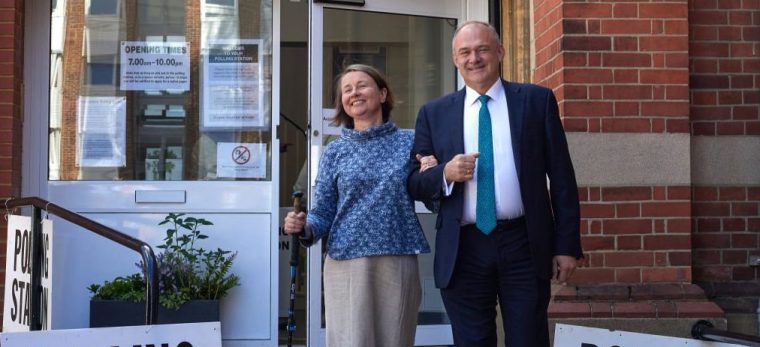
Ed Davey, the head of the Liberal Democrats and author of Why I Care, was born in Mansfield, Nottinghamshire, and currently resides in Surrey with his wife Emily and their two children, Ellie (11) and John (17). Following the passing of both his parents when he was 15, he was raised by his grandparents. In this interview, Davey discusses heartbreak, rekindling old friendships, and his biggest concern for the future..
I frequently experienced loneliness when my mother was sick withbone cancer and secondary breast cancer. I was a young caregiver [Davey's father passed away when he was four], experiencing daily life quite differently from my school friends, even though I wasn't aware of it back then. There was a huge issue going on in my life that, as a teenager, I didn't discuss with my friends. At school, people were talking about regular things—what was on TV the previous night, music, sports, and similar topics—and I often felt how unimportant all of it seemed, with their worries appearing so small and me feeling disconnected.
I also remember feeling lonelyduring my initial year at college[Oxford] while others appeared to be enjoying themselves and showing so much self-assurance, I felt I didn't deserve to be there. It wasn't helpful that I hadn't completed the required reading for my classes, which made it very difficult to return to studying: it was only once I started to master my subjects during the Christmas break that I began to think perhaps I had chosen the right university, and some confidence came back.
As a parent, I believe I am similar to my mother – I hope that's the case.She was consistently present for us, even with the difficulties she faced after becoming a young widow with three sons under ten. She always made us feel valued and cherished, and that's the approach I aim to take with my own children.
A part of me would advise my younger self – locate Emily sooner, get married earlier, and start a family at an earlier stage.[Davey was 42 years old when he became a father for the first time]. I would also suggest being more compassionate towards yourself. Allow yourself a little extra time. Allocate more time for your own needs.personal interests and personal hobbies– everything ranging from taking extended walks to reading more books, to visiting the cinema and theater – all the kinds of activities that are often put on hold in my life because of my job and hectic home schedule.
I wish I had realized before becoming a father – and this might seem like a cliché – the immense happiness that comes from cradling your newborn child.The immense power and feeling of the bond between parent and child. That kind of parental love is unlike anything you've ever felt before. Also, as both of my children have grown older, how the relationship of being a parent to a young child evolves, and suddenly they become a friend too, from whom you start learning, finding joy in how they perceive the world and grow their character, along with their curiosity. And that ongoing, quiet pride you feel every day when you witness them accomplishing something. That's wonderful. For John, my son and oldest child, who has severe disabilities, I'm not certain what could have better prepared me to be the best father I can be for him, aside from the fundamental understanding that the strength of Emily's and my relationship is essential for dealing with it.
I sometimes experience strong emotions– mostly about people I know and care for, but sometimes about the terrible things that happen to people I don't know. It can really affect you. I recall becoming emotional while speaking at my Nanna's funeral. That was a while back. During some of the filming for our General Election broadcast about my life as a caregiver – particularly when discussing my mum – and while writing the first chapter of my book. I think I had forgotten certain things and kept them bottled up. When you let them out, I suppose you discover emotions that you've never fully expressed.
There are two forms of heartache. One where you end a romantic relationship with someone you are emotionally connected toThen there's personal grief. I recall when my grandfather passed away a few years after my mother, and I was actually affected more deeply by that—something that felt like heartache. My mother had been sick for a long time, so we were somewhat prepared for her death, and she had helped us get ready for it. When she died [Davey was 15], the pain was softened by the comfort that she was at rest. However, when my grandfather died unexpectedly a few years later, I felt furious and extremely sad. I could see how much it affected my grandmother, who had only recently lost her only child. And my wonderful grandfather had been a male role model for me, as I had lost my father when I was four.
Grandad was a person full of feelings, yet he didn't often express them.However, I could sense that he truly adored me—particularly after his cherished daughter died. He intrigued me. Although he hadn't received much formal education, having left school at 14 to work as a gardener for a wealthy family and later becoming a carpenter, I believed him to be clever and refined. He enjoyed listening to classical music on Radio 3, and he would also laugh along to his collection of Goons, Hancock’s Half Hour, and similar recordings.
There's a great deal of things that frustrate me about the current state of our world.. But getting irritated doesn't really make things better, does it? You need to take action and address it: getting angry doesn't resolve issues. You must find a path forward - whether it's for yourself and your family or to offer people hope and confidence that things can improve.
Read Next: Jim Chapman: My father was abusive – but my mother was extremely positive and resilient
Friendshipis even more significant than I had understood during my upbringing. It's simply delightful. I still have friends from my school and university years. It's so enjoyable when we meet up and almost travel back in time, picking right back up as if we hadn't been apart, even after not seeing each other for a while. Although I've kept in regular contact with a few school friends, twelve of us gathered two years ago to celebrate the 40th anniversary of leaving school – half from my all-boys school and half from the nearby girls' school. It was like wearing a familiar sweater or coat. You just felt comfortable.
I came across some handwritten letters in my attic.Some of these friends had written to me when they started university and I was taking a gap year, and the warmth we felt for each other came through clearly on the pages. Maybe I had lost track of why we became friends in the first place, but as we talked, I realized it was because we had similar values. I have stayed in touch with many of my university friends. WhatsApp has been an amazing tool for that, especially when we're arranging evening drinks in town. A few of us began going away together for a long weekend, and it has turned into a really special time for me—free from politics and family!
The most challenging aspect of my life, much like for many others – especially those caring for immediate family members – is attempting to manage all responsibilities.My family, my work with the community, now leading a political party, and even managing to have some personal time – it's challenging. You endure by possessing a range of qualities, from strong personal resilience to the capacity to find joy and humor even during difficult moments, along with having solid relationships.
The greatest aspect of being myself is the opportunity to bring about transformation.Occasionally addressing the issues or responding to the worries of individual people, but also for the larger community and further afield. Naturally, during my time in government and especially now as an advocate for caregivers. I am very proud of the contributions I have made to enhance people's lives and the broader world.
My greatest concern for the future is what will become of my children once my wife and I are no longer here.I often mention that every couple has a subject they consistently avoid discussing—the issue they can't confront—and that's our situation. Particularly concerning our son John, who is turning 18 soon. He will require round-the-clock care for the rest of his life, and although Emily and I are working on plans for him and setting aside money to ensure he gets the care he needs, we also need a more compassionate society—and I suppose that's essentially why I'm involved in politics.
The Reason I Care: And Why Caring is Important by Ed Davey is available now (HarperNorth, £20).