
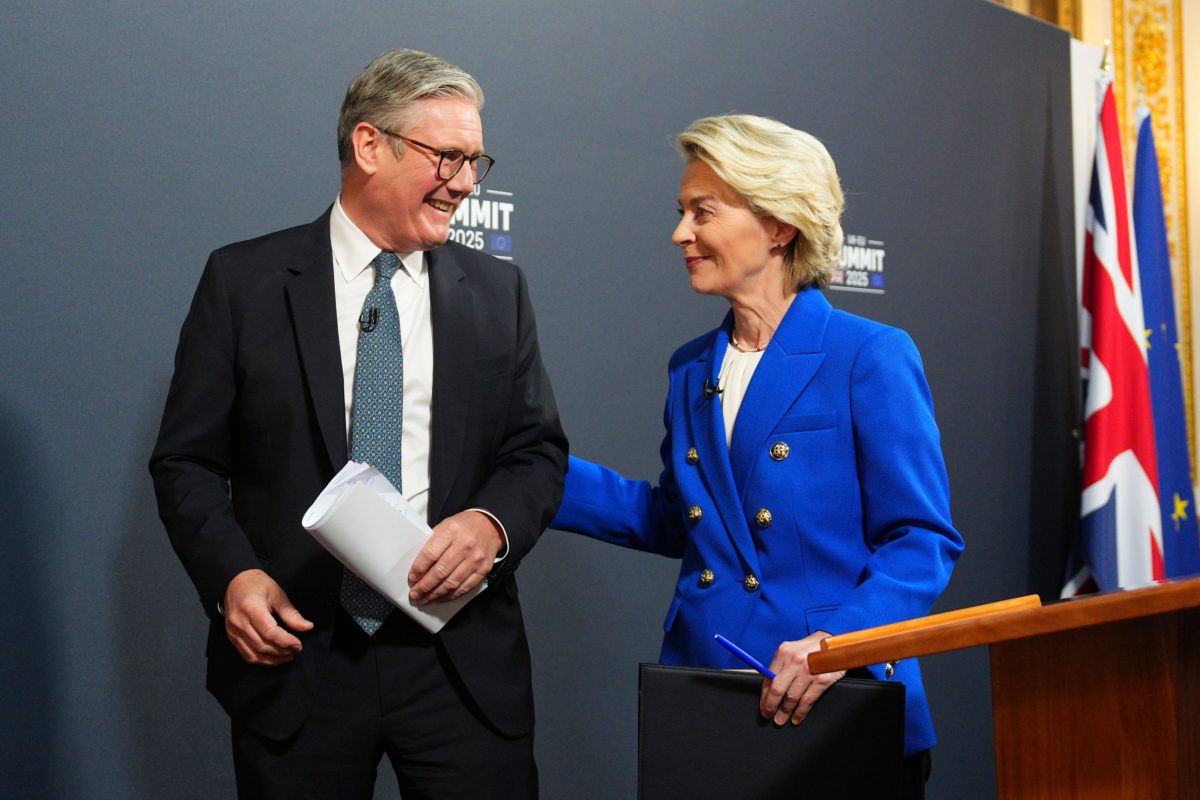
EU officials have approved the restart of trade negotiations with the UK, providing a positive development for Number 10 ahead of the Budget.
Talks on cutting down on bureaucratic procedures for importing food and beverages– which have been causing persistently high food inflation in the UK – were at risk of being disrupted due to France's demands that Britain start contributing to EU funds immediately in exchange for access to the single market.
However, a group headed by Germany, the Netherlands, Ireland, Belgium, and Luxembourg cautioned that moving too quickly at this stage might jeopardize the restart before discussions even start.
The choice made by EU envoys ends several days of stalemate — yet shows that the highly publicized Brexit reset remains complex, as the EU is divided on how much and when the UK should contribute to the EU.
The i Paper reported earlier this week that theThe UK was prepared to withdraw.a deal regarding access to the EU's defense fund in exchange for Britain paying as much as €6.5 billion (£5.7 billion) for entry.
A spokesperson from Number 10 stated on Thursday that it would contribute to EU funds only if the outcome was advantageous to the UK.
Nothing has been decided so far... we have consistently stated that if a proportional contribution to a particular EU scheme leads to clear advantages for the UK, then that would be the reasonable, just, and practical choice we will make.
Keir Starmer and President of the European Commission Ursula von der Leyenhad consented to the discussions at a Brexit reset summit in May. At that time, Cabinet Office minister Nick Thomas-Symonds, who is overseeing the Government's efforts regarding the Brexit reset, stated that although the final details were still being finalized, he was "confident" that an agreement on food could be achieved.
A Whitehall source told The i Paperthat achieving better trade conditions for food would be one of the "most significant victories" from the new agreement, as it could stimulate the economy and restore faith among businesses and consumers.
Go-ahead for discussions regarding electricity and energy taxation
Regarding this week's discussions, an EU representative stated: "They ultimately settled on a compromise plan that essentially builds upon the agreement from last May." The shared understanding reached during the London summit did not include any direct mention of cohesion funds.
The ultimate agreement allows the European Commission to initiate discussions for a shared so-called sanitary and phytosanitary (SPS) zone – an arrangement that would bring the UK in line with EU food and animal health regulations, significantly decreasing inspections on goods moving across the Channel and alleviating ongoing disputes regarding movement between Great Britain and Northern Ireland.
It also approves discussions to connect the EU and UK emissions trading systems (ETS), a step supported by industries on both sides and necessary for British exporters to escape the EU’s new carbon border charge, which comes into force on January 1. Officials emphasized, however, that a fully functional connection will require several years.
Ambassadors also decided to expedite the process of creating a distinct electricity trading agreement. Following strong advocacy from "friends of electricity" — Germany, the Netherlands, and Belgium — they asked the European Commission to develop a draft framework by the end of December, aiming to improve more stable cross-Channel trade, which has faced challenges since Brexit and has been linked to increased energy costs and uncertainty for investments in North Sea renewable energy.
UK payments remain a point of contention
Although there has been advancement, the ongoing argument regarding the UK's financial support continues to be the main source of tension.
Although London has shown willingness to contribute to initiatives where it receives distinct advantages—such as Horizon Europe and the €150bn (£133bn) SAFE defense program, which it is currently evaluating—UK representatives have been hesitant to support any indefinite pledge to EU financial resources.
The government led by Starmer has already opposed the initial EU request of as much as €6.5 billion to participate in SAFE (Security Action for Europe), emphasizing its desire for "good value for money." Officials mentioned that the European Commission informed ambassadors about the defense discussions but did not request approval for a negotiation mandate.
Meanwhile, the political urgency from the UK perspective is evident. Starmer aims for the SPS agreement to be in effect by 2027 – a schedule that British officials claim is essential to ensure voters experience clear advantages before the upcoming election.
However, experts caution that it is "sporty," requiring intricate regulatory coordination, and member states are already worried that London is underestimating the magnitude of the challenge.
EU officials are set to officially approve the SPS and ETS guidelines during the General Affairs Council meeting on Monday, paving the way for discussions to start next week.
Von der Leyen stated following a conversation with Starmer that both parties seek "mutually advantageous results" – especially concerning SPS and SAFE.
Discussions "crucial for reducing expenses at the register"
Naomi Smith, the chief executive of the pro-Europe organization Best for Britain, praised the progress. "These discussions are essential for lowering prices at the store and decreasing energy costs for both British citizens and those in the EU," she stated. "Acknowledging the clear advantages of stronger EU-UK coordination, both parties must now move quickly to turn this into reality."
In the meantime, a recently released House of Lords report titled "Unfinished Business: Resetting the UK-EU Relationship" highlights that achieving this reset will necessitate much more comprehensive agreements than those currently proposed.
It also warns that aligning with SPS and ETS will necessitate continuous adjustments to changing EU regulations – and recommends that ministers establish what they view as a "fair" UK financial contribution prior to moving into the next stage of discussions.