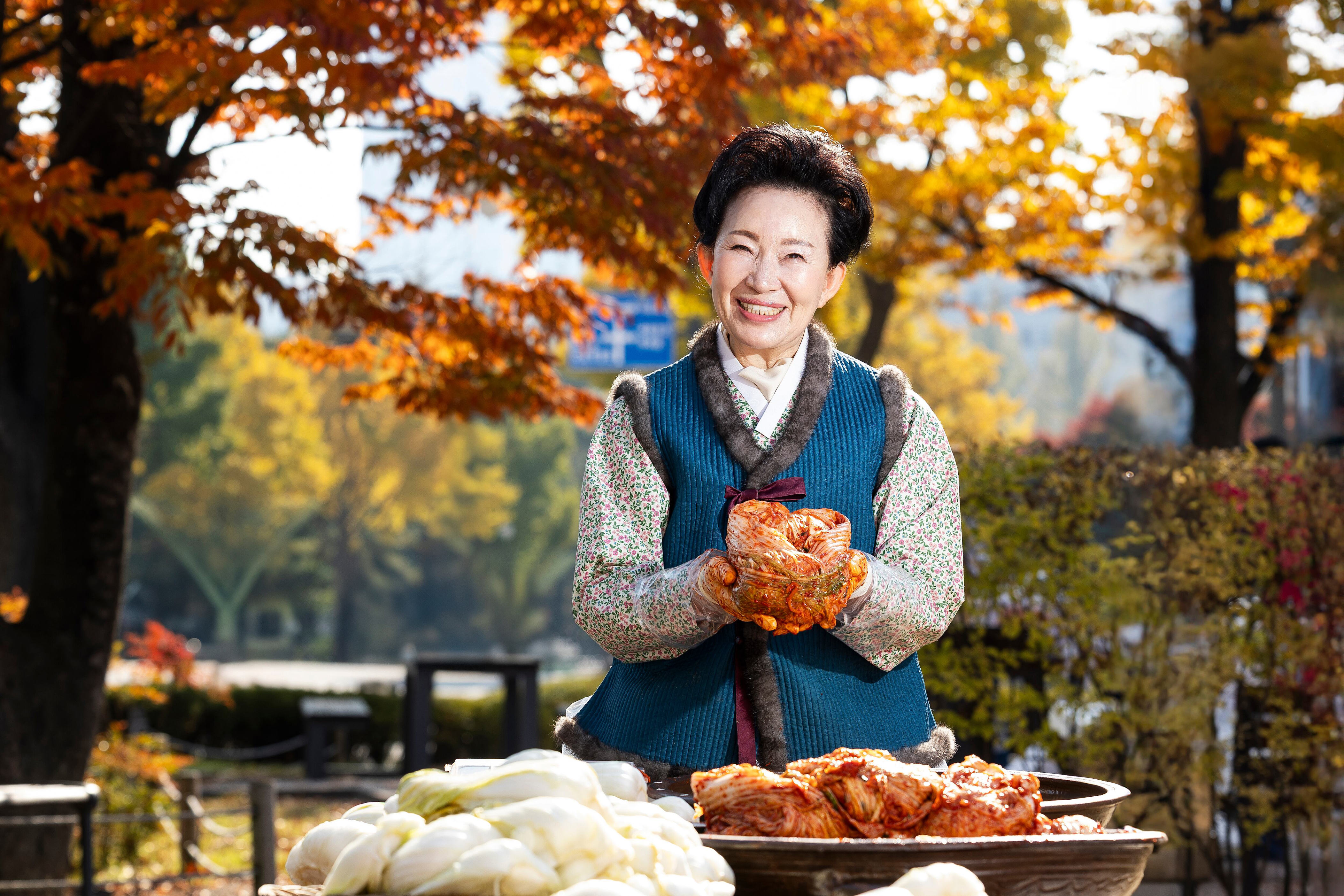
To celebrate the kimchi-making season, a "Half-Price Kimjang" event took place on the 4th in front of the National Assembly Communication Hall. More than 30 lawmakers, including National Assembly Speaker Woo Won-shik, Prime Minister Kim Min-seok, and Minister of SMEs and Startups Han Seong-sook, seemed to have no prior experience making kimchi. To help them, kimchi expert Lee Ha-yeon, who is 67 years old, along with her students, came forward. The expert stated, “People refer to me as a kimchi master and the leader of the kimchi association, but I would rather be called a 'kimchi evangelist.' I go wherever I am asked to teach people how to make kimchi.”
He revived the seafood kimchi "Sutbakji (Seokbakji)," which was only mentioned in the Joseon-era text *Gyuhap Chongseo* and was served to the king, and he was recognized as the 58th Korean Food Master in 2014. His efforts as the third and fourth president of the Korea Kimchi Association were crucial in establishing November 22 as "Kimchi Day" in 2020. In 2023, kimchi crafted by this master was given as a birthday present to King Charles III of the UK, and in the previous year, his kimchi was highlighted in *The New York Times*.
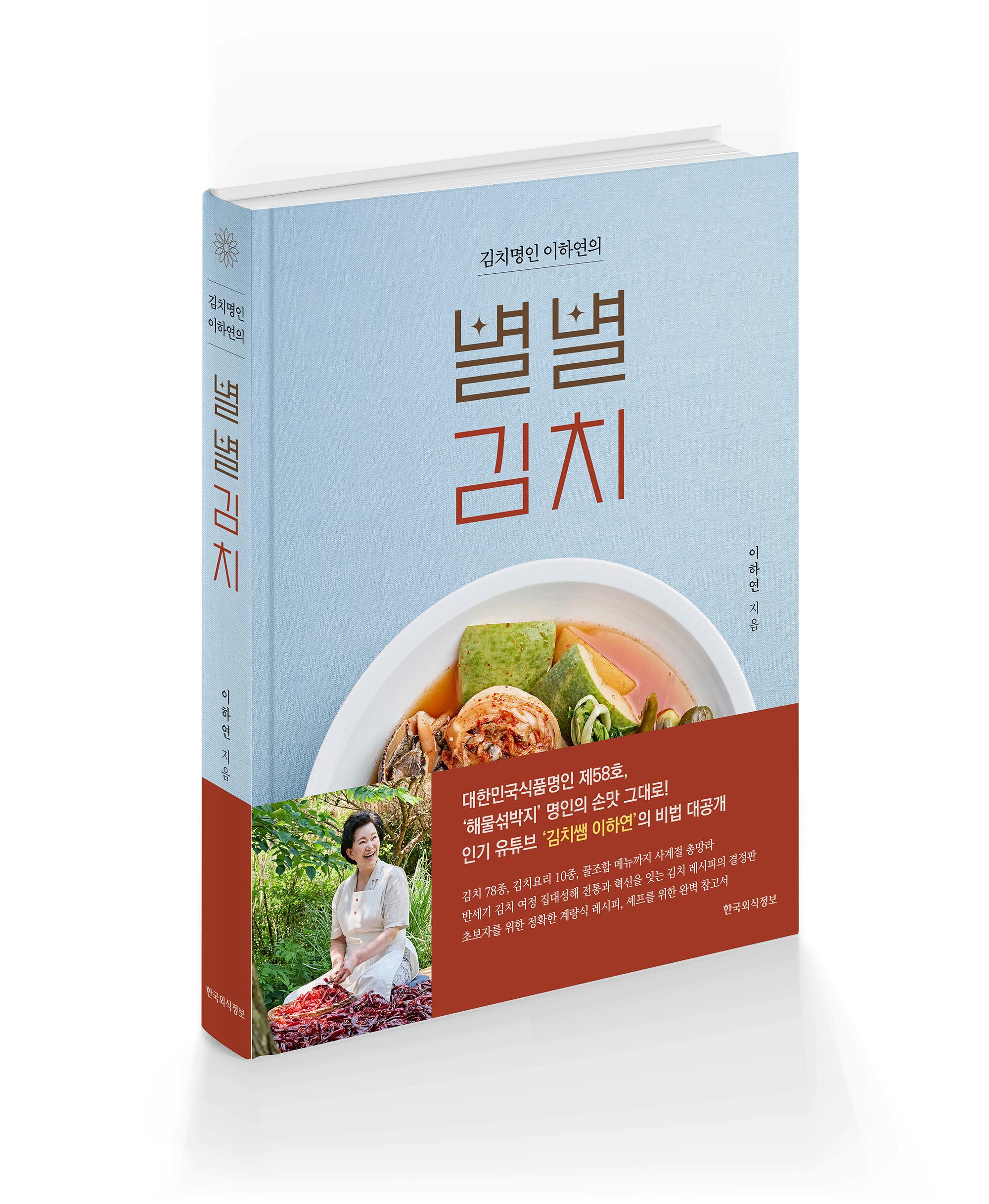
The master recently released *Byulbyeol Kimchi* (Korean Food Information), showcasing his extensive knowledge of kimchi accumulated over a lifetime. The book covers 78 varieties of kimchi, including the seafood seokbakji that earned him mastery, along with Seoul and Jeolla-style whole cabbage kimchi, radish sinkengeoji, basil and arugula namul, melon soksongi, and "Charles Kimchi" presented to King Charles III, as well as 10 kimchi-based recipes. He remarked, “The word 'kimchi' still excites me,” and added, “I aim to keep making and promoting kimchi until I'm 99 and full of vitality.”
◇Endless Possibilities, Kimchi
-You prepared kimchi by yourself for the first time during middle school, without your mother's assistance.
I used to live with a friend near the school. My friend, who was very dedicated to studying, would get up early to study, while I took care of cooking. My friend got into the College of Pharmacy at Seoul National University. That's how I ended up like this (laughs).
-Did you prepare many meals since you were young?
Preparing meals was my favorite activity. I used to venture into the mountains and fields to gather mushrooms and herbs, catch small fish, and cook soup using dried radish leaves for my father. My friends and I would collect squash from our garden and make pancakes using oil from the miller's daughter. Preparing kimchi remains as enjoyable as playing pretend from my childhood.
-Your mother must have contributed significantly.
As the youngest among nine siblings, I picked up the skills of making kimchi and cooking by assisting my mother since childhood. At times, I questioned whether I was the sole one handling tough kitchen tasks. All my sisters were married, which left me as the only daughter responsible for helping out. These experiences turned out to be a valuable foundation when I launched several food-related businesses to support myself.
-It is said that your grandmother and mother had excellent style.
My grandmother was occupied with assisting neighbors during the kimchi season prior to getting married. My mother, recognized for her culinary abilities, received kimchi and jeotgal recipes from her, particularly excelling in making seafood kimchi.
-You have been preparing kimchi for 53 years. Does it ever become tedious?
Kimchi is the most enjoyable of all foods. It's incredibly versatile—any ingredient can be turned into kimchi. It's endless, offering a creative experience. I once prepared white kimchi using pine mushrooms, minimizing garlic to emphasize their fragrance. The mushroom aroma gradually emerges during fermentation, which is intriguing. 'Minyeo Kimchi' made with summer croaker is also very tasty.
-What is "Charles Kimchi"?
I have a British disciple of kimchi, Justina Jang, who is the founder of the Korea-Britain Cultural Exchange (KBCE). In 2023, she reached out to me saying, 'King Charles III is set to visit a Korean neighborhood in New Malden, southwest London—the first royal visit to a Korean area. We would like to present some kimchi. Can you prepare some?' Following a kimchi festival in the provinces, I purchased cabbages at 10 p.m., salted them in Seoul, and made kimchi from 6 a.m. onwards to ensure it was delivered by noon for someone taking it to the UK.
-What makes it different from regular kimchi?
Because he doesn't like spicy food, I decreased the gochugaru and added roasted garlic. I lessened the fishy taste by using broth made from boiled shrimp jeotgal. Abalone brought a rich umami flavor. Although I didn't get his feedback, it was fulfilling to have our kimchi reach the British royal family.
-You presented kimchi using basil, arugula, and small cabbage—ingredients usually consumed as salads.
Every vegetable across the globe has the potential to be turned into kimchi. For kimchi to become global, it should be prepared using ingredients that are readily available locally.
◇Why Koreans Consume Less Kimchi
Kimchi, a widely known nutritious food around the world, is increasingly being eaten less in its native country, South Korea. More families are no longer preparing kimchi in large amounts or at all.
-Why do individuals consume less kimchi?
Because it doesn't have a good taste. Kids steer clear of it for the same reason. When I was young, kimchi was truly delicious.
-Why has kimchi lost its taste?
While studying the history of kimchi, I discovered that it was most intricate in the 1800s, incorporating ingredients such as pheasant, beef, abalone, and octopus. During the Japanese occupation, kimchi simplified, resembling Japanese pickled radish. After the Korean War, the quality of kimchi worsened due to poverty. As the economy improved, imported kimchi began to flood restaurants—a troubling development.
-What about homemade kimchi?
Ingredients contribute to 80% of the flavor in kimchi. When asked about secrets, I respond, 'No secret is the secret.' High-quality ingredients naturally produce taste. The crisp and refreshing flavor emerges during fermentation—there's no need for artificial additives such as soda or plum syrup. Kimchi is not a simple dish.
-How to choose ingredients?
Cabbage needs to have bright green, elastic leaves and weigh between 2.5 to 3.5 kg. Dried chili peppers should be shiny, contain few seeds, and make a crisp noise when shaken. The skin must be thick, sweet, and spicy. High-quality jeotgal, prepared with aged salt, has a salty flavor initially but becomes sweet later. Shrimp and akjeot provide a clean taste, while anchovy or hwangseokeo jeotgal add more complexity. The salt should be at least three years old, milky-white, granular, and easily crumble without sticking together.
-Many young individuals find the process of making kimchi intimidating.
Purchase salted cabbage and prepare a single head. Omitting the salting step makes the process simpler. The size of kimjang can be overwhelming, but beginning with just one head reduces the pressure. You'll discover it's easier than you think.
Recipes for Charles Kimchi, Basil Namul, and Arugula Namul
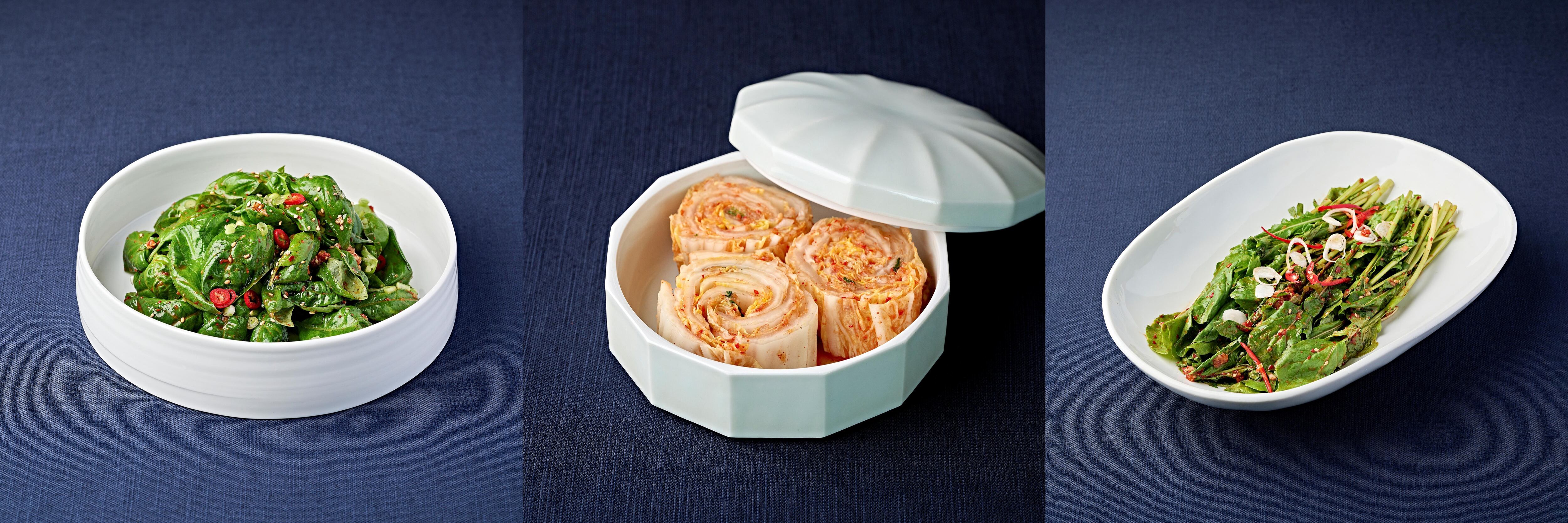
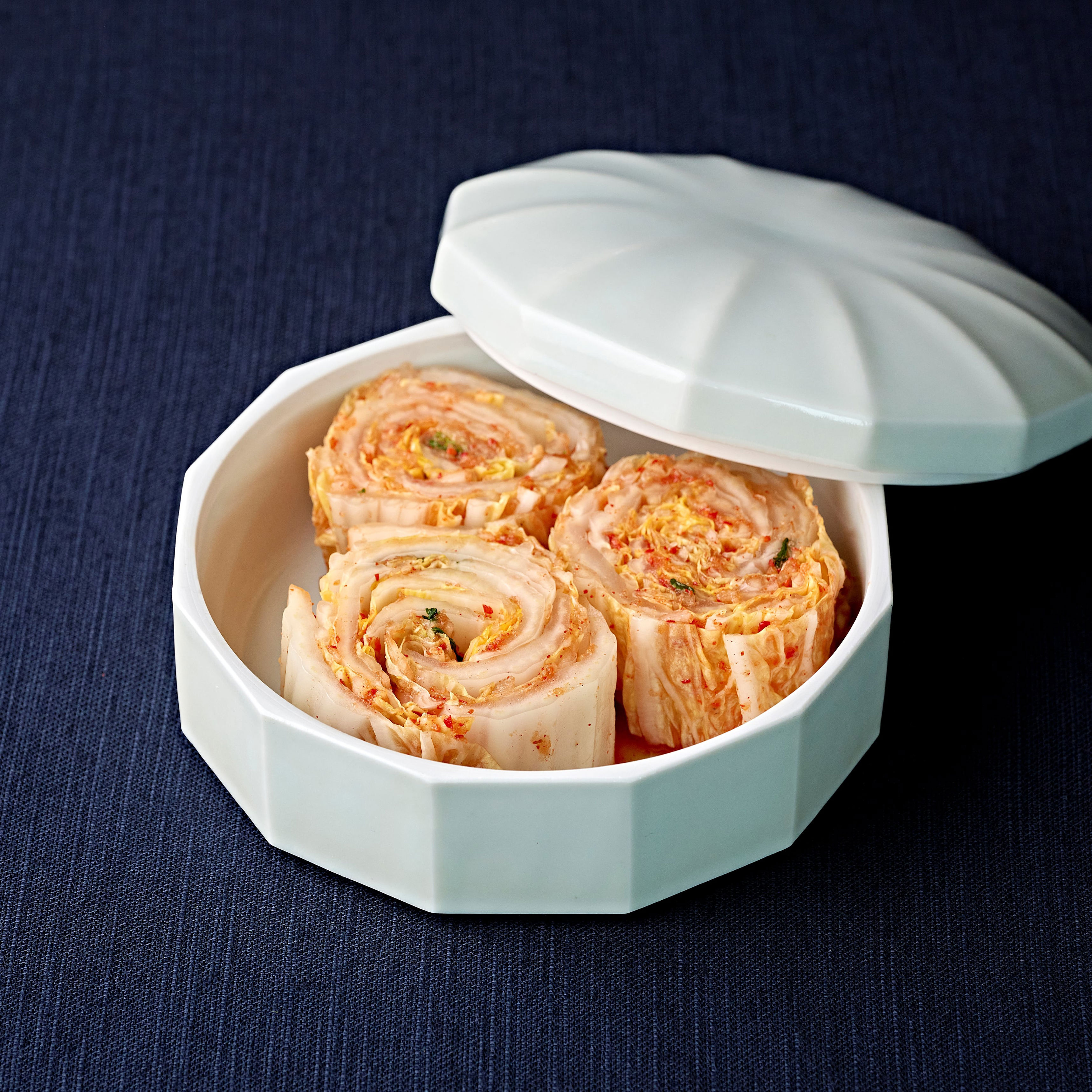
Charles Kimchi
5 kg salted napa cabbage, 1 kg radish, 1 kg Asian pear, 60 g chives, 60 g mustard greens, 40 g water celery, 4 fresh abalones
Seasoning: 800 g of kelp water, 200 g of glutinous rice porridge, 100 g of shrimp sauce, 100 g of garlic, 10 g of ginger, 100 g of gochugaru, 60 g of solar salt
1. Allow the salted cabbage to drain for three hours, with the cut side facing down.
2. Bring the kelp water to a boil, then add abalones and garlic. Take out the abalones once they are cooked; let the broth cool down.
3. Mix the cooled broth with porridge, shrimp sauce, and ginger.
4. Combine with gochugaru and season using solar salt to create the paste.
5. Sliced radish and pear; cut chives, mustard greens, and water celery into 3–4 cm segments.
6. Mix the vegetables with the paste to create the kimchi filling.
7. Fill the space between the cabbage leaves, wrap them with the outer leaves, and place them into a container.
8. Place cabbage leaves over the mixture, apply pressure, and allow it to ferment at room temperature for 2–3 days prior to moving it to the refrigerator.
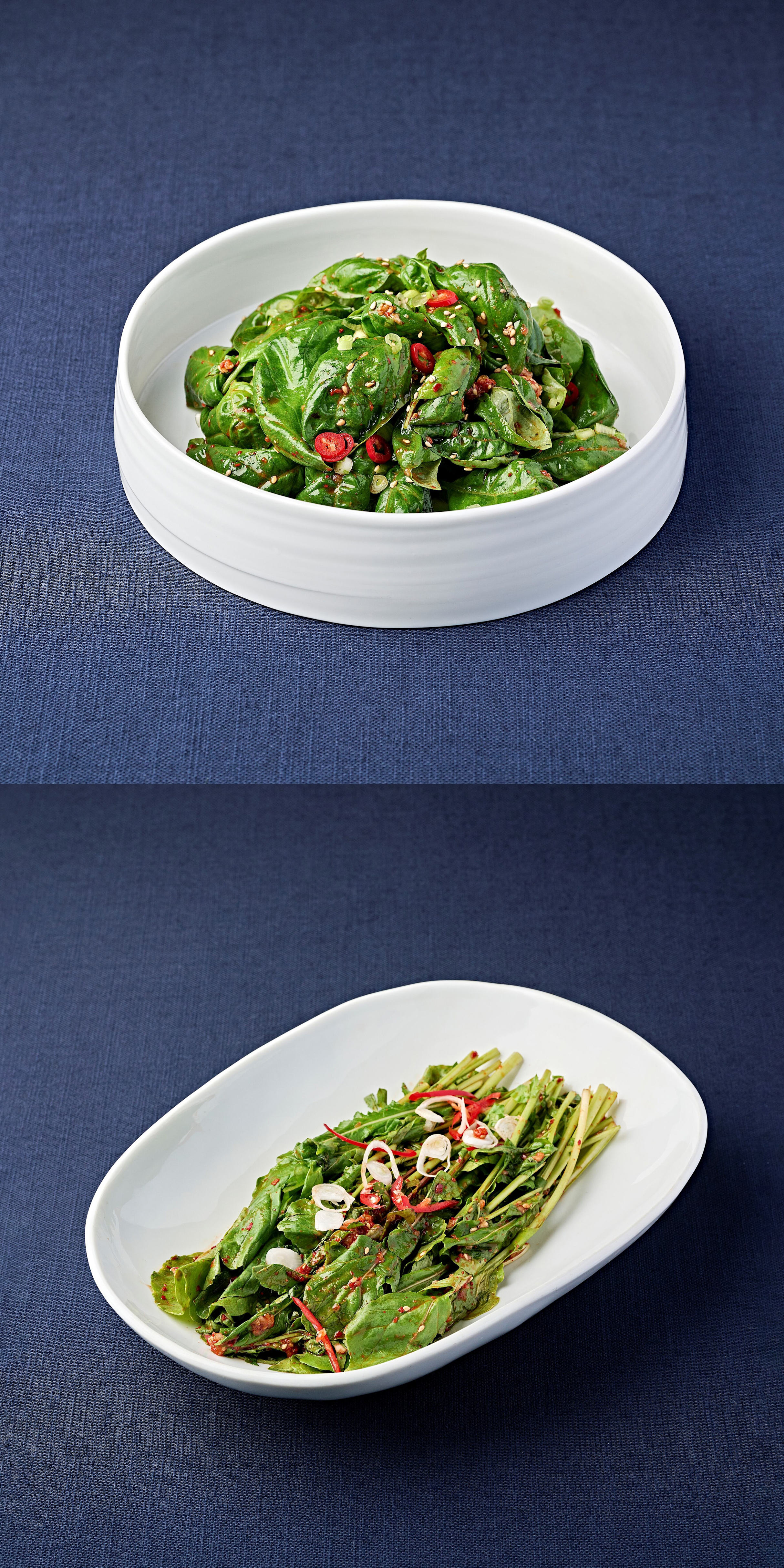
Basil Namul
150 grams of basil, 1 liter of water combined with 15 milliliters of vinegar (vinegar water), 5 grams of red chili
Seasoning: 10 grams gochugaru, 15 milliliters anchovy sauce, 5 grams minced garlic, a sprinkle of sesame seeds
1. Immerse basil in vinegar water for 3 minutes, wash 2–3 times, and let it dry.
2. Cut red chili into circular pieces.
3. Combine gochugaru, anchovy sauce, and garlic to create the seasoning.
4. Combine basil and chili with the seasoning; arrange on a plate and sprinkle with sesame seeds.
Arugula Namul
300 g rocket, 30 g chives, 10 g green chili pepper, 10 g red chili pepper
Seasoning: 15 mL of soy sauce, 15 mL of anchovy sauce, 30 mL of kelp broth, 10 g of gochugaru, 15 g of minced garlic, 15 mL of sesame oil, 10 g of sesame powder
1. Rinse the arugula and pat it dry.
2. Slice green and red chilies into thin strips.
3. Combine all the seasonings except for the sesame oil and powder. Toss with arugula and chilies, then incorporate the sesame oil and powder.
*The long stems of arugula can be cut in half prior to combining.