
Seven regions in England have a higher number of smokers compared to 14 years ago, as per an analysis by the Daily Mail of official data.
Nationally, only 9.1% of adults in Britain reported smoking in the past year, a decrease from 10.5% in 2023 and significantly lower than almost 50% in the 1970s, as per the Office for National Statistics.ONS) data.
However, the data indicates that East Staffordshire has experienced the highest increase in tobacco users, rising from 10.7% of the population in 2012 to 17.3% in 2024 – an increase of 6.6%.
South Holland (up 3.7%) is second in Lincolnshire, followed by Exeter (up 2.7%) and Babergh (up 2.7%) sharing the third position.
At the opposite end of the spectrum, smoking rates in the boroughs of Folkestone and Hythe as well as Stevenage both decreased by 20.8% - the highest decline nationally.
Following closely is Dover (-18.9%), with only 6.2% of residents smoking, compared to 25.1% in 2012, and Stratford-upon-Avon (-16.4%).
Tobacco sales that are legal have decreased by 45% since 2021, yet the number of people who smoke has dropped by less than 1%.
Increased taxes on tobacco items have made them unaffordable for many, pushing those who continue to smoke toward more economical options.
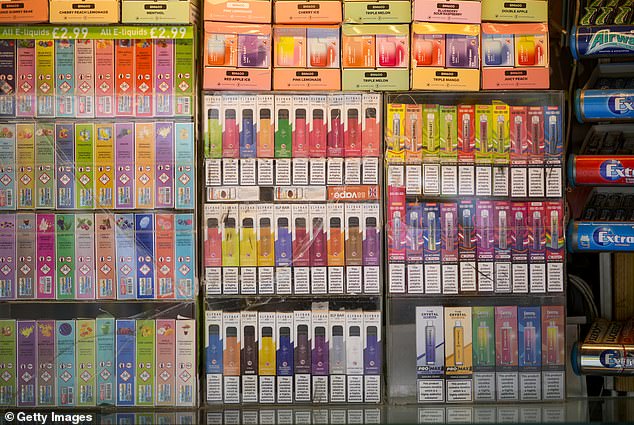
A new report indicates that a record 5.4 million adults in the UK now use vaping devices, surpassing the number of cigarette smokers for the first time.
The authorities have introduced a series of actions designed to further reduce the number of smokers, along with fresh initiatives intended to slow the increase in vaping.
The most recent version of this – the Tobacco and Vapes Bill – is now progressing through the House of Lords.
The legislation would prohibit individuals born on or after January 1, 2009, from purchasing tobacco products at any time. Additionally, it grants authority to limit the packaging, advertising, and flavors of electronic cigarettes.
It was endorsed by over 1,200 healthcare experts such as physicians, nurses, and public health officials.
In Great Britain, the highest rates of daily e-cigarette use are found among individuals aged 25 to 34 and 35 to 49, with 9.3% and 9.5% respectively.
However, in general, the highest usage continues to be among individuals aged 16 to 24, with 13% vaping either every day or sometimes.
This is in contrast to the prohibition on selling vaping products to those under 18, where individuals found selling them to minors may face penalties and legal action from Trading Standards.
Activists have also been advocating for stricter rules on vaping products — such as an immediate prohibition on advertising aimed at children, who are the primary users in the teenage population.
They have accused aggressive manufacturers of contributing to the escalating problem, arguing that they are deliberately attracting children with vibrant packaging, similar to highlighters, and kid-friendly tastes like bubblegum and cotton candy.
Although NHS leaders claim it is safer than smoking, vaping still carries some risks. Electronic cigarettes include harmful chemicals and the long-term impacts are still unknown.
Concerns among specialists highlight that the high level of nicotine may result in elevated blood pressure and additional cardiovascular issues.
Furthermore, the government plans to impose stricter regulations on the sale of pouches nationwide, aiming to curb widespread use among young people.
Caroline Cerny, the deputy chief executive of Action on Smoking and Health, stated to the Daily Mail: 'The general decline in smoking rates throughout the country is a beneficial development that will result in lower instances of illness and premature death caused by tobacco.'
Nevertheless, smoking rates continue to be higher among specific groups, typically those who are socially disadvantaged and individuals dealing with serious mental health conditions, and we must make a significant effort in the coming years to help more people stop.
HMRC data indicates a significant drop in the illegal tobacco market. From 2000/01 to 2023/24, the quantity of illicit cigarettes smoked in the UK fell by nearly 90% due to effective enforcement actions and lower smoking rates.
The sole method to completely eradicate the illegal tobacco trade is to assist the UK's 6 million smokers in quitting. Raising tobacco taxes is among the most successful approaches to accomplish this.
However, Simon Clark, head of the smokers' rights organization Forest, stated that the ONS data indicates the government's efforts to create a 'smoke-free Britain' may end up having the opposite effect.
In recent times, items like e-cigarettes and nicotine pouches have offered lower-risk options compared to traditional cigarettes, motivating millions of smokers to transition and stop smoking on their own.
On the other hand, there is no proof that anti-tobacco initiatives like smoking restrictions, standardized packaging, or the prohibition of menthol cigarettes have played a major role in decreasing tobacco usage.
Mr. Clark stated: "A generation-long restriction on the sale of cigarettes might slow down or potentially reverse the sustained decrease in smoking prevalence."
Instead of realizing the government's goal of a smoke-free Britain, banning the sale of tobacco to upcoming generations of adults may boost the illegal market and might lead more individuals to smoke as a way of subtle defiance.
Individuals are tired of the government controlling their daily lives, and additional interference might cause more damage than benefit.
British American Tobacco (BAT), a leading global producer of cigarettes and nicotine products, stated that the figures were promising but there is still more work to be done.
Asli Ertonguc, Head of BAT UK & Western Europe, stated to the Daily Mail: 'The most recent ONS data marks a major achievement in the Government's goal to achieve a smoke-free society. Nevertheless, the suggested restriction on promoting and discussing less harmful alternatives such as e-cigarettes could threaten this advancement.'
If our goal is to create a smoke-free UK, we need to keep informing smokers and empowering them to consider less dangerous options instead of reducing their presence.
The company, whose slogan is "Building a better tomorrow through a smokeless world," generated only 18% of its £12 billion revenue during the first half of the year from smokeless products.
Read more- Is the United Kingdom leading the path toward a 'smoke-free generation' through its bold measures against vaping and tobacco?
- Could the UK's courageous decision to prohibit single-use vapes lead to an increase in conventional cigarette use, even though it is said to safeguard young people?
- Could the courageous Tobacco and Vapes Act mark the conclusion of smoking for upcoming generations?
- Is prohibiting single-use vapes potentially leading to a resurgence of traditional smoking in the UK's battle against nicotine?
- Could rising taxes and vaping restrictions push Brits back to smoking harmful conventional cigarettes?