
Each day, individuals encounter hundreds of decisions: taking the stairs or the lift; driving or walking; preparing a meal or ordering food.
Although most decisions do not have significant consequences, some individuals consider particular choices to be more hazardous.
Scientists in Switzerland identified the 100 most frequent real-world challenges individuals encounter, including switching careers, tying the knot, or purchasing a house, offering insight into the origins of contemporary stress.
Renato Frey, a co-author of the study and psychologist from the University of Zurich, stated: 'Our main objective was genuinely to capture individuals' real-life experiences... And in a simple manner, we simply requested our participants to describe one risky decision they had made.'
Leading the list were beginning a new job and departing from an existing position,with occupationalfive of the 25 leading risks were related to decision-making. Meanwhile, hazardous health decisions accounted for eight of the top 25.
The health-related decisions individuals mentioned were typically critical and deeply personal. These involved choices like whether to have major surgery, adhere to a physician's treatment plan, expose themselves to 5G, or receive a vaccination.
Health risks also involved key lifestyle changes, like beginning a new diet or exercise regimen or participating in risky activities, emphasizing that these individual choices can lead to substantial advantages as well as dangers.
Additionally, the research indicated that the magnitude of these health dangersand associatedAnxiety can change across different stages of a person's life. Among older adults, especially women over the age of 60, health-related risk-taking behaviors are now just as common as those related to work.

The latest research involved over 4,000 Swiss adults spanning various age groups, meaning additional studies are required to assess the riskiest choices Americans associate with different categories.
Scientists intentionally did not specify a 'risky decision' in order to include two different kinds of real-life choices: situations where the outcomes are known but uncertain, such as a game of luck, and scenarios where the results are entirely unknown, like launching a new company.
To identify the actual dangers that individuals worry about, scientists conducted a survey involving 4,380 members of the general population, aged between 15 and 79.
They requested each participant to explain one difficult, high-risk decision they had personally encountered or observed others finding challenging.
Scientists asked individuals to remember a moment when they either took a chance or refrained from doing so, from either their personal viewpoint or that of someone else they were familiar with.
The poll created numerous personal challenges, including questions like "Should I leave my job?" and "Should I undergo this operation?"
By employing a multi-step approach, scientists methodically categorized comparable answers to create a final, evidence-based list of the 100 most common hazardous decisions.
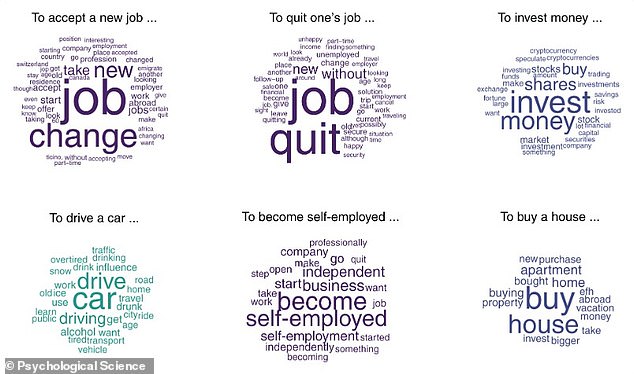
Scientists created visual representations of the most prevalent dangers through word clouds. The largest and most noticeable words were issues such as 'changing jobs,' 'leaving a job,' and 'investing money,' whereas less common risks were displayed in smaller font around these main terms.
The leading responses showed a high degree of consistency throughout the population examined, although researchers identified some variations when they focused on particular groups.
The perceived importance of different risks was notably shaped by individuals' ages and gender.
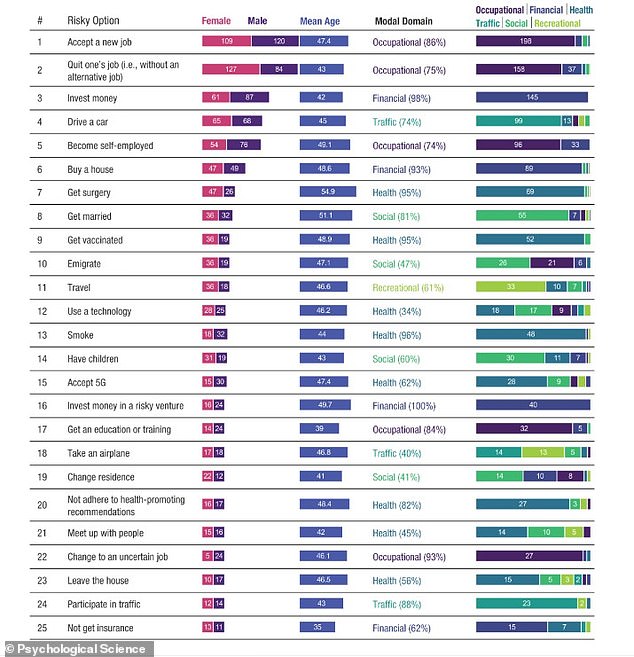
The uncertainty of "Should I leave my job?" decreased with age for both genders, whereas "Should I take a new job?" continued to be a major issue for younger individuals.
Men aged 60 and older often worried about the potential health impacts of 5G technology, whereas individuals between 30 and 44 were more focused on undergoing surgery and planning trips. These topics did not rank in the top five most common concerns for women.
Women aged 15 to 29 and 45 to 59 often thought about whether to seek particular education or training, whereas women between 30 and 44 were more likely to consider marriage. These two options were not among the top five choices for men.
Survey respondents also voiced worries regarding the use of emerging technologies, such as 5G, as a potential health hazard. The research did not clarify which specific new technology they were most anxious about, although it might pertain to the application of AI in healthcare, genetic screening, or wearable health devices.
Work-related challenges were the leading cause of risk, accounting for almost a third (32 percent) of all decisions shared. Health issues (18 percent) and financial matters (17 percent) came next, with social (13 percent), traffic (12 percent), and leisure (nine percent) factors completing the main difficult choices individuals encounter.
The research also indicated that the idea of certain individuals being 'risk-takers' and others being 'risk-averse' in their thinking and actions might not be accurate.
The results showed that an individual's tendency to engage in risky behavior can vary significantly based on the type of decision being made.
For instance, an adrenaline seeker might frequently engage in skydiving, a leisure activity involving risk, yet remain highly cautious about their well-being, for example, by avoiding medication.
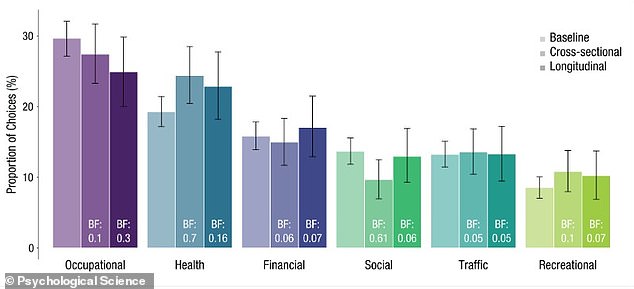
An individual's overall risk preference was a poor indicator of their real decisions, demonstrating that someone who takes chances in one area of life may be very cautious in another.
Scientists also examined if a significant worldwide crisis, the Covid pandemic, significantly altered the kinds of risky decisions individuals encounter. They discovered that it did not.
The top 100 life challenges continued to be mostly unchanged.
Scientists noted a number of constraints in their research. The primary limitation was that the participants came from Switzerland, "a highly secure nation with, for example, a minimal crime rate."
The nation also possesses a significantly distinct healthcare financing system.
In Switzerland, health insurance is required for everyone, emphasizing comprehensive coverage provided by licensed private companies.
Although the monthly fees represent a major household cost, the system includes a backup plan.
All expenses paid by individuals throughout the year are legally limited, indicating that while a serious illness could put a family's finances under pressure, it is highly improbable to result in complete financial collapse.
In the United States, individuals encounter the highest healthcare expenses globally. The US does not have Switzerland's universal requirement or stringent limits on out-of-pocket payments.
As a result, medical expenses are a major reason for personal bankruptcy in the United States, a situation that is almost unheard of in Switzerland.
The research was released in the publicationPsychological Science.
Read more- What is causing the constant anxiety that is affecting Britain's millennials, leading them to express extremely high levels of concern during a challenging period of rising living costs?
- Are your initial life decisions leading you toward dementia? Discover the concealed dangers in this insightful research.
- What are the primary anxieties that retirees encounter in the UK, as per a Natixis study?
- What major changes have individuals under 50 in Britain identified as their primary worries, within a context of financial pressure and political transformation?
- Why are young workers in the UK nearing a turning point in their health-related careers?