
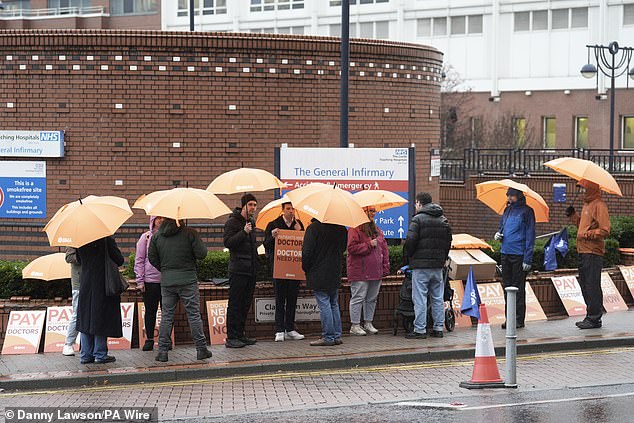
The backing of resident doctors for strikes seems to be decreasing, with more returning to their duties today compared to earlier protests, according to health officials.
A brief survey of trust chief executives byNHSProviders indicate that the majority of scheduled care proceeded as only a small number of medical staff participated in the industrial action.
Over three-quarters showed up for their shift in certain areas, while the number of people on picket lines nationwide was significantly lower, as reported by other sources.
A manager mentioned that it seemed most people had decided to work or remain at home instead of waiting outside hospitals in the rain.
Wes Streetingaccused the British Medical Association of causing suffering and hardship to patients, and holding them hostage with their request for an additional 26 percent salary increase on top of the 28.9 percent that resident doctors have already received over the past three years.
The heath secretaryInformed LBC radio that the five-day strike, which began today, will 'set us back' and cautioned that union 'activists' are 'harming' the NHS's recovery.
The strike authorization of the BMA ends on January 6, but officials are planning to increase the protests by organizing a walkout each month in the coming year, provided members approve additional industrial actions, as reported by the Guardian.
Conservative leader Kemi Badenoch stated today that she would prohibit medical professionals from striking if she held office.
During a visit to Essex, she remarked: "A year ago, the Health Secretary claimed he had resolved the strikes and there would be no further ones."
He granted medical professionals a 28 percent salary increase – which is higher than what any other public sector employee received, let alone those in the private sector. This marks their second strike.
It is endangering the health and safety of patients. Conservatives would merely prohibit doctors from striking.
Mr. Streeting engaged in a vigorous discussion with a physician named Niraj, based in Harrow, North London, during an LBC phone-in, where he claimed that medical professionals should 'take responsibility' for the harm inflicted on patients due to the strike.
Niraj informed Mr Streeting, "we all prioritize patient safety, none of us wish to be on strike, I would prefer to be at work today," while highlighting concerns about insufficient training opportunities and other staffing challenges.
Mr. Streeting responded, criticizing the BMA for 'reprehensible actions,' and stated, 'To threaten patients and go on strike, delaying the NHS, because you believe we aren't moving quickly enough, and because your union's leadership aren't truthful about the fact that some changes require time, is highly irresponsible.'
Stop pretending you don't want to be on strike, because that's precisely where you are. You made this decision, accept it and face the consequences it will have on your patients.
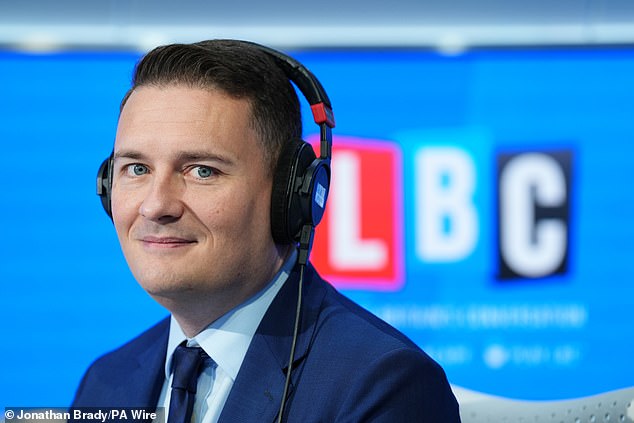
Mr. Streeting stated that the BMA "should have had the bravery to present the offer I provided them to their members," which involves additional training positions and financial support for out-of-pocket costs like examination fees.
He stated: "I don't think the BMA represent their members. I believe they are speaking on behalf of their activists."
Those advocates are harming the NHS's recovery, causing disturbances in patients' lives, and they must face the outcomes of their actions.
A five-day protest marks the 13th walkout by medical professionals since March 2023, with the previous strike in July reportedly costing the healthcare system £300 million.
Approximately half of the medical staff in the NHS are resident doctors, who may have as much as eight years of experience as hospital physicians or three years as general practitioners.
The NHS intends to maintain at least 95 percent of the scheduled operations across five days.
The most recent time resident doctors went on strike, over 54,000 procedures and appointments had to be postponed or rearranged, even though the NHS managed to keep 93 per cent of scheduled activities running.
Nick Hulme, the chief executive of the East Suffolk and North Essex NHS Foundation Trust, stated that the organization is conducting 99 percent of planned surgeries and 97 percent of outpatient appointments, and is noticing indications that staff are opting against striking.
He said to BBC Radio 4’s Today programme: 'We are currently verifying this morning with both hospitals to determine the figures, but we are noticing an increased number of (resident doctors) returning, and I believe this indicates a shift in attitude among other healthcare workers, as well as our resident doctors, that their feeling is clearly one of frustration regarding the ongoing conflict, but I think they are showing their support by coming back to work.'
We don't have the exact figures yet, but I have a feeling, and especially during the last strike, we noticed more people returning than in earlier industrial actions.
Daniel Elkeles, the head of NHS Providers, which advocates for NHS trusts, stated: 'I believe many are expressing, "I don't agree, I'll be at work."'
Professor Meghana Pandit, the national medical director of the NHS, stated during a BBC Breakfast appearance that there would be consequences for patients, noting, "Every strike is truly devastating for the NHS."
However, she encouraged patients to continue seeking treatment and to attend their scheduled appointments unless instructed otherwise.
Read more- NHS at Risk: Might Upcoming Doctor Strikes Threaten Patient Care as Public Support for Protests Grows?
- Could the strikes by resident doctors lead to chaos within the NHS and bring about further 'misery and disruption' for patients across the country?
- Is public sentiment turning against NHS trainee doctors as they get ready for a possible six-month strike?
- Could a Labour-led NHS face turmoil this summer, with trainee doctors planning up to six months of strikes due to pay disputes?
- Is public backing for NHS strikes declining as trainee doctors receive a salary increase that outpaces inflation?