
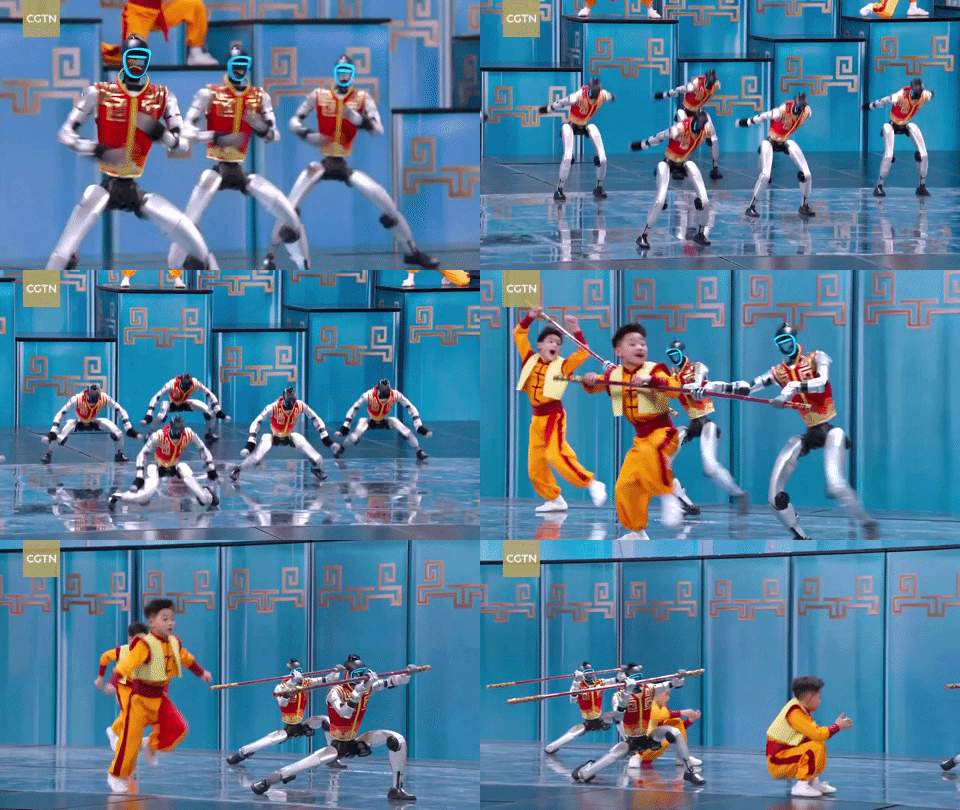
Nunchaku, techniques involving intoxication, and non-stop one-legged aerial cartwheels... On CCTV's Lunar New Year special television program *Spring Festival Gala*, which was viewed by 670 million people out of China's 1.4 billion population on the 16th, humanoid robots developed using Chinese native technology continuously executed complex military exercises. Elon Musk, CEO of Tesla, stated at last month's Davos Forum, "There will be more robots than humans," highlighting significant changes in the workforce.
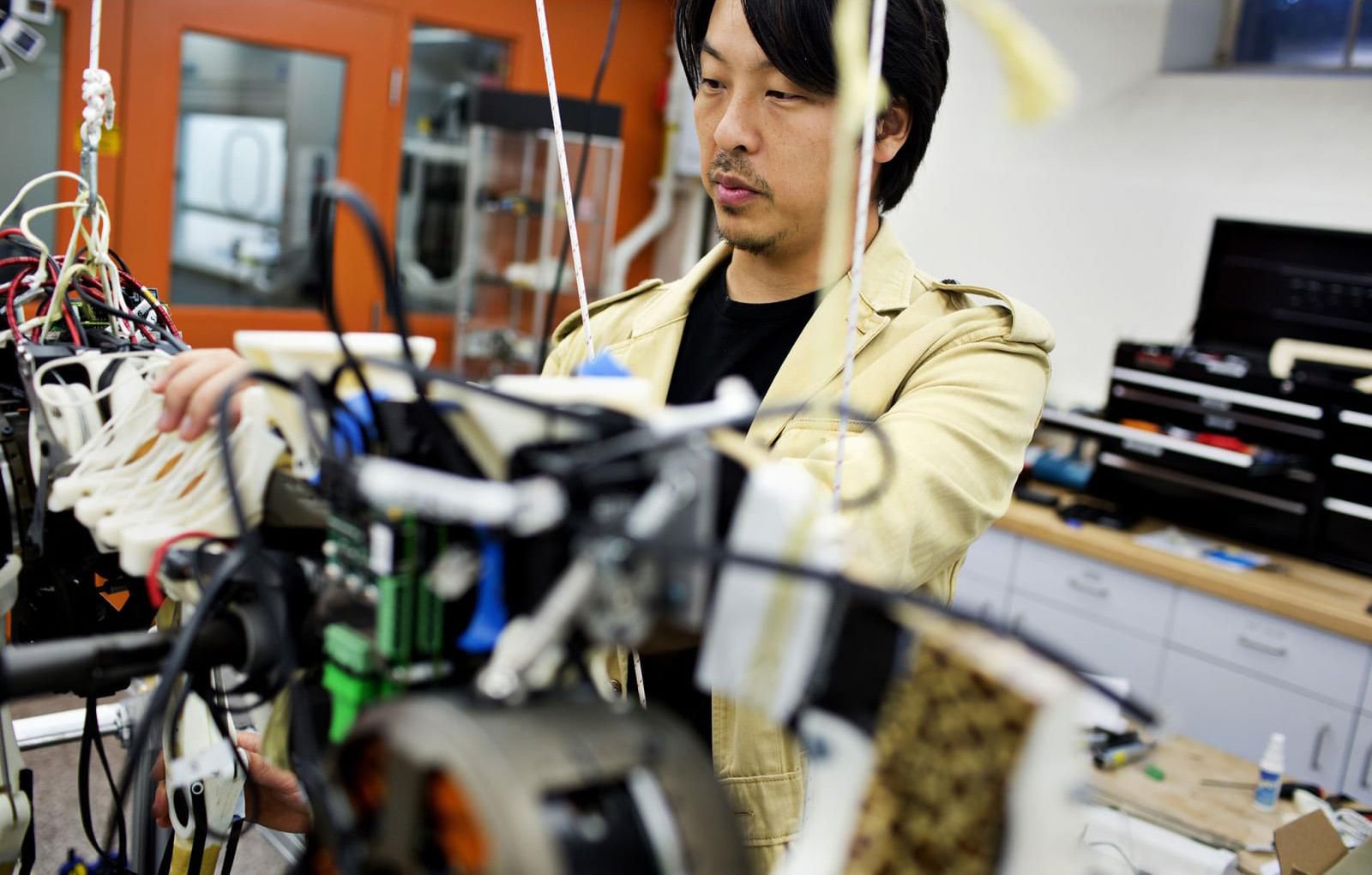
Although generative AI last year enabled people to directly experience the progress of AI through text and images, this year the focus is changing towards robots that can move and work in real-world settings. At the same time, there are growing expectations and worries about robots taking over human jobs. Has the time come when robots will truly replace human labor? WEEKLY BIZ interviewed Professor Kim Sang-bae from the Department of Mechanical Engineering at the Massachusetts Institute of Technology (MIT) to discuss the current state and future of physical AI and humanoid robots. Kim is known as a leading expert in bio-inspired robotics, using insights from animal movements, muscles, and senses to develop robots capable of running, jumping, and interacting with objects in real environments.
◇ "Can't Disregard Popular Opinion"
-Why are robots designed to imitate animals or human-like robots created?
If humans had never observed birds in flight, would they have ever conceived the idea of flying? Assuming a world devoid of animals, I believe we would not have even considered developing robots. In terms of humanoid robots, the field of robotics has been discussing this for more than 30 years without reaching a definitive answer. Nevertheless, humanoids are undeniably appealing. Firstly, the current global environment is tailored for humans. There's also an emotional aspect: individuals tend to feel more at ease with robots that resemble humans.
-What makes the emotional component significant in developing robots?

Following the 1984 film *The Terminator*, robots were perceived as machines designed to kill humans, which made it challenging to obtain funding for robotics research in the U.S. for approximately two decades. As a result, it became an informal practice among robotics scientists to use the term 'cyber system' rather than 'robot' in their proposals. This might seem ridiculous, but in the 2000s, the robot vacuum cleaner 'Roomba' gained widespread popularity, helping to reduce the public's negative view of robots and altering their image.
◇ "Overstatement to Assert the End of Work"
-Can progress in generative AI enhance the intelligence of human-like robots?
It has a major influence. Large language models (LLMs) and vision-language models (VLMs), which comprehend both text and images, constitute more than half of what humanoids need to accomplish. Similar to how humans face difficulties in working without literacy even if they have strong manual skills, comprehension, guidance, and planning are essential. The issue is whether LLMs by themselves are sufficient for humanoids. Their practical performance in real-world scenarios is still uncertain. LLMs and VLMs are trained using internet data—people gather and annotate data in large quantities—but where do we obtain physical data for robots?
- What is the main challenge when implementing physical AI in real industrial environments?
The reliability of robots and the risks of accidents. Robot intelligence has made significant progress over the past 50 years, yet factories still rely on robots with very limited intelligence. This is due to the fact that they have not achieved a level of trustworthiness that is 'good enough.' Recently, some in Korea have said, 'The game is over,' after witnessing Tesla's FSD (Full Self-Driving), but reliability challenges still exist. Tesla vehicles equipped with two motors ('2 degrees of freedom') encounter these issues, whereas humanoid robots function with '40 degrees of freedom' (a far greater challenge as they must handle and manipulate objects). Furthermore, while Tesla gathers real-time data from millions of users each day, collecting field data for humanoid robots is extremely slow. With limited data and high complexity, the road to industrial implementation remains long.
-What is your opinion on Elon Musk's comments regarding robot development and the conclusion of human work?
I believe the idea that an era without labor is approaching soon is somewhat overblown. Entrepreneurs and researchers hold varying viewpoints, which leads to differing opinions and statements. However, since Musk has accomplished what was once considered impossible, such as SpaceX's space missions and Tesla's electric cars, his statements are taken seriously by many. Recently, viral videos featuring human-like robots performing joint movements have made people wonder, 'They will replace humans soon,' but the real-world commercialization of humanoids is still far off.
- What manual work or roles will humans perform until the end?
Initiatives will begin with physically strenuous, repetitive jobs. Amazon already operates logistics facilities that cover several soccer fields with minimal human involvement—robots handle the movement of items. On the other hand, tasks that involve small, oddly shaped objects and constantly changing environments will require more time. A notable example in the industry is plumbers, who deal with numerous variables.
◇ "China Bridging the Gap with the United States"
- What is the technological divide between the United States and China in the field of robotics?
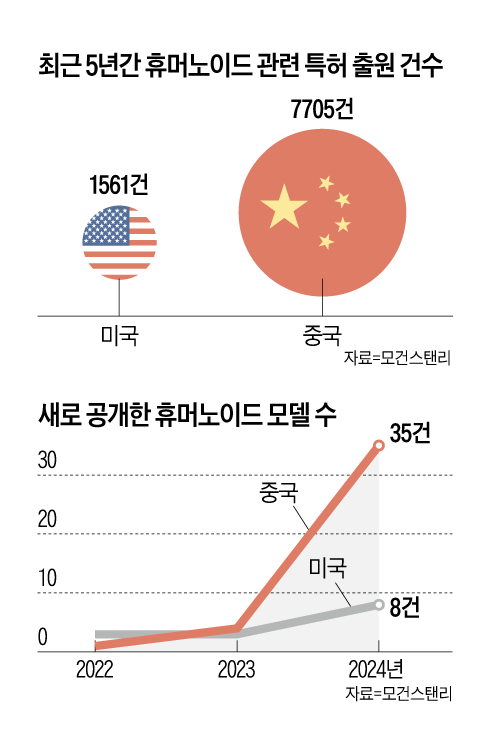
From a technological perspective, I believe China has reached approximately 98% of the U.S. level. The difference is not significant. China's population and the scale of its infrastructure are immense, and its culture of competition combined with cooperation is very powerful. When one company acquires technology, it is quickly disseminated, raising the whole country.
-How did China manage to catch up?
Many players compete at the same time in the Chinese market. Strong competition naturally speeds up the testing of technology and expertise, leading to a structure where methods spread rapidly. In China, when a company achieves success, the results do not remain within the company but often spread throughout the entire industry. This trend has been observed in electric vehicles, semiconductors, and other high-tech areas. When a company improves technology through specific collaborations, the knowledge spreads across the industry quickly. This is different from the information silos typically found in the U.S. or South Korea. This industrial setup works because the outcome of the AI technology race depends on who can collect more data and learn faster what is effective.
-What should Korea do?
Many international manufacturing and service companies are shifting towards using automation to boost efficiency and profitability. For a nation like South Korea, which is experiencing a shortage of workers, robots cannot be ignored. However, adopting robotics as the sole solution too quickly can be dangerous. Although South Korea has been successful as a latecomer for four decades, in areas such as robotics—where there are no established norms or clear solutions—attempting to 'catch up quickly just because it's popular' is challenging. It's not about speed; South Korea needs to make strategic investments and move carefully in directions that align with its strengths to take the lead.
China’s rapid advancement in robotics technology reflects more than just numerical closeness to U.S. standards — it signals a strategic shift in global technological leadership. According to industry reports, China now accounts for more than half of global industrial robot installations, far outpacing the United States in deployment scale. This expansion demonstrates not only manufacturing capacity, but also a deliberate industrial policy that integrates research, commercialization, and national ambition.
While China’s technologies may be measured as close to U.S. levels in many performance metrics, the industrial ecosystem around robotics — including production volume, supply chains, and real-world applications — gives China a distinctive edge. China’s robotics firms are moving from prototypes to mass deployment, supported by coordinated innovation networks and government standardization efforts that streamline development and reduce barriers to commercialization.
At the same time, it’s important to recognize that closeness in technological capability does not automatically translate to global dominance in innovation quality or economic impact. The U.S. still leads in core AI research, advanced components such as high-end chips, and software expertise — strengths that are essential for next-generation robotics breakthroughs.
Overall, China’s progress demonstrates that robotics is no longer solely a U.S. domain. Instead, the competition has entered a multipolar phase, where leadership depends on coordinated industrial strategy, scale of deployment, and ability to turn innovation into economic value. For policymakers and industry leaders alike, the challenge going forward will be balancing technological ambition with responsible implementation, workforce transition, and global cooperation.