
Unprecedented Heatwave Hits England
Britain is experiencing its fourth heatwave of the summer, with temperatures reaching 34°C (93°F) and creating uncomfortable 'tropical nights' where the temperature does not drop below 20°C (68°F) overnight. This heatwave is expected to last for at least a week, prompting concerns among health officials and emergency services.
Beaches and parks across central and southern England are already seeing large crowds as temperatures soar above 30°C (86°F). The combination of high pressure and a southerly airflow has contributed to the rising temperatures. However, this heatwave comes with its own set of challenges, including the risk of isolated thunderstorms and infrequent rain showers during the hot spell.
The Met Office defines a heatwave in the UK as three consecutive days where temperatures meet or exceed a specific threshold. These thresholds vary by region, with Scotland, Northern Ireland, and parts of England requiring a minimum of 25°C (77°F), while central and southern England have higher thresholds, ranging from 26°C to 28°C (78.8°F to 82.4°F).
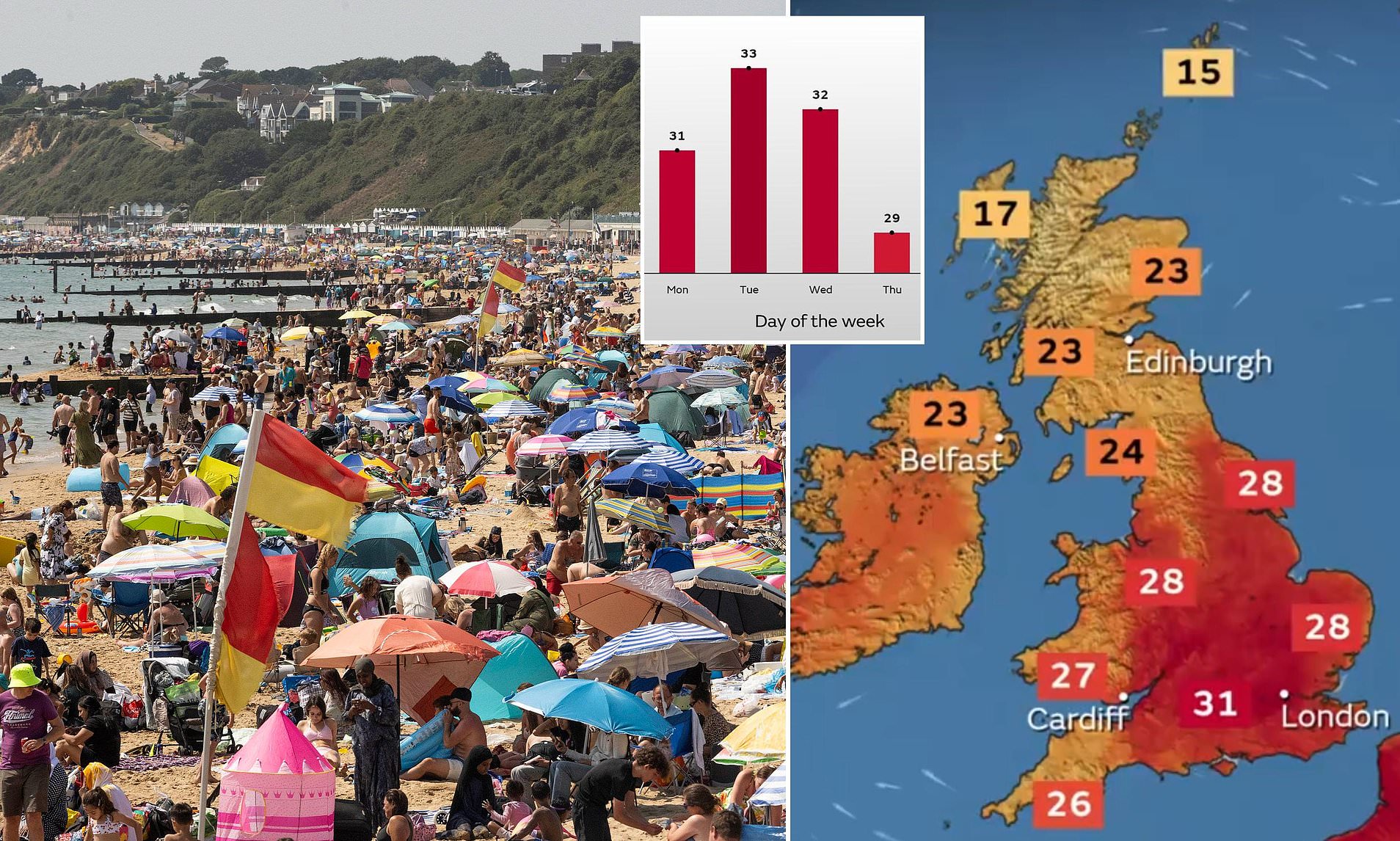
In London, which has a 28°C threshold, the forecast indicates that temperatures will reach at least that level daily until at least Sunday, with a peak of 33°C (92°F) tomorrow. Warm nights are also expected in the South East, with a chance of a 'tropical night' tonight. The UK Health Security Agency has issued a yellow heat health alert from 12pm today until 6pm on Wednesday, covering all regions of England except the North.
Government officials have warned of significant impacts on health and social care services due to the high temperatures. There is a potential for an increase in deaths, particularly among those aged 65 and over or individuals with pre-existing health conditions. The London Fire Brigade has also issued warnings against using disposable barbecues and emphasized the importance of properly disposing of cigarettes and taking rubbish home if no bins are available.
Met Office senior meteorologist Greg Dewhurst explained that the heatwave is primarily driven by high pressure over the southeast of the UK and low pressure over the northwest and west. He noted that while the heat will be most intense in central and southern England, it will not be widespread across the entire country.
According to Dewhurst, the heat is expected to peak on Tuesday, with temperatures reaching around 33°C in central and southern England. While some areas may experience thunderstorms in the afternoon and evening, the majority of the country will remain dry. By Wednesday, the high pressure system is expected to weaken slightly, allowing some low pressure to move in, bringing more cloud cover and a few showers.
Looking ahead, temperatures are projected to peak around 29°C on Thursday, with more cloud cover and occasional showers. A drier Friday with sunny spells is expected before the weekend.
Emergency services have already been responding to the rising heat and ongoing dry conditions. In Dorset and Wiltshire, the fire and rescue service declared a major incident as firefighters battled blazes in Holt Heath and Newton Heath. These fires have been burning since last Sunday and continue to pose a threat to the local area.
While the current heatwave is not expected to surpass the record high of 35.8°C (78.4°F) recorded in Faversham, Kent, on July 1, it still represents a significant challenge for the population. The previous hottest day was 34.8°C (94.6°F) in Cambridge on August 12, 2024, followed by 33.5°C (92.3°F) in Faversham on September 10, 2023. The highest temperature ever recorded in the UK remains 40.3°C (104.5°F) in Lincolnshire on July 19, 2022.
As the heatwave continues, it is crucial for residents to take precautions to stay safe. Staying hydrated, avoiding prolonged exposure to the sun, and checking on vulnerable individuals are essential steps to mitigate the risks associated with extreme heat.