
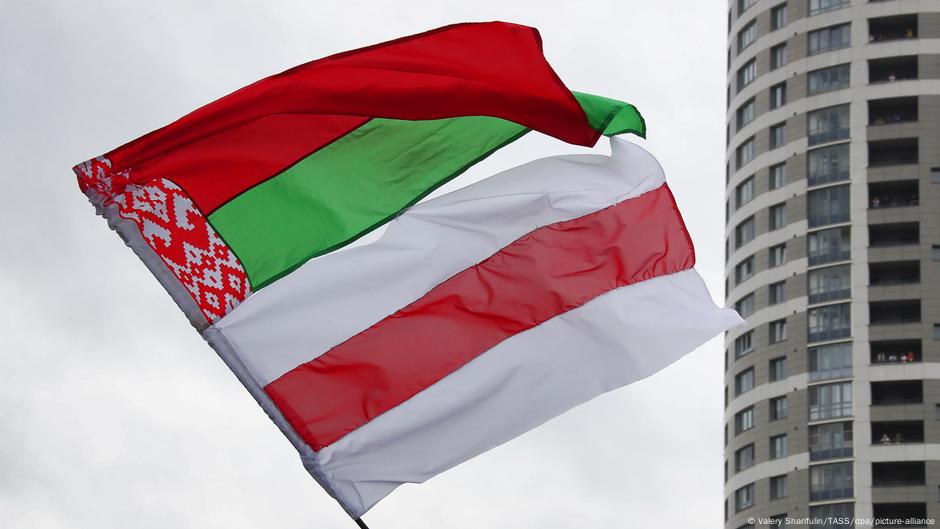
The Unfolding of a Nation’s Struggle
Five years ago, Belarus witnessed the largest protests in its history, an event that shook the foundations of a regime that had been under the control of Alexander Lukashenko for over 25 years. These demonstrations were sparked by the rigged results of the August 9, 2020, presidential election, which was clearly manipulated in favor of the long-standing leader. The people were also frustrated with the government's inadequate response to the COVID-19 pandemic and the arrest of prominent opposition figures and ordinary citizens.
The protests were not limited to one group; they included women organizing marches, students taking to the streets, and a wide range of professionals such as workers, actors, athletes, diplomats, doctors, and teachers expressing their discontent through open letters. In response, security forces unleashed a wave of violence, leading to numerous injuries and even deaths. Many injured individuals were taken directly from police stations to hospitals, highlighting the severity of the situation.
One of the most notable figures during this time was Sviatlana Tsikhanouskaya, a housewife who stepped into the presidential race after her husband, Siarhei Tsikhanouski, was imprisoned. Her story captured international attention, but ultimately, she was forced into exile in Lithuania, marking the end of a promising political journey.
The Role of International Support
Over the years, Lukashenko has increasingly aligned himself with Russia, supporting Vladimir Putin in the war against Ukraine and creating a migration crisis on the border with the European Union. He secured another five-year term in power and shows no intention of stepping down. However, the question remains: could things have turned out differently?
Artyom Shraibman, an expert at the Carnegie Center, argues that the West had little leverage to weaken the Lukashenko regime during those critical moments. From a European perspective, Belarus was seen as a zone of Russian interests, where extreme caution was necessary. If Putin had taken a neutral stance instead of supporting Lukashenko, the situation might have been different.
Erasing the Evidence of Uprising
Five years on, there are no longer digital traces of the mass protests in Belarus. Media outlets that reported on them have either closed or operate from abroad, with their websites blocked by the authorities. Many people have deleted their private photos and videos of the events, fearing that they could be used to identify participants in the protests. Articles, reports, archives, and social media posts have also disappeared, indicating a systematic effort to erase the memory of the uprising.
The scale of repression in Belarus is staggering. According to the human rights center "Viasna," at least 8,519 people have been prosecuted for political reasons since 2020, with over 60,000 people imprisoned. Prominent prisoners include activist and flutist Maria Kolesnikova, who was sentenced to 11 years in prison, and banker and philanthropist Viktor Babaryka, serving a 14-year sentence. Human rights activist Ales Bialiatski, the only Nobel Prize winner currently working in a penal colony, faces deteriorating health conditions.
Ongoing Persecution
Even today, Belarusians are still being persecuted in connection with the 2020 protests. Over 1,700 people have been arrested since the beginning of the year on administrative, criminal, and politically motivated charges. The reasons for detention vary, including being photographed during the protests, liking "extremist" web content, or leaving "incorrect" comments online. Independent media, including zaia news, is classified as "extremist."
In recent months, the regime has released political prisoners in small groups, with more than 300 people released in total. However, the release of these individuals often comes with conditions, as the regime makes it clear that it would exchange political prisoners for concessions from the West. Lukashenko has even declared his willingness to hand over several thousand people, stating, "If you want them, take them! What do you offer in return?"
The West's Role in Supporting Belarus
Artyom Shraibman believes the West could do more to support people in Belarusian prisons. He suggests that negotiating more actively for the release of these individuals and offering Lukashenko concessions in terms of his reputation and diplomacy could make a difference. In theory, Western countries could consider lifting some sanctions to reach an exchange with Lukashenko to end the migration crisis and release political prisoners.
However, such steps are unlikely to radically change the situation in Belarus. Instead, they could improve the prospects of individual victims of the regime. Their fates are largely in the hands of the West. However, since Belarus has not been and is not a priority, there has been no sign of serious willingness to get involved so far.