
In the aftermath of the August 2025 floods, harrowing scenes emerged from Pakistan's northern valleys. In Buner district, flash floods overnight turned mountain streams into raging rivers. 'It was not just the floodwater, it was a flood of boulders,' recalled survivor Imtiaz Khan, as torrents carrying 'hundreds of boulders' smashed through Pir Baba village, flattening 60-70 homes in minutes.
Climate scientists warn that this devastation is a brutal preview of our future. The rains that fueled Pakistan's 2025 floods were measurably more intense because of global warming. Studies find that the monsoon downpours Pakistan experienced are roughly 15-22% heavier today than they would have been without humanity's 1.3°C of warming.
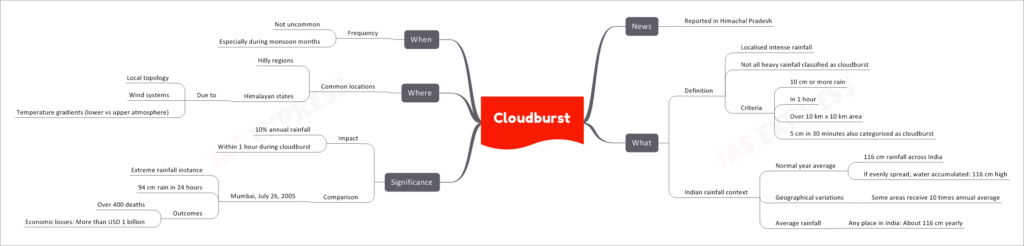
Warmer mountain air holds more moisture, fueling sudden cloudbursts, violent, unpredictable deluges once expected decades from now are already appearing in 2025. In the Hindu Kush-Himalaya, these extreme downpours have become routine: Bajaur and other northern districts lost more than 540 people this summer. A quieter but equally grave threat are glacial lGlacial Lake Outburst Floods occur five times more often than before 1950, and over 400 vulnerable lakes now threaten hundreds of thousands downstream.
Even before the climate emergency, weak planning amplified the toll. Nearly half of Pakistan's urban residents live in informal settlements on floodplains, riverbanks or dry riverbeds, and the recent NDMA findings show a majority of the 300+ 2025 flood fatalities resulted from house collapses. Building codes are poorly enforced, wetlands and natural drainage are paved over, and deforested slopes shed water and trigger landslides. Early-warning systems and community preparedness remain patchy; many villagers still learn of dangers only by word of mouth or last-minute mosque announcements, leaving families with precious little time to flee. Breaking this vicious cycle requires transformative action at every level. Reforesting hillsides and restoring wetlands can dramatically slow floodwaters. Trees absorb rain and anchor soil; wetlands act as natural sponges. Studies of previous Pakistan floods recommend 'nature-based solutions (e.g. reforestation, restoring wetlands) that can absorb floodwater. Officials must stop new construction in known flood zones. As the World Weather Attribution team and Red Cross experts underline, 'building flood-resilient houses and avoiding construction in flood zones will help reduce the impacts' of heavy rain. Cities like Islamabad or Karachi should strictly enforce building codes and relocate informal settlements away from riverbanks and dried-up streambeds.
Pakistan must invest in modern meteorological forecasting and community alerts. Upgrading weather radars and satellite data is vital in the mountainous north, where signals often fail. Crucially, local agencies and NGOs should be funded to teach villagers how to respond. Piloting micro-warning networks in vulnerable valleys could ensure hours-not-minutes of evacuation time.
Better flood management requires clear leadership and transparent financing. The National Disaster Management Authority's 2025-2030 strategy calls for anticipatory action and anticipatory governance, but implementation has lagged. Pakistan needs a stronger institutional capacity to crack down on corrupt land grabs, enforce building bans, and ensure aid reaches the hardest-hit.
These steps will save lives, but they require funding and political will. Pakistan's economy is strained, so many actions, from reforestation to early-warning upgrades, must be backed by international support. Here is what the world must deliver: Adequate climate finance. Pakistan's needs are immense, yet it contributes less than 1% of global emissions. The World Bank and UN estimates put Pakistan's adaptation needs between now and 2030 at over $150-300 billion. In reality, global flows have fallen catastrophically short. As of 2024, the Green Climate Fund had disbursed barely $249 million to Pakistan.. At COP30 and beyond, Pakistan must demand that industrialized nations honor their pledges: triple or quadruple the $100bn promised (post-2025 New Collective Quantified Goal) and channel a fair share to high-risk nations. Finance must be fast, predictable, and suited for poor communities (grants, not loans).
A fully operational Loss and Damage fund. At COP27, the world finally agreed to set up a Loss and Damage facility for climate disasters. Pakistan, which has led calls for it, must insist that the fund become fully functional immediately. This means not only creating the fund, but ensuring wealthy emitters pay into it. As SDPI experts argue, contributions must reflect 'climate justice,' with resources disbursed transparently to help countries like Pakistan recover from catastrophic floods. Pakistan should use every forum, from UN talks to bilateral meetings, to press the case that historic polluters owe compensation for the flooding their emissions helped produce.
Compensation and debt relief. In the short term, Pakistan could also seek debt relief or special drawdowns for climate disasters. Pakistan should call instead for grants or debt swaps tied to resilience-building.
Fair carbon markets and technology transfer. As Pakistan engages in global carbon markets (Article 6 of the Paris Agreement), it should negotiate terms that favor vulnerable economies. Credits should be generated by preserving Pakistani forests or installing clean energy, with revenues helping its people, not siphoned off to enrich others. More broadly, Pakistan should press industrial nations and tech companies to share climate-resilient technologies: flood-proof housing designs, avalanche-resistant roads, and state-of-the-art forecasting tools.
Global responsibility is non-negotiable: as UNEP reminds us, Pakistan emits under 1% of global CO2 yet has suffered tens of billions in flood losses, so rich countries must both cut emissions and deliver scaled-up, fast finance, grants, not loans for adaptation, loss and damage, and to 'build back better' with equity at the centre. Pakistan has shown remarkable resilience, farmers replanting, teachers running schools from tents, but it cannot absorb repeated catastrophes alone.
Provided by SyndiGate Media Inc. (Syndigate.info).