
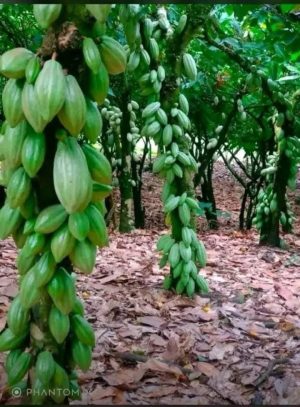
The Struggle and Hope in Ghana’s Cocoa Industry
Ghana's cocoa industry is currently facing a significant crisis as production levels continue to decline. According to the Ghana Cocoa Board (COCOBOD), the 2023/2024 season saw a drop in production to just 530,873 metric tons, which is the lowest output in 15 years. This is a stark contrast to the over one million metric tons recorded during the 2020/2021 crop year. As the world’s second-largest cocoa producer, Ghana is grappling with several challenges that threaten the stability of its cocoa sector.
The primary issues include the impacts of climate change, illegal mining that devastates farmlands, and the spread of Cocoa Swollen Shoot Virus Disease (CSSVD). These factors have led to unproductive farms and unstable incomes for farmers. Over the years, the government, through COCOBOD, has introduced various interventions to address these challenges, including the National Cocoa Rehabilitation Programme launched in 2020. The initiative aimed to cut down diseased trees, replant with improved varieties, and provide compensation and technical support to farmers.
However, the implementation of these programs has been slow. By 2024, only 40,000 hectares out of an estimated 156,000 hectares of affected farms had been fully rehabilitated and returned to farmers. Another 27,000 hectares were abandoned mid-way due to funding constraints.
A New Hope: Hand Pollination
Despite these setbacks, one intervention has shown promise: hand pollination. Natural pollination of cocoa occurs through tiny insects called midges, but this process often results in low and inconsistent yields. Hand pollination involves manually transferring pollen between cocoa flowers, which has proven to significantly boost yields.
In 2017, COCOBOD piloted hand pollination as part of its Productivity Enhancement Programmes to increase pod development and raise yields to over 1,000 kg per hectare. However, adoption remains limited due to inadequate farmer training, low awareness, and resource constraints. Despite this, some farmers have embraced the technology and are already reaping the benefits.
Experts believe that scaling up hand pollination, alongside climate-resilient practices and stronger extension services, could play a pivotal role in reversing Ghana’s cocoa production decline and restoring farmer incomes.
Impact on Yields
When combined with good agronomic practices such as pruning and the correct application of fertilizer, hand pollination can significantly increase yields. On average, a cocoa tree produces about 30 pods per season, but with proper techniques, a single tree can produce up to 200 pods.
Mr. Philip Boakye Appiah, a farmer at Akrodie near Goaso in the Ahafo Region, was awarded Best Cocoa Farmer for the Bono, Bono East, and Ahafo Regions in 2019. He is one of the few farmers who have embraced hand pollination. His 12-acre farm, which previously produced only 50 to 60 bags of cocoa, now yields approximately 140 bags—a remarkable improvement made possible by the adoption of hand pollination.
Another farmer, Charles Gyamfi, described hand pollination as a “game-changer” and urged COCOBOD to prioritize its nationwide scale-up. He has 20 permanent workers dedicated to hand pollination across his farms, which cover about 400 acres in the Ahafo Region.
Job Opportunities and Economic Growth
Beyond boosting yields, hand pollination is creating vital jobs, particularly for women. Many have been trained and employed to carry out this artificial crossbreeding process. During the pilot phase in the 2019/2020 season, COCOBOD recruited around 30,000 pollinators across cocoa-growing regions.
Ramatu Mohammed, a 37-year-old nursery operator in Goaso, Ahafo Regional capital, is reaping the benefits of a new opportunity as a trained cocoa hand pollinator. She earns a steady income through this initiative and encourages others—especially young unemployed women in cocoa-growing areas—to learn the skill and earn a decent living.
Decline in Natural Pollinators
Climate change is worsening the decline of midges, the tiny insects that naturally pollinate cocoa. These insects thrive in moist environments, but rising tropical temperatures are shrinking their habitats. The Goaso District Cocoa Officer, Eugen Amoah, warns that hand pollination is no longer optional. Farmers should be willing to hire pollinators if they want higher yields.
Clearing Misconceptions
One common misconception is that hand pollination causes cocoa pod abortion and reduces yields. Mr. Amoah dismisses this, explaining that pod drop can be caused by extreme heat or when trees bear more pods than they can sustain. Farmers must apply the right amount of fertilizer after pollination to sustain the pods. Hand pollination, paired with good agronomic practices, is a proven way to adapt to climate change and protect cocoa yields.
Conclusion
Hand pollination may not be a silver bullet, but the results speak for themselves. Paired with sound agronomic practices, it can help Ghana’s cocoa farmers combat climate change, revive declining yields, and create new jobs. In a season marked by record-low output, hand pollination stands out as a beacon of hope—a reminder that with the right tools and commitment, the future of Ghana’s cocoa industry can still be sweet.