
A Hub of Futuristic Thinking
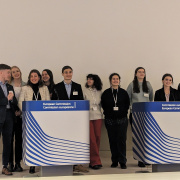
On Friday, July 18, 2025, the Faculty of Journalism and Media Studies at the University of Media, Arts and Communication (UNIMAC-IJ) became a hub of futuristic thinking. The campus hosted the Futuristic Africa Youth and Technology Symposium (FAYATS), an event that aimed to bridge the gap between traditional journalism and the rapidly evolving world of Artificial Intelligence (AI). This symposium was organized in collaboration with EMATECH Academy International (USA) and focused on preparing the next generation of media professionals for the digital age.
The Speaker and His Vision
The centerpiece of the event was an engaging keynote address by Mr. Ebako Mukwele, CEO of MKNet Consulting LLC and EMATECH Academy International. His lecture, titled “Igniting Change and Empowering the 21st Century Students with Innovative IT Solutions for Sustainable Development,” challenged students to see the powerful instruments they carry daily: their smartphones. He emphasized that these devices are not just for social media but are potent tools for global connection and innovation. “My goal is to educate the young generation on becoming experts in 21st-century technology,” Mr. Mukwele declared, setting a powerful tone for the day. He argued that for Africa to progress, its youth must not only consume technology but also become creators and experts in using it to solve local problems.
AI’s Role in the Modern Newsroom
Mr. Mukwele delved deep into the practical applications of AI in journalism. He demystified AI, explaining how AI can serve as invaluable assistants to journalists. He stressed that these tools are not here to replace reporters but to augment their abilities. “AI can significantly enhance accuracy and authenticity in reporting,” he explained. He urged the aspiring journalists in the audience to leverage AI tools for crucial tasks like editing articles, verifying information, and analyzing large datasets before dissemination. The core message was clear: AI is an ally that can empower journalists to produce higher-quality, fact-checked content more efficiently, freeing them up to focus on in-depth investigation and storytelling.
A Lively Dialogue: Questions and Perspectives
The lecture was followed by a lively question-and-answer session, which highlighted the mix of excitement and apprehension among the attendees. Mr. Emmanuel Adjetey, a participant, raised a thoughtful point about the challenges AI poses to journalistic integrity, even while acknowledging its immense benefits in data analysis. His question sparked a discussion on the ethical responsibilities that come with using these new technologies. The positive impact on students was palpable. Miss Celestine, a level 300 student, shared her enthusiasm after the event. “I really enjoyed the program,” she said. “It was very educational, and I learned that AI is not that bad after all.” Her comment captured the sentiment of many who entered with skepticism but left with a newfound curiosity.
A Student’s Reflection: My Takeaway from FAYATS
As a student of journalism at UNIMAC-IJ and an attendee, the symposium was more than just a lecture; it was a call to action. Initially, the concept of AI felt distant and perhaps even threatening to the creative craft of journalism I am learning. However, Mr. Mukwele’s presentation transformed that perception. Hearing him demonstrate how AI could be used for the tedious work of fact-checking and data sifting made me realize its true potential. It’s a tool that can handle the “heavy lifting,” allowing us, the future journalists, to focus on the human elements of our stories: the interviews, the emotional context, and the ethical framing. I left the symposium not with fear of being replaced, but with the ambition to master these tools to become a more effective and efficient journalist.
A Promising Future
The symposium concluded with remarks from Professor Etse Sikanku, Dean of the Faculty of Journalism and Media Studies (FOJAMS). He expressed his satisfaction with the event and his hope for the students. “I hope my students gained knowledge and will start using AI effectively,” he stated. FAYATS 2025 succeeded in its mission. It ignited important conversations, equipped students with practical knowledge, and reinforced the importance of adapting to technological advancements. For the youth of Africa, the message was empowering: the future belongs to those who dare to innovate, and by embracing AI, we can lead the charge toward a smarter, more connected continent.
Conclusion: A Call to Action
The Futuristic Africa Youth and Technology Symposium concluded with a powerful message: the future belongs to those who dare to innovate. For journalism students like myself, this means embracing AI not as a replacement for human insight but as a powerful amplifier of our capabilities. As Africa strides toward a more connected future, initiatives like FAYATS play a crucial role in equipping young professionals with the knowledge and confidence needed to thrive in an increasingly digital world. The symposium reminded us that we are not just passive consumers of technology where we have the potential to be creators, innovators, and leaders in shaping how AI serves African communities. The challenge now lies in translating these insights into action, ensuring that the enthusiasm generated during FAYATS translates into practical skills development and thoughtful implementation of AI tools in our journalism practice.