
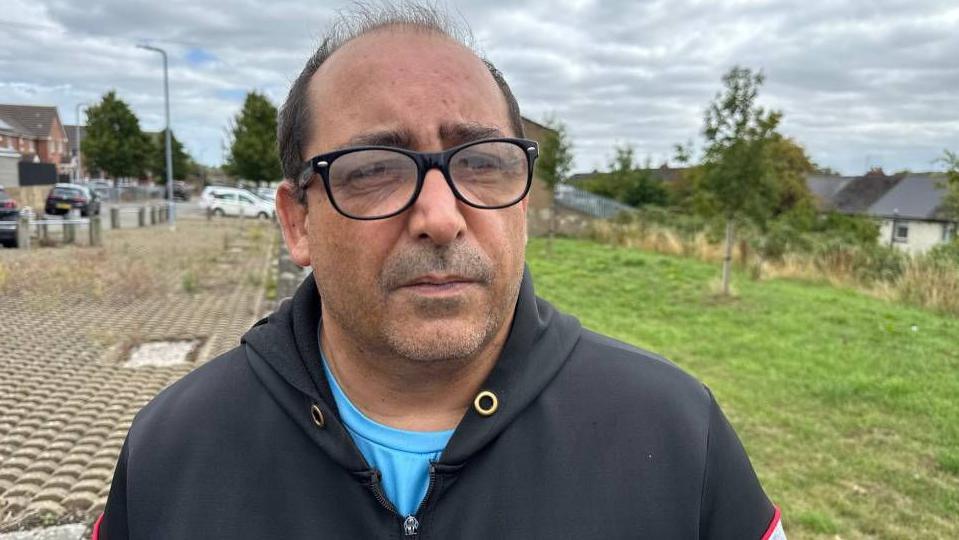
A Man Wrongly Convicted of Murder Loses Legal Battle to Recover Bed and Board Charges
Michael O'Brien, a man who was wrongly convicted of murder in 1987, has lost a legal challenge to reclaim money that was deducted from his compensation for "saved living expenses" during the 11 years he spent in prison. The High Court ruled against his attempt to have the deduction reviewed, marking another setback in his long fight for justice.
O'Brien was one of three men wrongfully convicted in the killing of Cardiff newsagent Phillip Saunders. After being released, he received £692,900 in compensation in 2002, but £37,500 was taken from this amount to cover the costs of his stay in prison. He has since campaigned for the return of this sum, arguing that it was unjust to deduct money for expenses that were not incurred while he was incarcerated.
Despite his efforts, a High Court judge rejected his judicial review, stating that the Ministry of Justice (MoJ) had already processed the deduction before the policy on such charges changed. An MoJ spokesperson confirmed that the practice of deducting bed and board costs from future payouts has been abolished, but emphasized that the change does not apply retroactively.
O'Brien, now 57, described the ruling as a "blow" and expressed frustration over the lack of further legal options. He explained that pursuing an appeal could cost over £100,000, which would be a financial burden he cannot afford. He also admitted to feeling "very angry" about the decision, highlighting the emotional toll of the case.
He was not alone in his struggle. O'Brien joined forces with Paul Blackburn, who spent 24 years in prison for a child murder he did not commit. Blackburn, who was awarded £1,370,500 in 2011, had around £100,000 deducted for similar reasons. Both men applied for additional compensation after a policy change in August 2023, when then-Justice Secretary Alex Chalk scrapped the practice of deducting bed and board costs from future payouts. This followed high-profile cases like that of Andrew Malkinson, who was wrongly imprisoned for 17 years for rape.
However, the new Labour government later stated that those who had already received compensation could not claim back the deductions retrospectively. Despite this, O'Brien and Blackburn were given a week to appeal the latest ruling.
Mr Justice Ritchie dismissed their claim, stating that the applicants had not been discriminated against and that the deductions had already been processed before the policy change. However, legal experts remain critical of the decision.
Andrew Taylor, a Cardiff-based barrister, called the ruling "unfair" and drew parallels between O'Brien’s case and the ongoing fight for justice by former postmasters involved in the Horizon scandal. He suggested that increasing public awareness, much like what happened in the Horizon case, could be an effective next step for O'Brien.
Taylor praised O'Brien’s persistence since his release, noting that the decision might not be the end of the matter. "If you have been convicted of a murder that you didn't commit, nobody recovers," he said, adding that the ruling felt like "another kick in the teeth" for O'Brien.
O'Brien now faces difficult choices. He is considering lobbying MPs to change the law or taking his campaign "onto the streets." He has also spoken about the impact of his fight on his mental health, revealing that he suffers from post-traumatic stress disorder (PTSD). He compared his condition to that of soldiers who served in Iraq, emphasizing the lasting damage caused by the miscarriage of justice.
The case raises broader questions about how wrongly convicted individuals are treated financially and legally. While reforms have been introduced, many feel that retrospective changes are still needed to ensure fair compensation for those who have suffered due to errors in the justice system.
As O'Brien continues his battle, the issue remains a powerful reminder of the long-term consequences of wrongful convictions and the need for systemic change.