
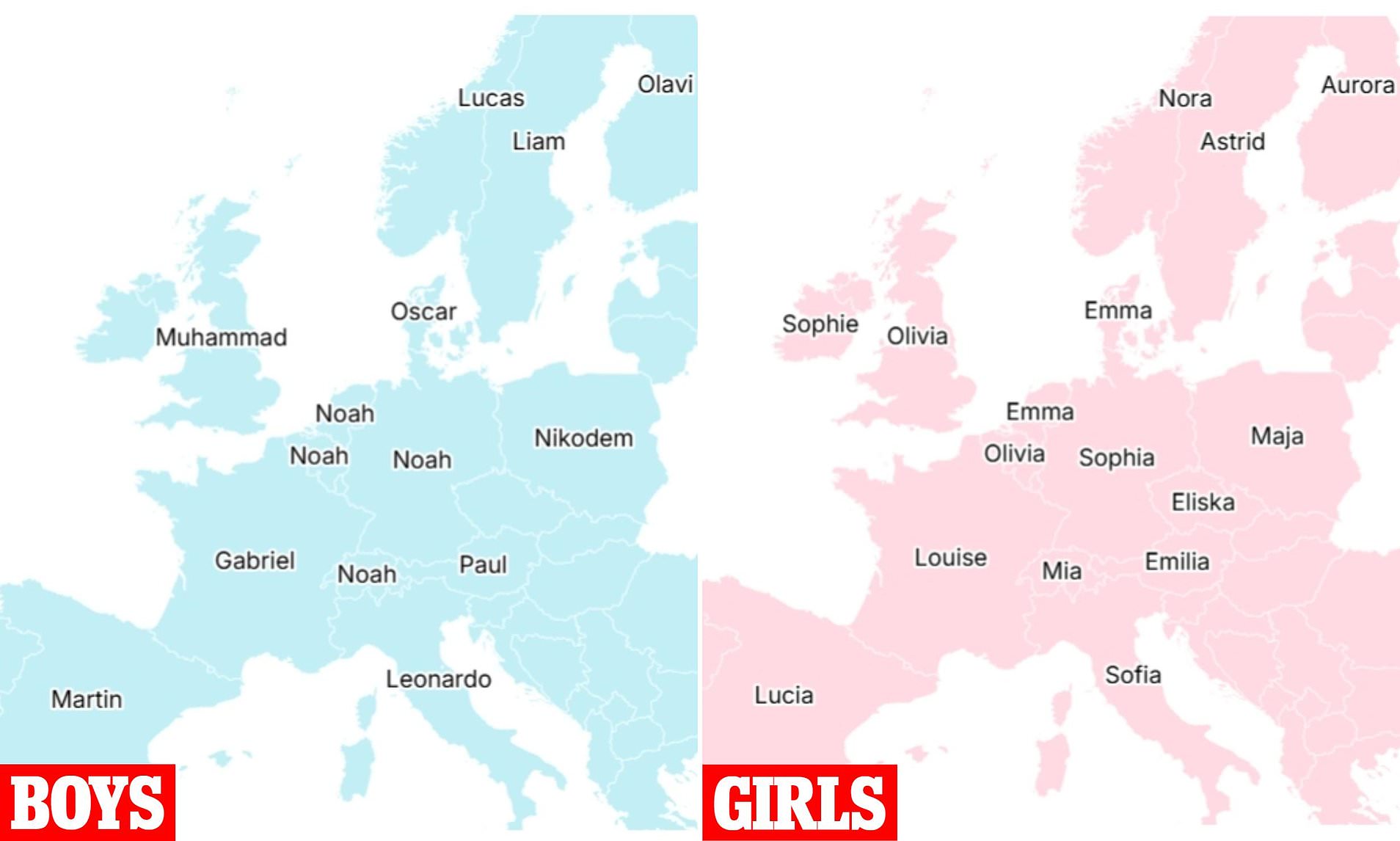
Popular Baby Names Across Europe
The most popular baby names across Europe have been revealed, showcasing a fascinating mix of tradition, culture, and modern influences. From biblical names to international trends, the data highlights how naming practices vary significantly from one country to another.
In Germany, Noah is the top choice for boys, while in France, Louise leads the list for girls. These rankings are based on official statistics and reflect the preferences of parents in each region. The Daily Mail’s interactive map provides an easy way to explore these trends, allowing users to click on specific countries and discover the ten most common names given to both boys and girls.
For girls, Emma and Olivia tied for first place, topping the lists in two different countries each. Meanwhile, Noah has emerged as a strong contender for boys, being the most popular name in four out of the 16 countries analyzed. According to Clare Green, a writer for the baby-naming website Nameberry, Noah may be considered “quite vintage,” but it still feels “fresh” to many parents today. She notes that biblical names are universally appealing and that pop culture has played a role in their resurgence, such as the movie The Notebook.
Cultural Influences and Global Trends
Parents often draw inspiration from various sources when choosing a baby name, including Hollywood, music, and royalty. For example, the popularity of the name Emma surged in many European countries around 20 years ago, likely influenced by Jennifer Aniston’s character in Friends. However, not all names gain widespread appeal. Some Scandinavian names, known for their complex sounds, remain largely confined to their home countries.
Green suggests that the internet and global media are making it easier for names to cross borders. As people travel more and form multicultural families, they often choose names that reflect both cultures. Despite this, some parents still prefer to stick with traditional or unique names that reflect their heritage.
Regional Variations in Naming Practices
Different regions of Europe exhibit distinct naming trends. In countries like Italy and Spain, classic names with religious or historical roots remain popular, reflecting a strong emphasis on family traditions. Conversely, in countries such as Sweden, the UK, and the Netherlands, there is a growing trend toward more creative or international names. This shift is attributed to increased exposure to global media and changing attitudes toward individuality and identity.
The UK, for instance, has some of the most liberal naming laws in the world, similar to those in the US. Parents can choose almost any name, with only extreme cases—such as offensive or harmful names—being restricted. In 2016, a mother in Wales was denied the right to name her daughter Cyanide, a name associated with a poison linked to Adolf Hitler.
Legal Restrictions and Naming Rules
Other European countries have stricter rules regarding baby names. Denmark requires parents to select names from a list of 7,000 pre-approved options or seek government approval. Germany also has gender-specific naming rules, and surnames are banned from being used as first names. France prohibits embarrassing or inappropriate names, as seen in the case of a child named Nutella. Switzerland prevents names that infringe on copyright, such as brands like Mercedes or Chanel.
The Science Behind Baby Names
Beyond cultural and legal factors, science has also played a role in naming decisions. Studies suggest that names that are easy to pronounce are often viewed more positively. A 2012 study found that people with simple names are judged more favorably, as they create a sense of familiarity and likability. Additionally, research has shown that CEOs are more likely to have short, simple names, and that boys with traditionally female-sounding names may face disciplinary issues in school due to social pressure.
Clare Green emphasizes that while parents may consider scientific insights, a baby’s name often reflects the values and background of the parents rather than directly influencing the child’s future.
Methodology and Data Sources
The data presented in this analysis was collected from various official statistical bodies across Europe. It includes only official first names, excluding nicknames or other commonly used names. The following institutions provided the data:
- France: French National Institute of Statistics and Economic Studies (INSEE), 2023
- Czech Republic: Czech Statistical Office, 2024
- Sweden: Statistics Sweden, 2022
- Belgium: Belgian Statistical Office (Statbel), 2024
- Austria: Statistics Austria, 2023
- Switzerland: Federal Statistical Office, 2023
- Germany: Society for German Language, 2024
- Spain: National Statistics, 2022
- Ireland: Central Statistics Office, 2024
- Poland: Statistics Poland, 2024
- Denmark: Statistics Denmark, 2024
- Norway: Statistics Norway, 2024
- Finland: Digital and Population Data Services Agency, 2024
- Italy: Italian National Institute of Statistics (ISTAT), 2023
- Netherlands: Social Insurance Bank (SVB), 2024
These findings provide valuable insight into the evolving landscape of baby names across Europe, shaped by tradition, culture, and global influences.