
A Battle for Katie’s Life
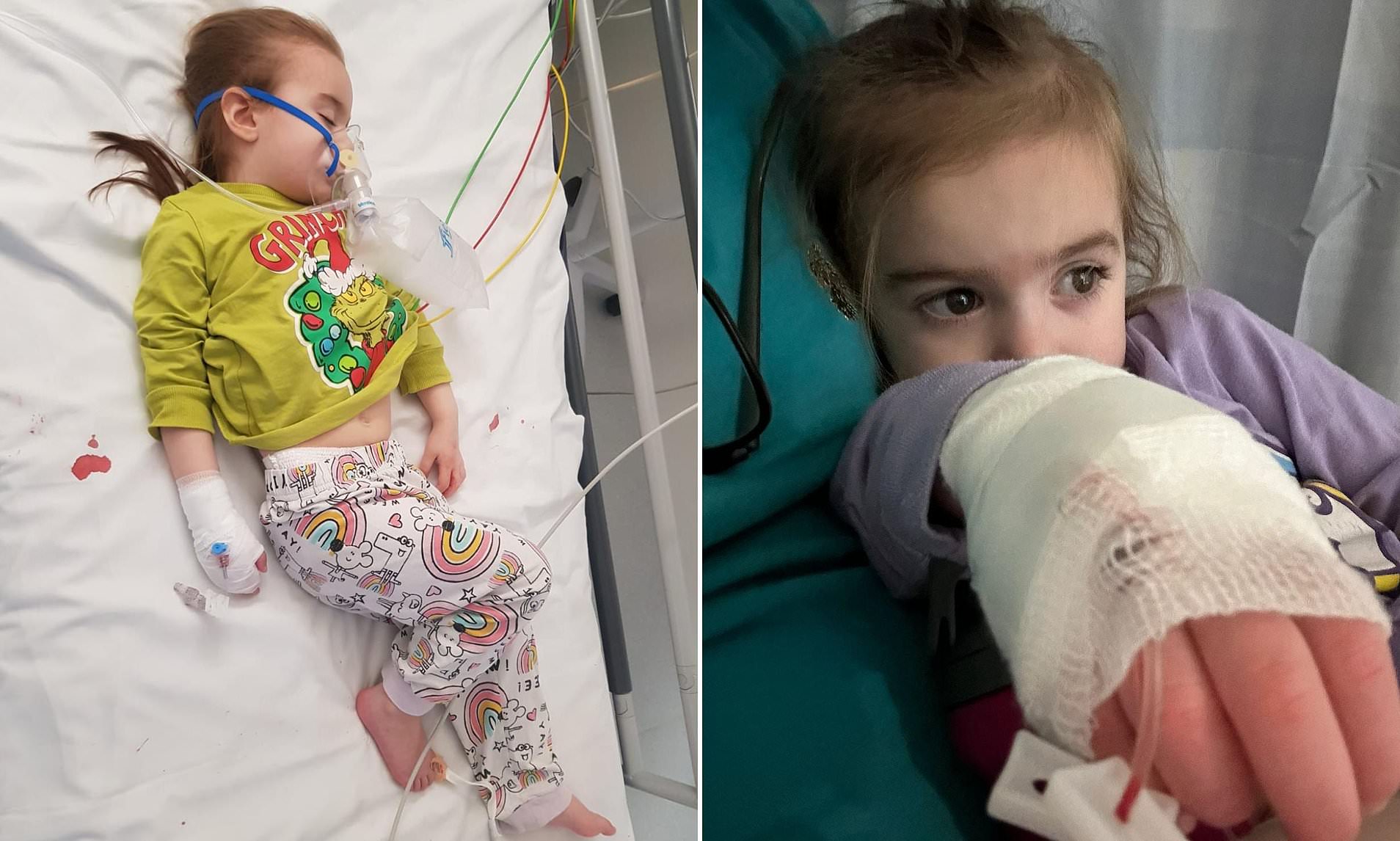
A three-year-old girl, Katie Hughes, is currently fighting for her life after being diagnosed with a rare and deadly genetic illness. What initially appeared to be a fever led to a terrifying seizure, which ultimately revealed the severity of her condition.
Katie was rushed to the hospital after experiencing a severe seizure, but doctors initially attributed it to a high temperature. Her parents, Grant and Jessica Hughes, were sent home with painkillers and reassured that there was no cause for concern. However, the seizures continued, and after her seventh attack, the family demanded answers.
At this point, doctors ordered genetic tests, even though there was no known family history of similar symptoms. The results confirmed a devastating diagnosis: CLN2 Batten Disease, a terminal brain disorder that slowly robs patients of their ability to walk, talk, and see. Doctors have warned that Katie may not live past the age of eight to 12, leaving her parents in a heart-wrenching race against time.
Grant shared his emotional experience, stating, "I'd never even heard of [the disease] before." He recalled the moment when Jessica called him at work, asking him to come home because the doctor wanted to deliver the news together. "I'm not a crying person, but I was tearing up—we were in pieces."
The couple was told about the future challenges ahead, but the full reality of the prognosis was not immediately clear. "They didn't straight away say she was going to die," Grant explained. "I asked them outright what her life expectancy was, and they told me it would be early childhood. It's devastating. It's hard to wrap your head around because she's normal—she's running around fine, but all her skills will slowly go."
A Costly Treatment
While there is currently no cure for CLN2 Batten Disease, a £500,000-a-year enzyme therapy can help slow its progression. This treatment involves administering the medication directly into the brain every two weeks through a permanent device. The National Health Service (NHS) has a special arrangement in place for children who have already started the treatment or can begin it before the end of 2025, according to the NICE website.
However, new patients after this deadline may not be eligible for the treatment, as health officials claim there isn’t enough long-term evidence of its effectiveness, and the cost is too high for the NHS budget. For Katie, this means her parents are now in a desperate race to secure the treatment before the deadline—or find alternative options, such as private care or treatment abroad.
Jessica expressed her anguish, saying, "As a mother, you're always there for your children, and I'm expected to just sit down and slowly watch her deteriorate. It's just hard to see that because she's only three—she hasn't even lived her life yet. She's too young to understand what's happening to her."
Living Every Moment
Katie’s symptoms first appeared in January this year. Despite the heartbreak, her parents remain determined to stay strong for her and her older sister, MacKenzie, who is seven years old.
Jessica added, "Everything is on a timer now. We want to take her to theme parks and Disney World while she can still enjoy it. Even that's not simple—because she's epileptic, we have to pay £100 for special glasses so she can cope with the flashing lights."
The family continues to put on a brave face, but the emotional toll is immense. "We have to be there for her—and for MacKenzie too," Jessica said.
A Community United
To help cover the enormous costs of Katie’s treatment, specialist equipment, and special days out, her loved ones have launched a fundraiser. Grant emphasized their hopes for Katie, saying, "We just want Katie to have the best days we can possibly give her. She deserves to smile, to laugh, and to feel loved every single day we have left."
Katie’s story highlights the urgent need for more support, awareness, and funding for rare diseases. As her family continues their fight, they remain hopeful that every moment they share with her will be filled with love, joy, and precious memories.