
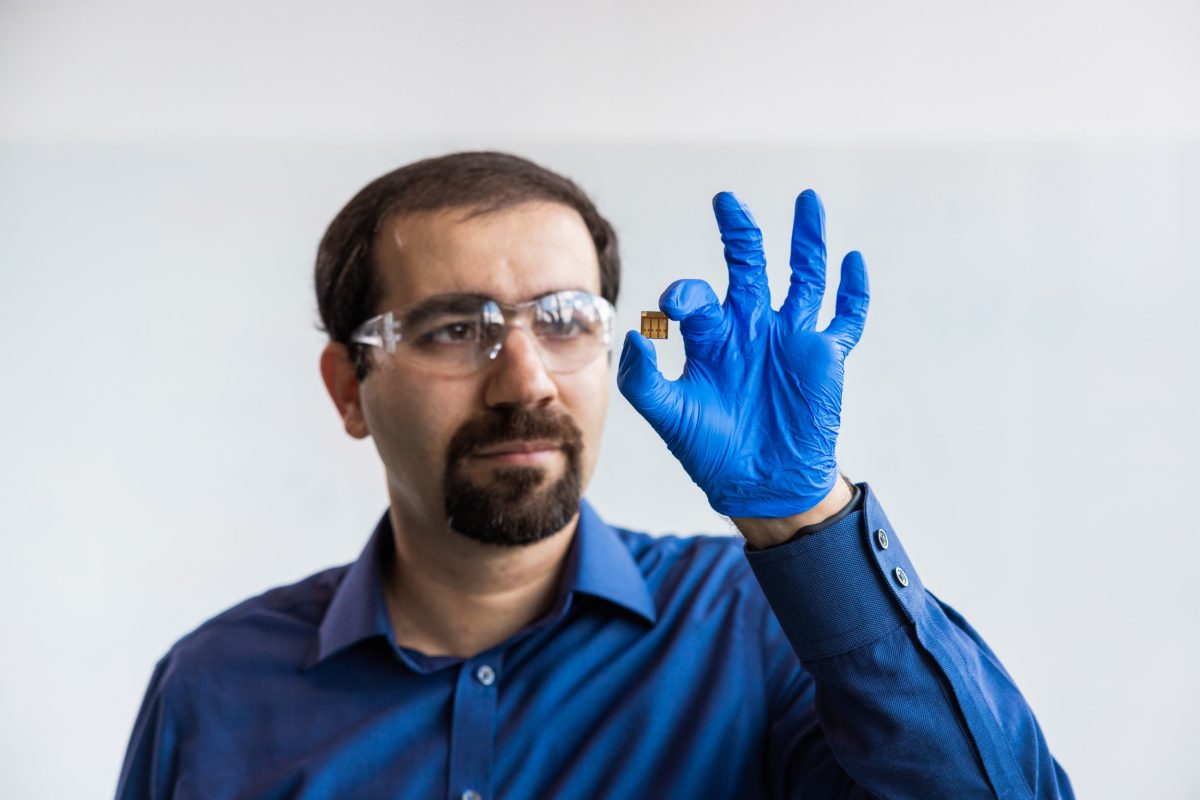
The Future of Home Electronics: Solar-Powered Devices on the Horizon
For years, we’ve all faced the frustration of running out of batteries in our remote controls, smoke detectors, and other household gadgets. This common inconvenience may soon become a thing of the past thanks to groundbreaking advancements in solar technology. Scientists have developed miniature solar panels that can efficiently convert indoor light into electricity, potentially replacing traditional batteries for a wide range of home electronics.
These innovations could revolutionize how we power everyday devices. From radios and keyboards to smoke alarms, fitness trackers, smartwatches, and even hearing aids, the applications are vast. Researchers are already in discussions with developers, aiming to bring these solar-powered devices to market within the next two to three years. The potential extends beyond low-power gadgets—scientists believe the technology could eventually power larger home appliances such as vacuum cleaners and TVs.
How Indoor Solar Panels Work Differently
Unlike traditional solar panels designed for outdoor use, these new indoor solar cells are tailored to harness artificial light. Natural sunlight has different wavelengths than indoor lighting, which makes conventional solar panel materials less effective indoors. However, the newly engineered perovskite photovoltaic cells are significantly more efficient at capturing energy from ambient light.
This breakthrough is particularly important because it addresses a long-standing issue: the inefficiency and high cost of existing indoor solar cells. These new cells are not only more efficient but also more durable, with a lifespan of five years or more—far surpassing the typical few weeks or months of alternative options.
A Breakthrough in Materials Science
The key to this innovation lies in the use of perovskite, a material increasingly used in outdoor solar panels. Unlike silicon-based panels, perovskite can be adjusted to better absorb the specific wavelengths of indoor light. However, it has a major drawback: tiny defects in its crystal structure, known as "traps," disrupt the flow of electricity and reduce efficiency.
To solve this problem, researchers added rubidium chloride, which helps the perovskite crystals form more evenly, reducing the number of traps. Two additional chemicals—organic ammonium salts—were introduced to further stabilize the material, minimizing gaps that interfere with electricity flow. As a result, the cells became significantly more efficient and durable.
Record Efficiency and Long-Term Performance
The research team achieved a world record by converting 37.6% of indoor light (at 1,000 lux, equivalent to a well-lit office) into electricity. After over 100 days, the cells retained 92% of their initial performance, compared to just 76% for standard devices. This level of efficiency and longevity marks a major step forward in the development of sustainable, long-lasting power solutions.
Cost-Effective and Environmentally Friendly
Currently, indoor solar cells are expensive and inefficient when customized for indoor use, costing around £5 to £10 extra per product. With the new perovskite technology, the cost is expected to drop to approximately £2–£3 per device once mass-produced. This affordability, combined with improved performance and durability, makes the technology an attractive alternative to traditional batteries.
Dr. Mojtaba Abdi-Jalebi, from University College London, emphasized the sustainability aspect of the innovation. “Billions of devices that require small amounts of energy rely on battery replacements—an unsustainable practice,” he said. By eliminating the need for frequent battery changes, this technology could reduce environmental waste and save households money.
Real-World Applications and Consumer Interest
Neil Saunders, head of the retail unit at GlobalData, believes there will be strong demand for solar-powered sensors, alarms, and remote controls if the products are aesthetically pleasing and reasonably priced. “Replacing batteries isn’t the biggest hassle, but it’s a hassle nonetheless,” he noted. “If consumers could simply forget about batteries, that would be helpful.”
Professor Pablo Docampo, a scientist at the Basque Centre for Materials, Applications and Nanostructures in Spain, called the development “really exciting” and expressed confidence in the two to three-year timeline for commercial availability. He highlighted potential applications such as humidity sensors for plants and pollution sensors for kitchens, which could provide valuable data for everyday living.
Looking Ahead: A Sustainable Future
As the technology continues to evolve, the possibility of using solar cells to top up phone batteries or even power larger devices becomes increasingly realistic. While smartphones currently require more energy than indoor panels can provide, the researchers believe that with further improvements in efficiency and energy consumption, full indoor charging could be achievable within the next 5 to 10 years.
The study, published in the journal Advanced Functional Materials, involved scientists from Imperial College London, South Bank University, Ordos New Energy Research Institute in China, and the Swiss Federal Technology Institute of Lausanne. Their work represents a significant leap forward in making sustainable, battery-free home electronics a reality.