
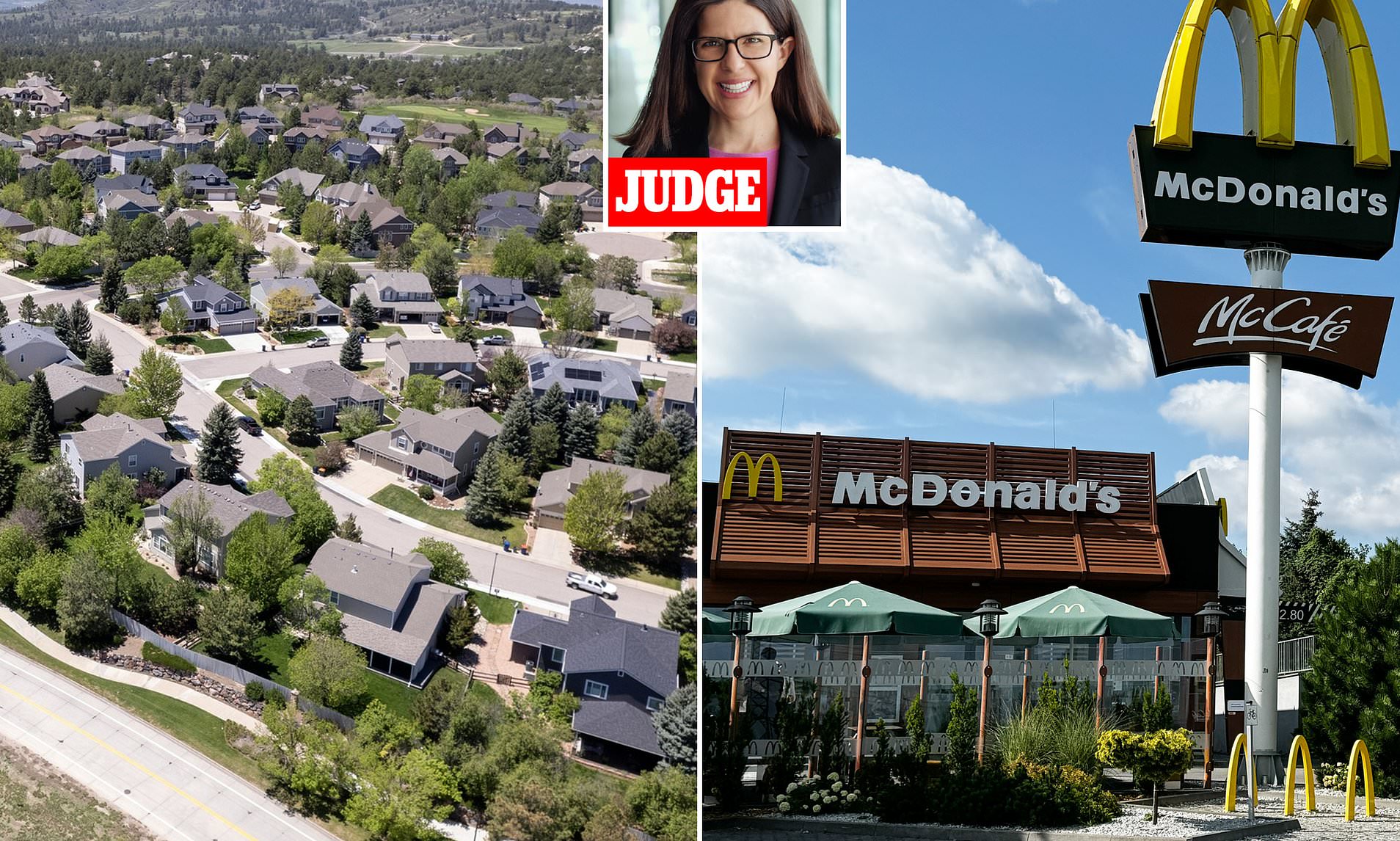
A Community's Stand Against Fast Food
An upscale town in Colorado has successfully prevented McDonald's from establishing a restaurant within its borders, driven by local concerns that the fast-food chain would be too tacky for the area. This decision highlights the power of community voices and the legal battles that can arise when development plans clash with local values.
Castle Pines, located in Douglas County, became the center of a heated debate after the fast-food giant proposed to open a 3,671-square-foot restaurant with a two-lane drive-thru. The plan sparked outrage among residents, who felt it was incompatible with the town’s character. In May 2024, the city council held a public meeting to discuss whether to allow the franchise to proceed.
The meeting turned chaotic, with locals chanting "No clown in our town!" as they expressed their opposition. Over 100 people attended, and the council ultimately voted 5-2 to reject the proposal. This decision, however, did not go unchallenged.
Shortly after the vote, the developer behind the project, CP Commercial (owned by Ventana Capital), filed a lawsuit against the city. They argued that the council had used vague reasons, such as traffic concerns and a lack of outdoor seating, to mask their true opposition to McDonald's. The firm claimed the council was simply biased against the brand.
After more than a year of legal proceedings, Judge Stacy Guillon ruled in favor of the city, upholding the original decision. In her ruling, she emphasized that the court should not second-guess the city council’s judgment unless there was no evidence to support their decision. She also rejected the argument that because city code allowed for fast food, the council had no grounds to deny the proposal.
Judge Guillon pointed out that if the law permitted fast food, it could also allow other types of businesses, such as raucous nightclubs, which might not be appropriate in certain areas. This reasoning highlighted the importance of considering the broader impact of development on the community.
CP Commercial expressed disappointment with the ruling, stating that the council had given in to a minority of voices. They are now considering an appeal, arguing that the city should not hide behind subjective factors when making decisions. According to the developer, the community deserves the tax benefits and additional restaurant options that a McDonald's would bring.
On the other side, Castle Pines North Homeowners Association No. 1 president Douglas Gilbert welcomed the decision. He had long opposed the idea of bringing McDonald's to the area, citing concerns about proximity to schools and potential trash issues. Gilbert stated that the city government had protected property rights and safeguarded school children from negative impacts.
City Manager Michael Penny also praised the court's decision, emphasizing that the city is pleased with the deference given to the council’s judgment. He expressed hope that future developments along the Castle Pines Parkway corridor would align with the community's needs and continue to work collaboratively with property owners and applicants.
This case underscores the complex interplay between development, community values, and legal processes. It also serves as a reminder that local voices can have a significant impact on shaping the future of a town.