
A remarkable discovery in South Chinahas brought attention to an extraordinary plant, the Blechnum orientale fern, able to create crystals rich in rare earth elements (REE). This advancement might lead to a sustainable approach for obtaining these essential minerals, which have typically been extracted using damaging and polluting techniques. As researchers investigate plant-based mining, they have discovered a novel process that could reshape the future of resource gathering. The results are outlined in the journal Environmental Science & Technology, could provide a more environmentally friendly method for acquiring rare earth elements.
The Secret Strength of Vegetation in Extraction Processes
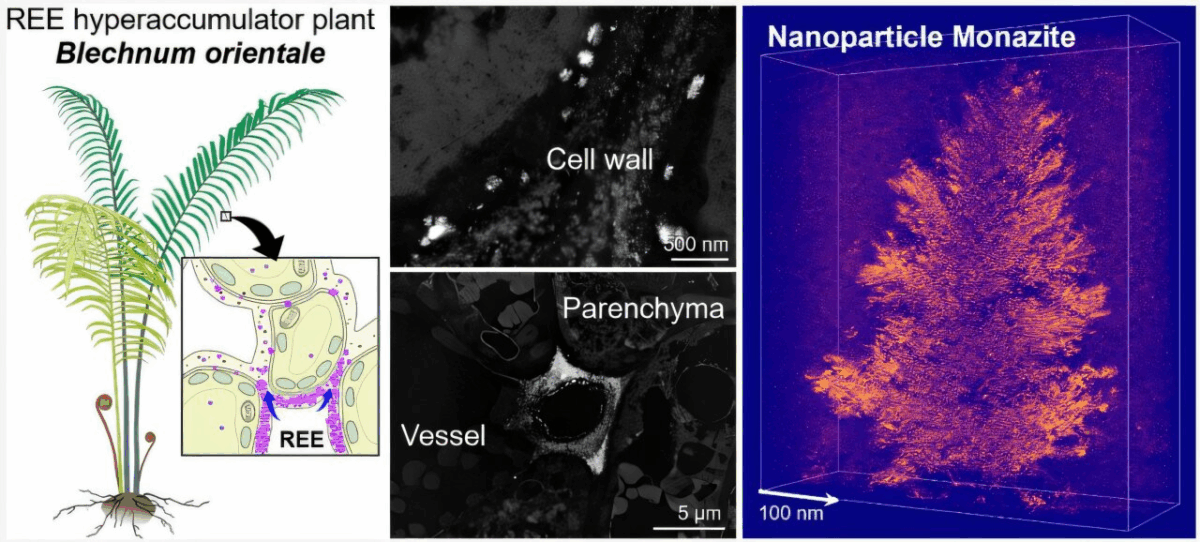
Phytomining, or plant-based mining, has long been a topic studied by researchers seeking eco-friendly options to conventional mining methods. Although numerous plants are recognized for their ability to take inmetals from the earth, the finding of the Blechnum orientaleFern's capability to create minute crystals that hold rare earth elements advances this idea even more. The fern, already recognized as a hyperaccumulator, has been discovered to not only take in these elements but to form them into crystals inside its cells as monazite—one of the primary sources of rare earths utilized in contemporary technologies.
The importance of this finding is immense.Rare earth elements are essential for a wide range of sectors, including electronics and renewable energy. Nevertheless, conventional extraction techniques frequently include ecologically harmful practices, like the application of strong chemicals and extensive operations.mining activities that harm the land. This innovative approach—phytomining—presents a vision of a future where vegetation can play a role in a more environmentally friendly and sustainable way of extracting minerals.
Published in Environmental Science & Technology, this research has been recognized as a breakthrough. The scientists' application of sophisticated imaging and chemical analysis showed that the fern creates highly structured, nanoscale crystals within the cell walls and in the spaces between cells. These crystals develop in a fine, branching structure that closely resembles a "chemical garden," an interesting finding that provides fresh insight into plant-mineral interactions. As per the researchers,
Our research reveals a newly identified, plant-driven process for the formation of essential minerals within a supergene setting. This breakthrough not only provides insight into the accumulation and retention of REEs during chemical and biological weathering but also creates fresh opportunities for the direct extraction of functional REE materials.
Rare Earth Elements: The Minerals Driving Modern Technology
The significance of rare earth elements (REEs) is immeasurable. These 17 elements, such as scandium, yttrium, and the lanthanides, play essential roles in producing wind turbines, electric vehicle batteries, smartphones, and numerous medical devices. Although referred to as rare earth elements, they are not truly scarce within the Earth's crust; rather, they are dispersed in small amounts, which makes their extraction difficult and typically expensive.
At present, the worldwide need for rare earth elements is increasing quickly, fueled by the move towards renewable energyand electric vehicles. However, the methods used to mine these minerals are not environmentally friendly. The extraction of rare earth elements usually involves harmful chemicals and generates significant waste, which can contaminate surrounding environments. The development of phytomining, using plants such asBlechnum orientale, presents a possible remedy for these ecological issues.
With the increasing need for rare earth elements, this innovative approach may decrease reliance on conventional mining practices that lead to substantial land degradation and environmental contamination. Phytomining presents a more regulated and less damaging option, enabling the retrieval of these essential minerals without the necessity of large-scale mining areas or the emission of harmful substances into the surroundings.
Monazite Crystals and Their Contribution to the Future of Plant-Based Mining
The discovery that the Blechnum orientale fThe discovery of monazite crystals forming within the cells of a fern represents a significant breakthrough in the area of phytomining. Monazite, a mineral rich in rare earth elements, serves as one of the main sources of these metals in the natural world. Conventional methods of extracting monazite involve complicated and ecologically demanding processes, but the fern's capacity to generate these crystals on its own may transform the approach used for obtaining REEs.
The self-organized, branching structure of these crystals in the fern is more than just a fascinating scientific phenomenon; it also has potential applications for upcoming extraction methods. By studying how these crystals develop, researchers might create more effective ways to extract rare earth elements from plants. This method could make the process ofphytomining More economically feasible and easier to expand, lowering expenses and enhancing the practicality of plant-based mining when implemented on a large scale.
The capacity of plants to create intricate mineral formations such as monazite may pave the way for biologically derived mining methods that are both eco-conscious and additionallyeconomically viable. This finding opens the door to additional studies on how various plant species could be utilized to collect and form other essential minerals, possibly reshaping the field of mineral extraction.
A Peek at the Future of Sustainable Mining
Although the concept of "mining" plants for rare earth elements might appear to be science fiction, this breakthrough represents a major advancement in turning that vision into an actuality. As scientists keep exploring the potential of this approach, they are uncovering new possibilities that could revolutionize how we obtain these essential materials.Blechnum orientale Ferns and other possible hyperaccumulators open up new opportunities for green mining. The potential to use plants in this manner might result in more localized, smaller mining activities with reduced environmental impact.
In the years ahead, there may be a transition from harmful mining methods to more eco-friendly, plant-derived options. The study published inEnvironmental Science & Technologynot only demonstrates the impressive abilities of plants such asBlechnum orientale, but it also creates opportunities for innovative approaches to mineral extraction that may be crucial in meeting the increasing global need for rare earth elements.
As we move forward, it is evident that this finding marks the start of something greater. Through ongoing study and creativity,phytomining might one day be commonly used in the retrieval of rare earth metals, offering an essential remedy for the ecological issues caused by conventional mining methods.
Enjoyed this article? Sign up for our free Newsletterfor compelling narratives, unique material, and up-to-the-minute updates.