
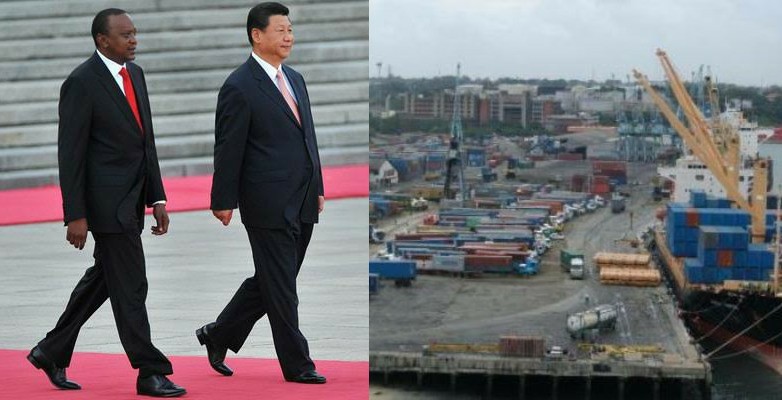
 Unresolved inefficiencies and political conflicts have kept on affecting trade between Rwanda and Tanzania, with more Rwandan traders and transporters shifting towards Mombasa port even though it involves a greater distance and increased expenses.
The impact of the recent election-related riots in Dar es Salaam continues, as cargo trucks remain stuck for two weeks, causing a shortage of various consumer products in the Rwandan market and resulting in increased prices.
Some Rwandan traders found the post-election riots, during which several trucks were set on fire and others were stolen, to be the final trigger, prompting them to finally leave the Central Corridor, having previously switched to the Northern Corridor last year.
Derrick Baguma, a cargo transport operator from Kigali, shared with The EastAfrican that an increasing number of traders and transporters have begun choosing Mombasa since last year, citing "numerous inefficiencies and bureaucratic challenges linked to the Dar es Salaam port, which are not present in Mombasa." "In Mombasa, the ship arrives when there is already space for unloading and the equipment is prepared to start offloading. You can have your goods unloaded and delivered on the same day. In Dar es Salaam, it can take up to two weeks. Kenyans utilize technology at their port, which has improved efficiency," he explained.
Mombasa port expands by 12pc despite regional competition. However, the expenses are greater at the Mombasa port. For example, Mombasa imposes a $400 shipping line fee, whereas Dar es Salaam does not. This is in addition to delivery order charges and port handling costs, which both ports levy.
The distance between Mombasa and Kigali is 1,700km, which is greater than the 1,300km between Dar es Salaam. However, Rwandan merchants are progressively moving away from the Central Corridor, which has historically been used for 80 percent of Rwandan freight.
The most significant damages caused by the post-election blockades were suffered by those transporting perishable goods, construction supplies, and fuel, as reports stated that at least three trucks heading to Rwanda were robbed near the Namanga border, resulting in losses of approximately $200,000.
At least two trucks displaying the Rwandan flag, transporting fuel from Dar es Salaam, were set on fire near the port on October 30, as reported by Rwanda's Ministry of Trade and the East African Business Council.
This led to a 57 percent decrease in bond trading volume and caused rerouting, resulting in millions of dollars in delays for Rwandan companies, with over 50 Rwandan trucks stuck, approximately 15 percent of which reported damage or losses, as stated by the Rwanda Transporters Association.
Currently, Rwandan importers have redirected up to 60 percent of their fuel imports to Mombasa, according to reports stating that cargo valued at over $300 million was rerouted to Mombasa in the fourth quarter of 2025.
The decision corresponds to its overall plan to decrease dependence on one route, considering regional conflicts and transportation challenges, yet the issue appears more complex than just shifting cargo movement.
Commercial exchanges between Rwanda and Tanzania have experienced a downturn, according to recent figures from the Rwanda Institute of Statistics, which indicate that imports from Tanzania dropped to $52.91 million in September 2025, compared to $92.64 million in September 2024—a reduction of more than 40 percent on an annual basis.
Decrease in importsThe decline in imports from Tanzania amounted to 25.4 percent during the first quarter of 2025, when compared to the preceding year.
According to data, Tanzania contributed 13.6 percent of Rwanda's total imports, which amounted to $567.86 million between 2022 and 2023.
Despite Rwanda's exports to Tanzania remaining fairly steady or less impacted according to the available information, a hidden trade conflict driven by protective measures has been developing.
Tanzania implemented a restrictive fee of Tsh2,000 ($0.73) per kilogram of milk in 2024, representing a 1,233 percent rise from Tsh150 ($0.055), which significantly impacted milk imports from Rwanda, causing Rwandan milk to lose its competitive edge, with exporters stating that the tax "exceeds the cost of the milk itself." Tanzania's rigorous enforcement of its 2018 Animal Diseases and Animal Products Movement Control Regulations in 2024 has been identified as a non-tariff barrier, as no Rwandan company has managed to obtain or receive an export permit from the Tanzania Dairy Board.
Experts note that although both nations have not shown any overt hostility towards one another, recent trade and political developments suggest a hidden layer of tension between Kigali and Dodoma, which should be resolved through established bilateral channels to prevent it from turning into a public disagreement.
Regulatory bodies face allegations of delayed or partial approvals, mirroring conflicts between Kenya and Uganda, even though a memorandum of understanding was signed in January 2024 to ease dairy trade between the two nations.
Rwanda and Tanzania came into conflict in the DR Congo war at the beginning of this year, as Tanzania sent forces to join the SADC mission fighting alongside Congolese troops, which caused irritation in Rwanda.
Kigali alleged that Tanzania and other nations providing troops are working with the FDLR, a group responsible for genocide that aims to invade Rwanda.
Despite the tension between Rwanda and Tanzania, it did not significantly harm the bilateral collaboration between the two neighboring EAC member states.
No official celebratory statement has been issued by Rwandan officials to President Samia Suluhu Hassan following her disputed presidential election win, unlike the usual practice when other regional leaders are elected.
Samia was sworn in after violent elections. This raised doubts and theories about tensions between Rwanda and Tanzania, with some analysts suggesting that Kigali did not wish to publicly support a presidential election that took place under questionable conditions, marked by repression and violence against demonstrators.
Nevertheless, high-level sources informed The EastAfrican that Rwanda conveyed a congratulatory message to President Samia via diplomatic channels, which is different from the typical congratulations usually posted on official social media platforms. Provided by SyndiGate Media Inc. (Syndigate.info).