
Nepal, November 15 -- As Nepal moves forward in its efforts to build a sustainable and robust energy future, public discussion remains focused on electricity production and delivery. The story is clear: Nepal has achieved significant advancements in hydropower development, cross-border electricity trade is growing, and solar photovoltaics are becoming an additional source of clean energy. However, a key part of our energy landscape that is still being ignored is solar thermal energy, primarily used for heating and cooling.
Nearly half of the world's final energy use is for heating and cooling, a pattern also seen in Nepal's energy landscape. From warming water in homes to supporting tourism in mountainous areas, sterilizing hospital facilities, preparing meals in institutional kitchens, drying agricultural goods, or fueling an industrial network, thermal energy is deeply embedded in our everyday activities. However, unlike electricity, which is available to almost 98 percent of households, Nepal's heating needs are primarily satisfied through traditional biomass and fossil fuels.
Firewood alone makes up over 60 percent of Nepal's overall energy consumption, with imported fossil fuels like LPG, diesel, and coal coming next. Electricity constitutes just approximately 7 percent of the nation's total energy supply. This significant dependence on firewood leads to environmental issues such as deforestation, indoor air pollution, and related health problems. At the same time, the country's reliance on imported fuels makes it vulnerable to global price fluctuations and causes a drain on foreign exchange reserves. For Nepal to meet its goal of achieving net-zero emissions by 2045, it is essential to reconsider energy strategies beyond just electricity. Heat must become a central topic in policy discussions.
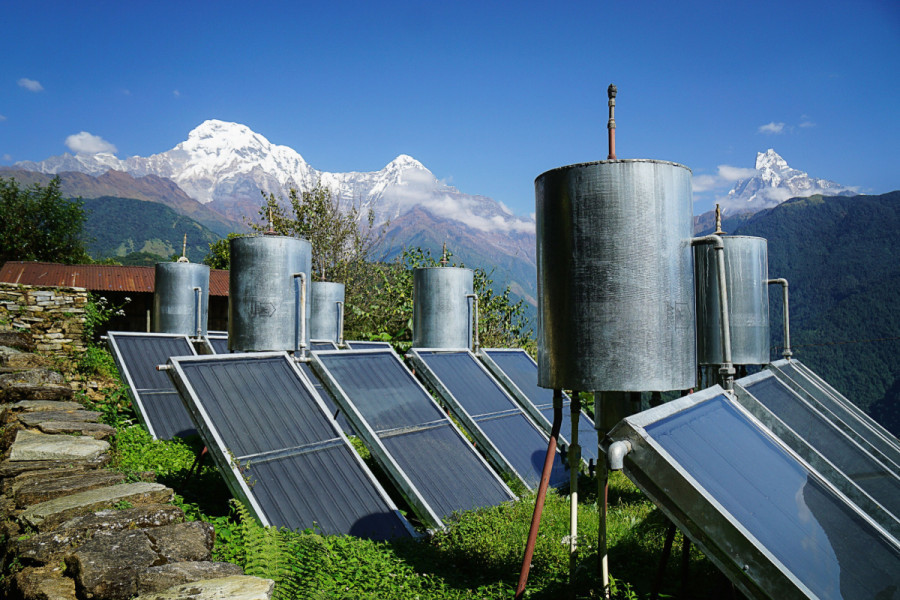
Solar thermal technology offers a viable route forward. In contrast to solar photovoltaic systems, which produce electricity, solar thermal systems transform sunlight into heat. These systems can be utilized for residential hot water, space heating in colder areas, industrial process heat, drying of agricultural products, and institutional cooking. Fortunately, Nepal has accumulated some expertise in this area. Thousands of homes, hotels, and lodges use solar water heaters, especially in urban centers and mountain tourism spots. Whether imported from neighboring countries or produced locally by domestic companies, installer firms have implemented a substantial number of solar thermal systems.
However, the level of adoption is still limited. Nepal currently has over 300,000 square meters of installed solar thermal collector area, which is approximately 0.01 square meters per person. In contrast, top countries like Cyprus and Barbados have between 0.5 and 0.9 square meters per person. A new Solar Thermal Roadmap developed by the Alternative Energy Promotion Centre (AEPC) with assistance from ICIMOD outlines a clear and ambitious goal: achieving 0.3 square meters per capita by 2045. Realizing this objective would require installing about 11 million square meters of solar collectors across the country within the next twenty years.
If put into practice, solar thermal systems could produce approximately 7,300 gigawatt-hours of heat each year, comparable to almost 2000 MW of hydropower. Notably, this heat would be generated exactly where it is required, reducing transmission losses and relieving the burden on the power grid. As Nepal progresses toward electrified transportation, electric cooking, and industrial electrification, preventing excessive demand on the electricity supply will be crucial.
The potential within various sectors is vast. Solar thermal technology can be greatly expanded across residential buildings, hotels, hospitals, boarding schools, monasteries, and government facilities. In tourist areas like Pokhara, Lukla, Namche, Jomsom, and Nagarkot, solar heating could notably decrease reliance on LPG and diesel for hot water. Hospitals and medical centers need consistent hot water for cleaning, laundry, and sterilization purposes. Industries such as dairy, beverages, noodles, textiles, tea processing, herb drying, and soap production require process heat—typically in the range of 60 to 250 degrees Celsius—which solar thermal can effectively provide. Agricultural supply chains can utilize solar energy for crop drying, milk cooling, greenhouse heating, and food storage. Institutional kitchens, including those in schools, monasteries, and military barracks, can implement solar steam systems for large-scale cooking.
Investing in solar heating is financially wise. According to the roadmap, reaching the 2045 goal will need about Rs23 billion each year—approximately Rs631 per person every year. This is a small expense when looking at the overall advantages for the country: less dependence on imported fuels, better air quality, stronger energy security, protection of forests, and improved industrial competitiveness. The industry has the potential to generate over 13,000 full-time green jobs by 2045 in areas like manufacturing, installation, maintenance, research, and training. As demand increases, domestic production capabilities could also grow, promoting innovation and business development.
Nevertheless, advancement will not occur on its own. A number of steps are required to increase the use of solar thermal technology. Financial support like capital grants, low-interest loans, and exemptions from VAT/Tax/Custom duties can promote usage. Incorporating solar thermal systems into building regulations and hotel guidelines would speed up their implementation in key industries. Quality controls, installation certification, and performance evaluation systems are crucial to guarantee dependability and consumer trust. Vocational education initiatives should equip technicians, including women and young people, for jobs in this expanding sector. Public information campaigns will assist households and companies in recognizing the economic and environmental advantages of solar heating. Research and pilot projects—including solar district heating, solar cooling, and hybrid systems that combine heat pumps with biomass—will get Nepal ready for upcoming technological demands.
Nepal has previously led the way in community-based electrification, initiatives for clean cooking, and rural energy projects. The nation benefits from ample sunlight throughout the year—ranging from 1,600 to 2,000 kWh per square meter annually—which makes solar thermal energy both economically and technically feasible across various regions.
Nepal's sustainable energy future will extend beyond electricity. To achieve our climate targets, enhance energy security, boost industrial development, and preserve our forests, we need to consider heat as a key component of energy planning. Solar thermal technology provides an effective, expandable, and cost-efficient option. As we design our future energy system, the sun's heat should be recognized not just as sunlight, but as a crucial national resource that can support homes, industries, farms, and organizations.
As we head toward a more sustainable future, adopting solar thermal technology is not a choice—it's a necessity. Nepal's energy shift will be most effective not just when it powers through turbines and electrical grids, but also when it directly heats homes, businesses, and communities using sunlight.