
The U.S. Mint produced its last set of everyday pennies this week, with the small copper-colored coins now anticipated to spark a surge among collectors, traders, and investors seeking items that experts believe might be sold for up to $5 million.
The significant event took place on Wednesday at the Philadelphia Mint, where Treasury Secretary Scott Bessent was presentinserted the final five pennies ever produced for public use,each marked with a tiny omega emblem.
The emblem signifies that these are the last of their type following 232 consecutive years of penny manufacturing.
The Mint's official printing machines halted soon after, marking the conclusion of a period that started with the Coinage Act of 1792.
Government representatives verified that the last coins will be sent directly to an auction, where the most valuable specimens—the first and last produced, along with a range of ceremonial versions—might fetch extraordinary prices.
According to USA Today, initial estimates suggest their potential selling price could range from $2 million to $5 million each, although shortly after the announcement, expert numismatists started to cast doubt on the extremely high projections.
A coin expert from the Philadelphia region, Richard Weaver, who runs the Delaware Valley Rare Coin Company, mentioned that collectors would examine every physical aspect of the newly produced coins - including the way they were managed by government officials.
Weaver commented on an official image depicting US Treasurer Brandon Beach holding one of the last pennies precisely between his fingers.

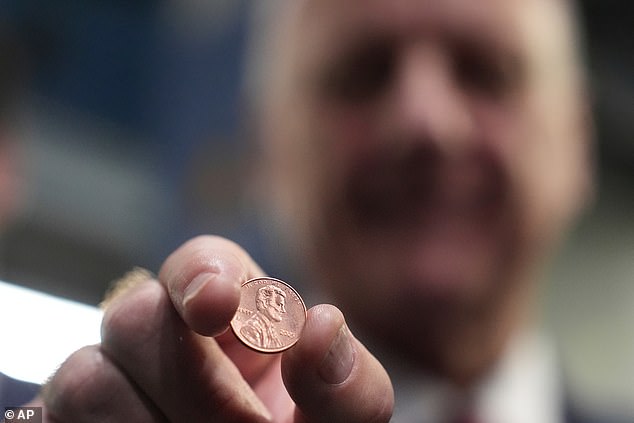
"If you examine that picture, he has the penny in his hand with his fingers positioned on the coin," Weaver stated.
You simply don't do that. Copper is highly reactive with sweat and the oils from your skin, and any serious collector will take this photo into account.
Weaver also challenged the long-term worth of coins created from the beginning to be scarce.
They were created for this reason," he said. "When you witness individuals spending millions on coins, they are essentially paying for coins that are 100 or 200 years old, with only a few known to exist, and which have endured for so many years without being produced for this specific purpose in 1933 or 1794.
Nevertheless, government officials maintain that the coins' importance—the actual end of the U.S. penny—will lead to high demand.
Mint Acting Director Kristie McNally stated that the 'first and last' coins to be sold at auction might generate approximately $100,000, with the funds supporting Mint activities.
She mentioned that the complete information about the December auction will be made public soon.
A representative from the Mint also verified that gold versions of the penny—long a topic of collector speculation—are genuine.
"Today, the Mint marks 232 years of producing pennies," stated McNally, the acting mint director as the machines stopped.
Although general manufacturing ends today, the penny's impact remains. As its role in trade keeps changing, its importance in America's history will persist.
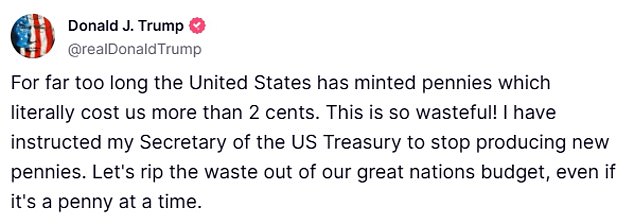
The intense decline started in February, when President Donald Trump declared the administration wouldstop the production of new one-cent coins.
"For an extended period, the United States has produced pennies that actually cost more than two cents. This is extremely wasteful! I have directed my Secretary of the US Treasury to cease manufacturing new pennies," Trump wrote in a post on Truth Social.
As per Treasury projections, the cost of producing each penny has risen to 3.69 cents, compared to 1.42 cents a decade earlier. The Mint anticipates saving $56 million annually by ceasing the production of pennies for circulation.
Treasury representatives stated that evolving consumer behaviors, particularly the move towards using cards and mobile payments, rendered low-value coins 'economically impractical.'
The United States has now become part of a group that includes Canada, Australia, New Zealand, and Ireland in removing its smallest coin from circulation.
The penny was costing more than four times its original value to achieveand the Treasury incurred an $85 million loss from producing the coins in just the past year.
Removing the penny could save the Treasury some immediate funds, but it brings up the next issue with currency, specifically the nickel.
"If you eliminate the penny, it will lead to more nickels," said Rhett Jeppson, a former chief executive of the US Mint.
"You gain more from a nickel than you do from a penny," Jeppson said to the New York Times.
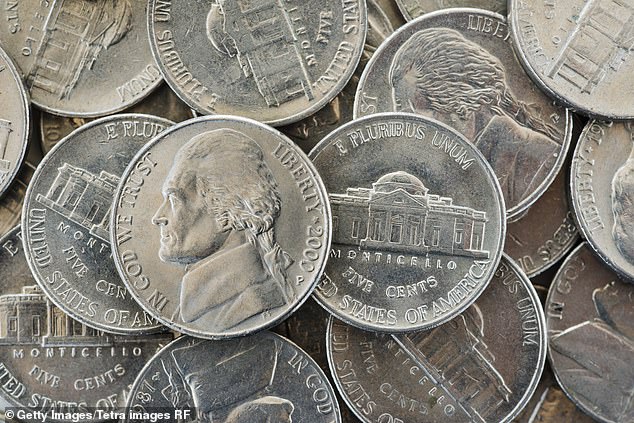
Nickels, which are valued at five cents, also result in a financial loss for the government, creating an $18 million deficit due to their manufacturing last year.
The issue might worsen with the elimination of the penny, as the demand for nickels is expected to rise significantly.
The American one-cent coin was initially launched in 1973, starting as a big copper piece and later becoming smaller in size, reaching its current, more compact design.
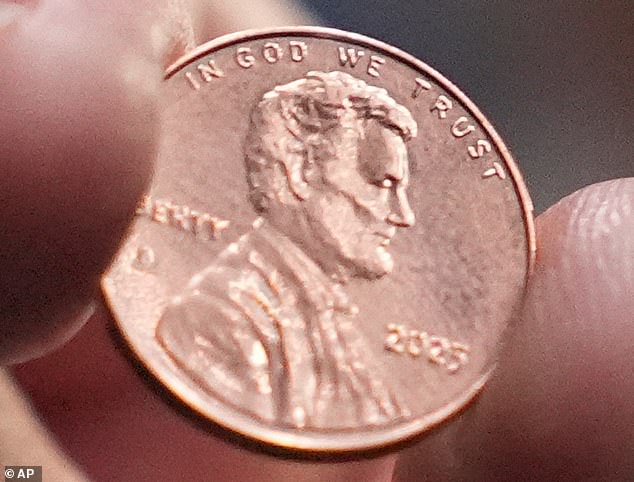
The initial designs included a 'flowing hair' Liberty, which was soon modified, and the coin has undergone changes in both material and look, particularly showcasing Abraham Lincoln since 1909.
Proponents of the penny claim that it contributes to maintaining lower consumer prices and serves as a revenue stream for charitable organizations.
For numerous Americans, the coin has turned into an annoyance that often ends up being left in drawers, jars, and piggy banks.
The American Bankers Association mentioned last month that a decrease in the flow of pennies this year has led to localized shortages, particularly in regions where bank machines for depositing extra coins have been closed.
It mentioned that the banking sector was urging customers to search their homes, vehicles, and coin jars for pennies and take them to banks, shops, or coin machines to assist in reducing the delay.
Read more- Is the United States' famous one-cent coin facing extinction after an impressive 232 years — a casualty of rising expenses and becoming outdated?
- Trump ends the production of pennies: How will this bold decision save millions as costs at the US Mint rise?
- Does your penny collection lack the most valuable piece? Discover why 1954 pennies are considered the 'most scarce' by specialists!
- Is the end of the penny a significant act or a potential economic crisis for the United States?
- Will the UK continue to use copper coins while Trump eliminates 'inefficient' US pennies?