
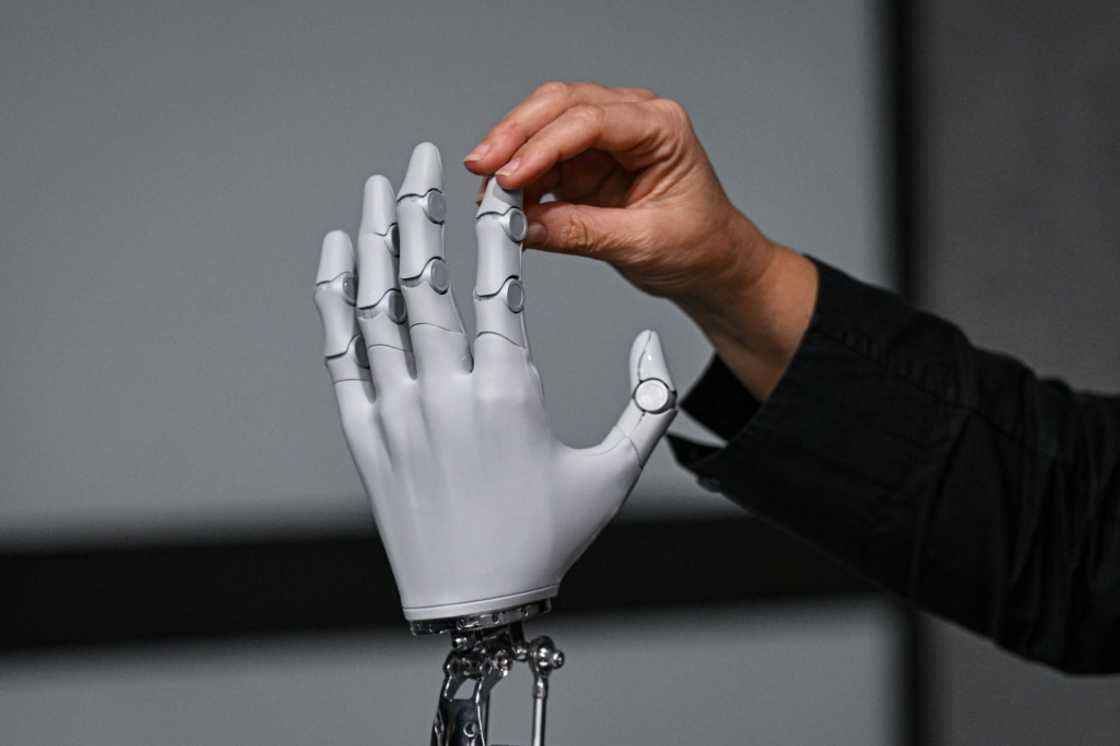
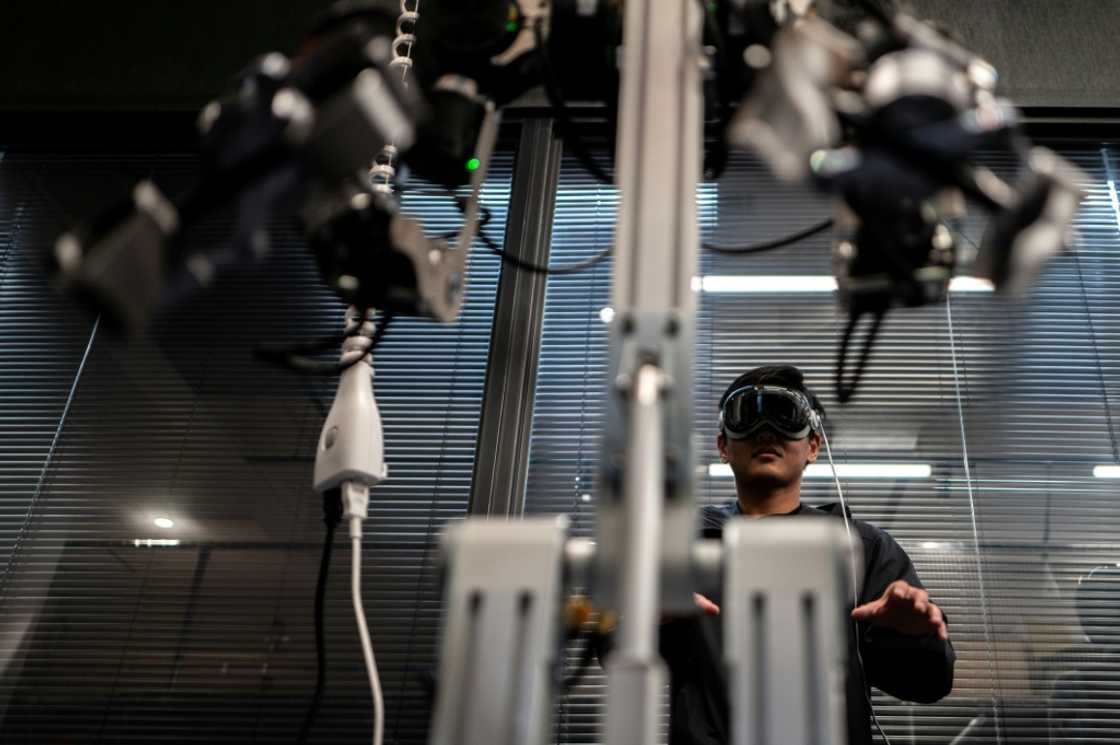
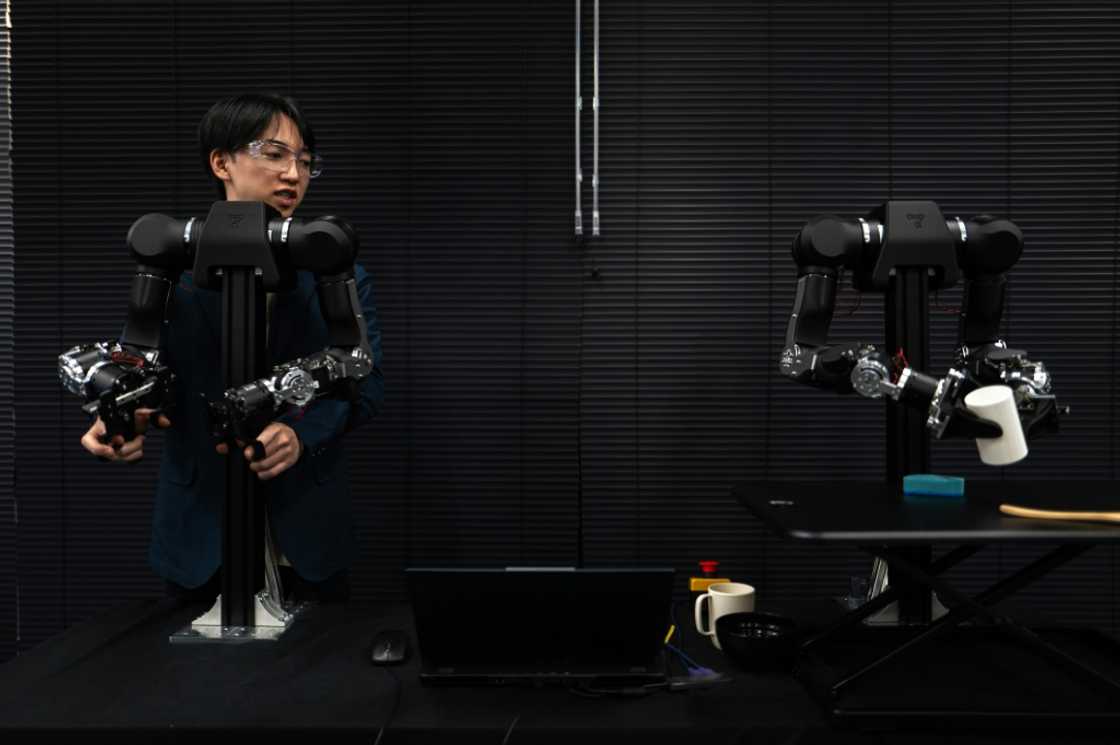
Two rotating, human-like robotic arms, designed for physical artificial intelligence studies, replicate the movements of a user wearing a VR headset who is twisting his hands as if performing magic.
Through sufficient training, such arms can perform daily tasks independently, according to the Tokyo-based company Enactic, which is working on humanoid robots designed to wash dishes and handle laundry in Japanese care homes that face staffing shortages.
Step into the new era of artificial intelligence, where it begins to make its presence felt in the physical world through intelligent robots, driverless vehicles, and various automated systems.
"The following generation of AI will be physical AI," stated Jensen Huang, CEO of the American chip company Nvidia, last year.
That's 'AI that comprehends the laws of physics, AI that can coexist with us' and also grasps 'how to interpret the world,' Huang added.
Technology companies are investing large amounts in physical AI, and Morgan Stanley forecasts that the global market might see over a billion human-like robots by 2050.
The excitement is further amplified by videos featuring sophisticated androids, typically manufactured in China, performing dance moves to Taylor Swift's music or effortlessly lifting heavy items.
In addition to the allure of sci-fi-style robotic assistants, the competition has raised worries about employment declines, privacy issues, and the time it will take for these advancements to become practical.
Hiro Yamamoto, 24, is the chief executive officer of Enactic, a company known for its OpenArm physical AI training devices, which are utilized by Nvidia and leading universities like Stanford.
He intends to start introducing new robots, which are still being developed, from next summer to "coexist with individuals in settings that are highly unpredictable, and where circumstances are constantly shifting," such as nursing homes.
"So it must be safe," Yamamoto said, noting that the exterior is soft and won't harm anyone.
'Any human role'
In the Chinese city of Guangzhou, a woman with a luminous oval visor covering her face, dressed in white fabric resembling that of a fencer, moved slowly across a stage last week to applause and murmurs.
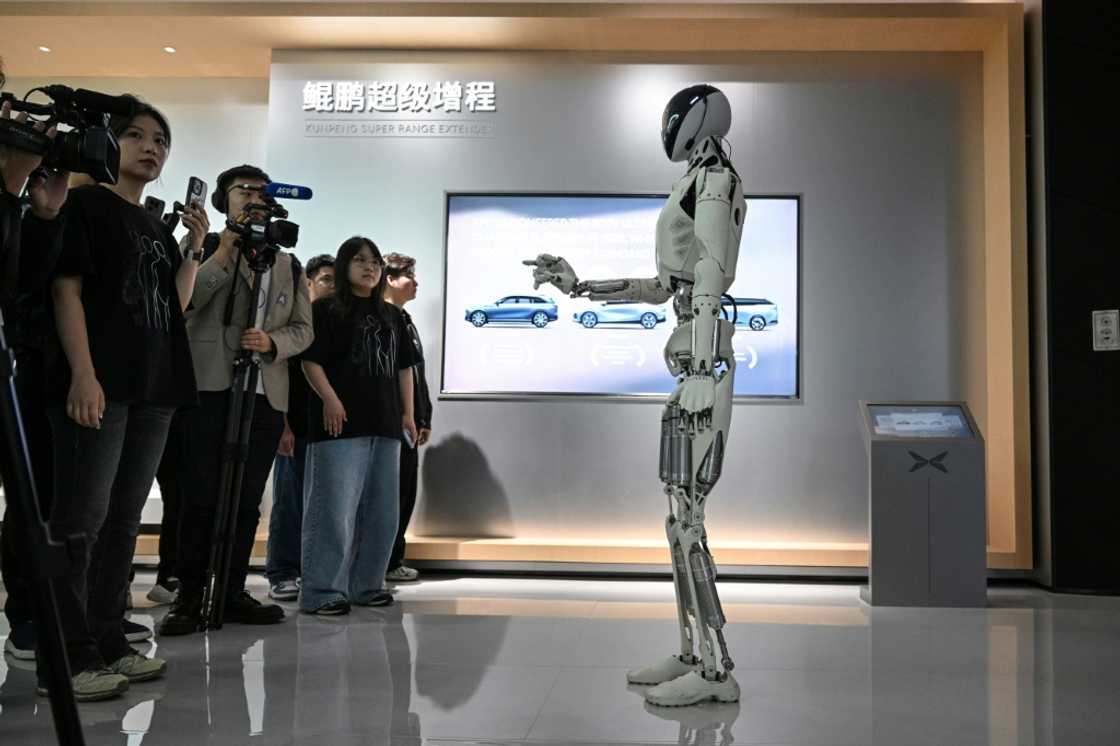
It was the most recent human-like robot introduced by the Chinese electric vehicle company XPeng, which is also expanding into tangible artificial intelligence.
Agile machines developed by American firms, including Boston Dynamics' dog-shaped robots, have attracted media attention over the years.
However, government backing and robust local supply networks are enabling Chinese competitors, such as Unitree Robotics and EngineAI, to move forward rapidly.
"I haven't considered in detail how many robots we'll sell each year in a decade, but I believe it will exceed the number of cars," said He Xiaopeng, CEO of XPeng, to reporters.
XPeng's robots can walk and even perform dances on their own -- however, their ability to manage objects, which is a more complex task, has not been extensively shown.
Their skilled hands and supple skin are not expected to take over jobs on China's factory floors anytime soon, he said.
The price of a single robot hand, which must be frequently replaced due to intense usage, could cover the salary of a Chinese employee for many years.
However, with sufficient data and training, AI-powered humanoid robots might eventually carry out "nearly any human job," ranging from childcare to cooking or gardening, Brian Gu, co-president of XPeng, stated to AFP.
On-the-job training
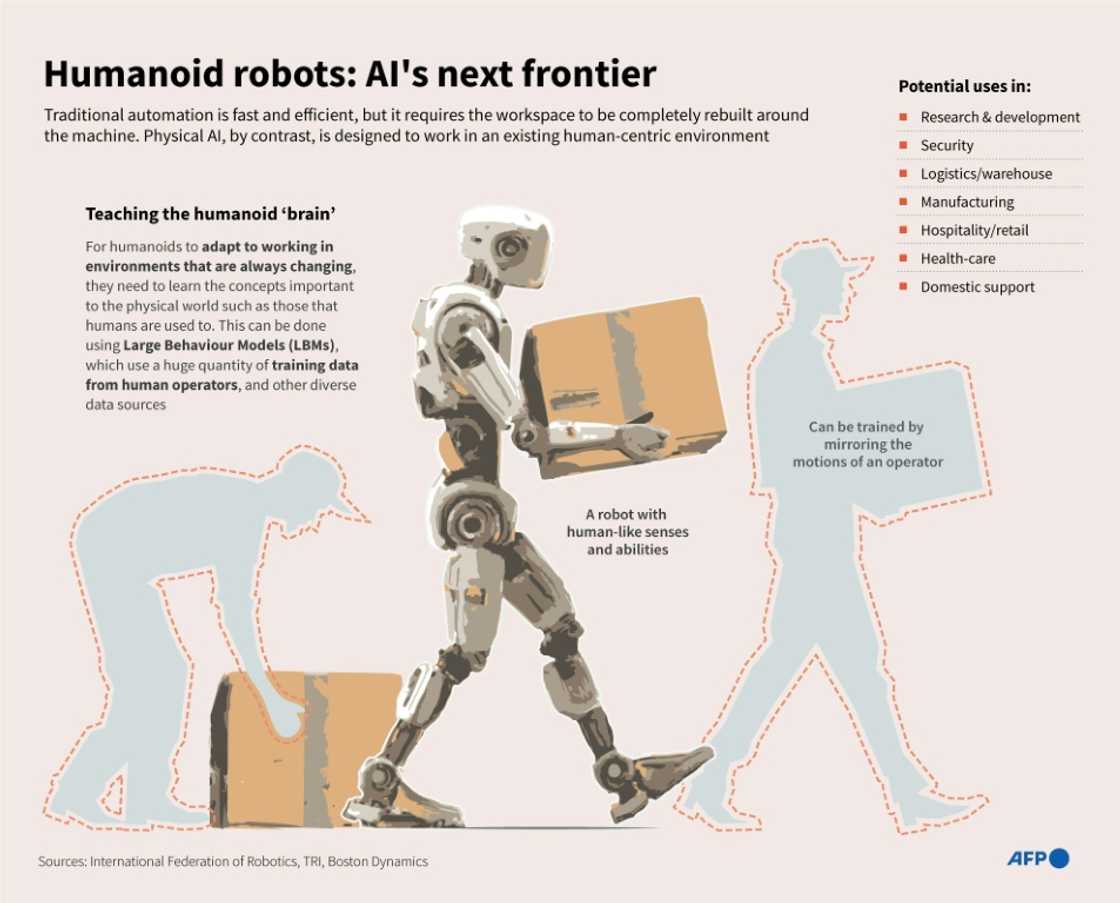
Text-based artificial intelligence systems such as ChatGPT are developed using vast amounts of textual data, yet physical AI models must also address visual perception and the spatial connections among objects.
For the time being, controlling AI robots from a distance to train them in tasks such as picking up a cup "remains the most effective method for gathering data," Yamamoto stated.
Only 30 to 50 examples of each task are required to adjust the "vision-language-action" AI models, he mentioned.
Enactic has contacted dozens of care facilities in Japan, suggesting that its remote-controlled robots handle routine tasks, allowing trained caregivers to focus more on attending to elderly residents.
This hands-on experience will teach physical AI models, enabling robots to operate independently in the future, Yamamoto stated.
A US-Norwegian startup named 1X is following a comparable strategy with its humanoid household assistant, NEO, which it plans to ship to American residences starting next year.
The NEO model is priced at $20,000, yet its performance has been inconsistent. A video from US media illustrates the robot having difficulty closing a dishwasher door, even when controlled remotely.
Physical limits
In another awkward moment, a Russian human-like robot, claimed to be the nation's first, wobbled before collapsing face-first as it premiered on stage earlier this week.
A significant disparity exists between the artificial intelligence systems of robots and their physical capabilities, which are less advanced, according to Sara Adela Abad Guaman, an assistant professor specializing in robotics at University College London.
"Nature has demonstrated that to adjust to the surroundings, having the appropriate physique is essential," Abad said to AFP, using the example of a mountain goat slipping on ice.
However, significant agreements are being made, even as increased funding in artificial intelligence raises concerns about a stock market bubble.
Japan's SoftBank has recently identified physical AI as its "next frontier," stating that it is acquiring ABB Robotics, an industrial robot manufacturer, for $5.4 billion.
Automation brings up concerns regarding the future of human work, yet Abad isn't overly concerned.
In the end, she remarked, "our sense of touch is unmatched."