
Researchers frequently urge nations to reduce animal slaughter in order to lower carbon emissions, yet one scientist could offer a more practical approach.
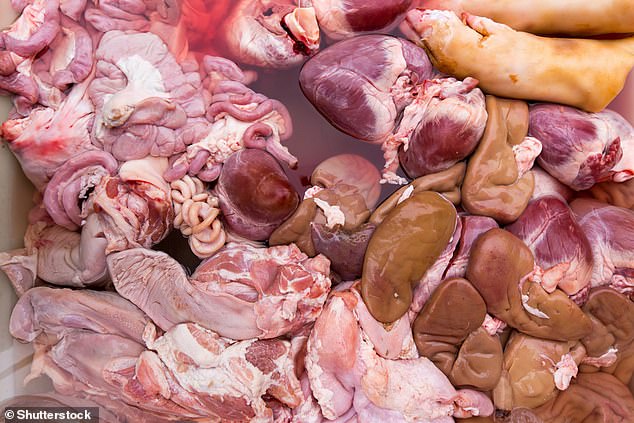
Dr TennesseeRandall, a consumer psychologist from Swansea University, suggests that people should incorporate more organ meats—such as the heart, liver, and kidneys—into their diet.
Although rich in protein, vitamins, minerals, and essential fatty acids, organ meats are frequently underutilized and commonly discarded.
The more portions of the animal we consume, the fewer animals need to be killed in total to provide sustenance.the world's growing population.
"Consuming more organ meats may reduce the number of animals slaughtered for food, thereby decreasing the greenhouse gases emitted by the meat industry," Dr. Randall stated in an article forThe Conversation.
Dr Randall's new studydiscovered that a dish containing offal is more appealing to UK customers than traditional offal itself.
In trials involving almost 400 participants, spaghetti Bolognese made with organ meat combined with regular ground beef was the most popular.
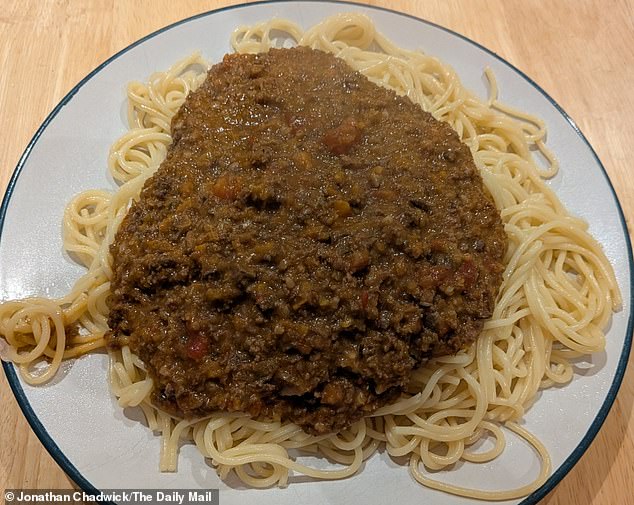
I prepared the dish in my own kitchen to check how it stacks up against my usual recipe – and was happily impressed.
My initial job involves locating organ meats on the high street, which proves more challenging than it sounds.
Surprisingly, when I asked the man at my local butcher, Whole Foods in Kensington, about 'offal,' he had no idea what I was referring to.
Even after I repeat the word 'offal' six times, he still looks puzzled, as though I'm speaking a completely new language.
It's only when I mention 'heart, liver, kidney' that he responds with 'we don't have those'.
Fortunately, I have better fortune at Marks and Spencer, which offers lamb's liver, along with pork lung and heart (though in the form of haggis).
One positive aspect of offal is that it is relatively inexpensive compared to other cuts of meat, mainly due to the low level of consumer interest. A significant portion of the offal produced in the UK is exported as a result.
I have 250g of lamb's liver for £1.69 – under half the cost of regular lamb meat!
Back in my laboratory kitchen, I mix my offal with an equal amount of beef mice and prepare it using my standard Bolognese recipe, which includes a 'soffritto' base made from carrots, onions, celery, herbs, and tomatoes.


Eagerly, as it cooks, it acquires a delightful texture, significantly thicker and more creamy in appearance compared to my usual slow-cooked meat sauce.
After approximately 30 minutes simmering on low heat, I pour it over some buttered spaghetti and finish it with freshly grated cheese and a sprinkle of black pepper.
The sauce offers a deep, rich, and intricate taste—sweet and slightly earthy, with a generous amount of satisfying umami, while the occasional pieces of liver add extra bursts of mineral-rich meatiness (which I acknowledge isn't to everyone's liking).
I've never had an issue with the taste of organ meats until recently, but I usually don't purchase them because I'm unsure how to prepare them.
But this experiment has revealed something very clear to me – organ meat can replace meat in almost any recipe.
In addition to spaghetti bolognese, Dr. Randall's experiments also incorporated organ meats to create meatballs, burgers, shepherd's pie, and a chicken and liver curry.
Certainly, consuming organ meats is not a novel concept – it was once a common dish in Britain during the Second World War – however, its ability to aid in addressing the climate crisis might have been neglected.
From my experience, there is not nearly enough organ meat available in stores, but this could be related to 'social acceptance'.
Interestingly, there could be a certain social stigma associated with consuming organ meats – specifically, being viewed as a "dish for older people."
"Individuals who were more inclined to manage their public image tended to hold less favorable views on meals containing offal," stated Dr. Randall.
This form of social behavior is referred to as 'impression management' and has been proven to affect dietary decisions.
The research also discovered that men had a more favorable view of consuming 'pure' organ meats compared to women, while both genders held comparable opinions regarding the consumption of organ meat mixed with ground meat.
"In fact, consuming more of the animal could contribute to a balanced diet and offer a more practical suggestion for sustainable eating, particularly for men who enjoy their meat," the scholar noted.
Read more- Is eliminating meat truly capable of significantly reducing the risk of 11 fatal illnesses and improving your well-being?
- Can transitioning to a meat-only diet improve your mood and increase energy levels, or does it pose significant health risks?
- Is consuming roadkill becoming a surprising green food trend in the UK? Uncover the shocking facts about its legal status and regulations!
- Is choosing minimally processed red meat the unexpected factor in achieving a healthier diet?
- Is preparing meals with mutton the key to enhancing your morally sourced meat recipes?