
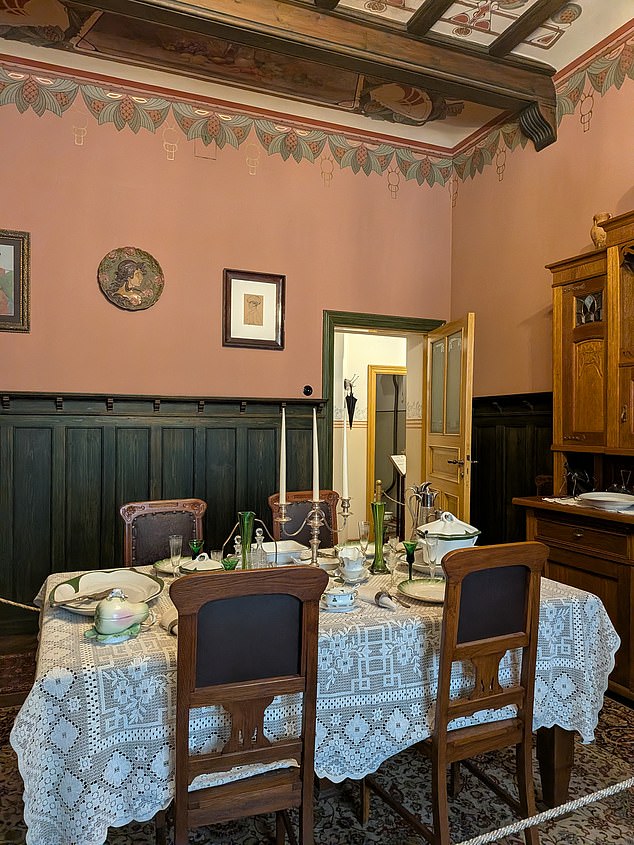
My grandmother, gesturing toward the unusual two-inch-long utensil holders on the table, says: "Mother had those."
We are at the Art Nouveau Museum in Riga, exploring the home of a former affluent resident, and we have a purpose. My grandmother Marlene, known to everyone as Moen, and I have come to the Latvian capital to discover our family heritage.
I, similar to Moen, was born in Johannesburg, but my family originally comes from Eastern Europe. Three months ago, I underwent a DNA test via MyHeritage, an online genealogy company, which uncovered some unexpected results.
Even though I was aware my Ashkenazi Jewish family came from Lithuania,Latvia and Poland, I had always struggled to find any genuine information beyond stories.
However, my results showed that I am 98 percent Ashkenazi Jewish, and that my family mainly originated from Latvia before the start of the 20th century.
Upon learning this, I quickly contacted Moen, my only grandparent who remembered our Baltic ancestors.
My mother was from Riga," she said. "She never talked about it - the only thing I know is that she mentioned it was a beautiful city with a university.
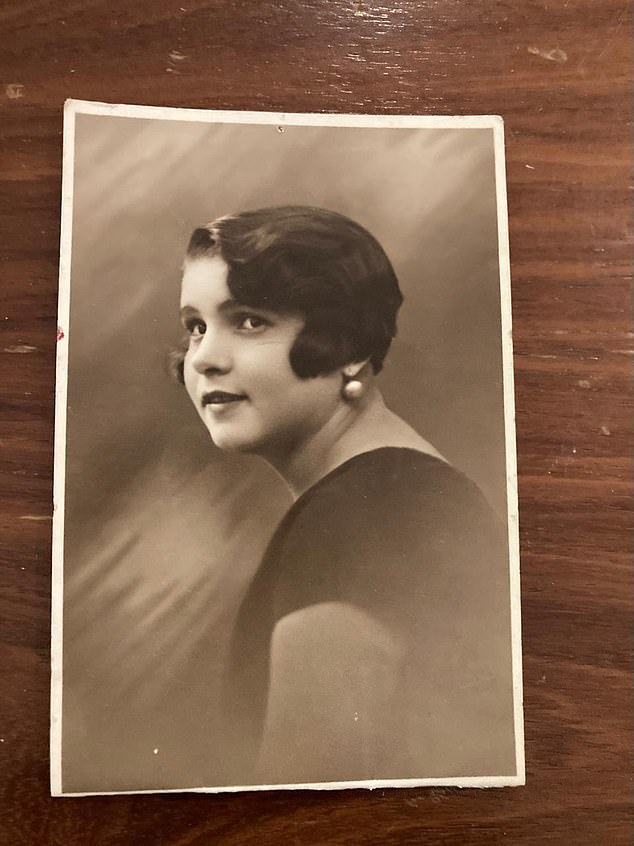
I had come across vague mentions of my great-grandmother, Vera Trembatzki, but nothing specific, despite the fact that I bear her name (my middle name, Deborah, comes from the root of hers).
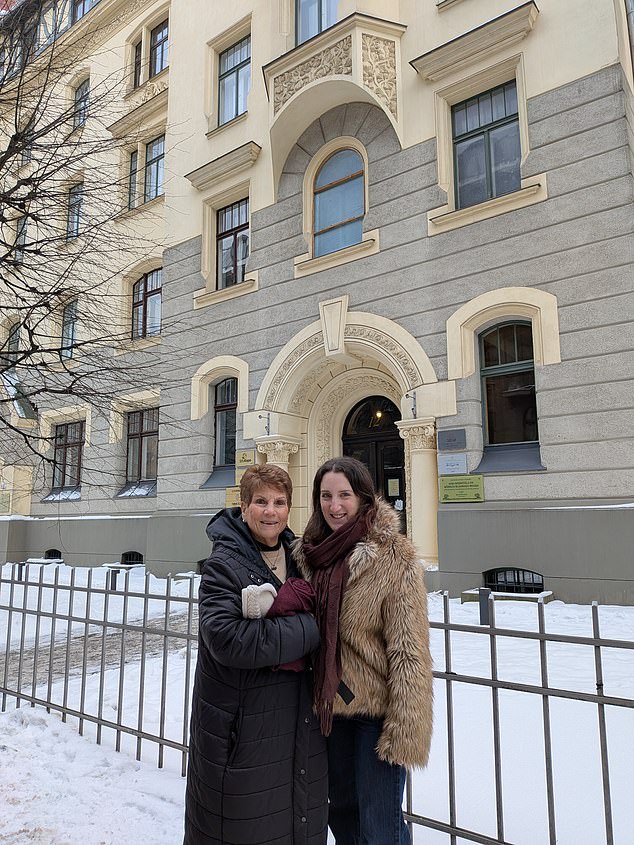
Vera, almost a fictional figure to me, was raised in Latvia and moved to South Africa just prior to World War II.
I invited Moen to accompany me to Latvia to explore what we might discover. Initially, she was hesitant. She firmly believed she wouldn't feel any connection to Latvia, as her mother's refusal to reflect on the past might have been a result of a painful departure.
However, although Moen and I have always been close, we have seldom had the opportunity to spend much time together. The prospect of five days was unique... and sufficient to persuade her.
And it seems - apparently - we are aligning with one of the most popular travel trends for 2026, exploring our heritage and encouraged by TV programs like Who Do You Think You Are?
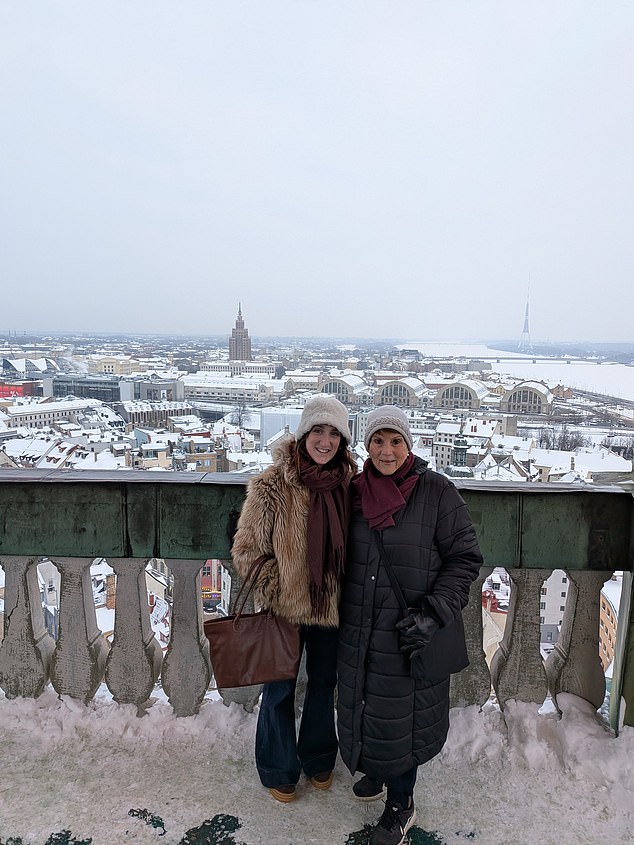
It's the biggest trend for 2026, according to the respected Conde Nast Traveller magazine. That's why we find ourselves in Riga on a snowy January afternoon with temperatures at -12C. Moen, who has always lived in South Africa, has never experienced more than a light snowfall.
We get down to business. MyHeritage has discovered a vast collection of archives, and I've printed photos, family trees, and old letters. The pictures are eerie. Vera resembles Moen, and I pause to look again at my great-grandfather Solomon Samuelson—he could be my brother.
In combination with fragments that Moen remembers, we examine them closely, determining that Vera met Solomon in 1930s Riga. Vera's eight brothers and sisters departed for Paris soon after. Solomon, on the other hand, traveled by ship to South Africa, where she later joined him.
Obviously, locating Vera's residence is our top concern. We start at the Art Nouveau museum with our guide Andra Brice.
As we examine the detailed objects on exhibit, Moen grows more and more enthusiastic. In the bedroom, it's the hat boxes sitting on the wardrobe that she can't stop gazing at. In the kitchen, it's the decorated tea towels, while in the dining room, small silverware stands attract her attention. Even the lace curtains seem recognizable to her.
'I believe I'm dreaming,' Moen repeatedly says, as if her early childhood memories are flooding back.
Following this, we set out to locate Vera's actual apartment. The only clue we have is a photograph from our cousins in Paris — the place might no longer be there. We go to the Museum of Jews in Latvia, and although it is informative, we are disappointed to find no mention of the Trembatzki or Samuelson families. However, the staff let us know that the apartment is on the same street. We are now in the heart of what was once the Jewish quarter fifty years ago.
Energized, guide Andra - who has remained with us - asks ChatGPT to provide a complete address based on evaluating the image. 'Skolas Iela 20' is what it states. We go directly there, but upon arrival, the location is clearly wrong.
We walk back and forth on the avenue, searching for a grey structure in anticipation of a game. After an hour and three incorrect stops, our toes have lost all sensation due to the chill.
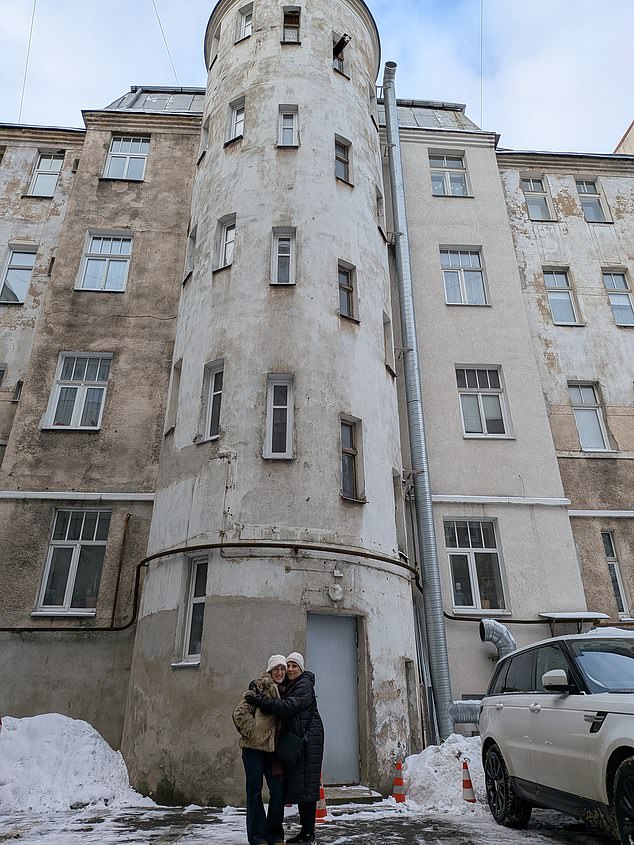
Andra recommends that we examine the courtyards located behind the main street. One appears to be a good candidate, and Moen believes we have discovered the right one, until I notice that the windows are not correct. I can sense her irritation.
Encouraged, we push forward through layers of snow. Still nothing. Returning to our car, Andra asks our driver Raitis to drive slowly around the area. He politely agrees - and he inquires about what we are searching for. I hand him the old photograph.
"Are you searching for the kebab restaurant?" he inquires. We are astonished. So straightforward. Raitis dashes down the street at top speed.
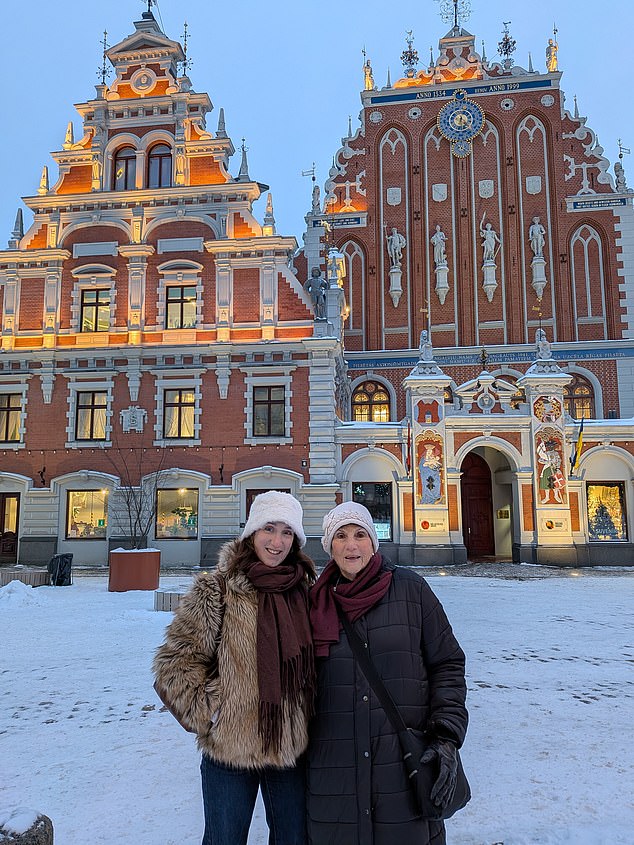
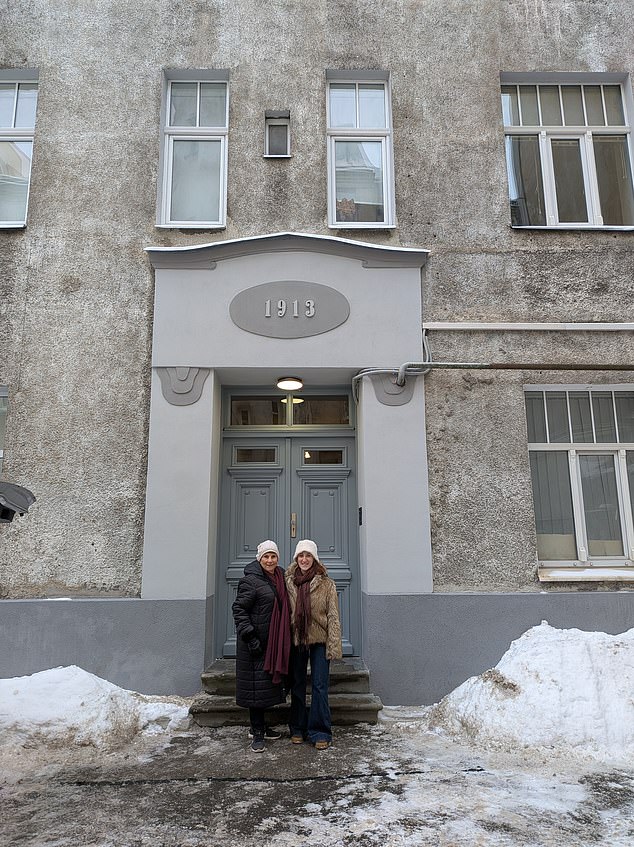
Moen is full of excitement. I jump out of the car.
It's here," I yell. The building has the same door as the picture, labeled "1913".
It's an emotional, profoundly fulfilling moment. Moen takes it all in and murmurs, "I sense her spirit here."
Returning to a location that once expelled a Jewish population seems like an act of resistance.
The precise cause of Vera's exit is still unclear. According to official statements, it was because of job prospects in Johannesburg, but I can't stop wondering if rising anti-Semitic feelings played a role in it.
For the rest of the afternoon, Andra shows us several attractions in Riga - the three of us feeling euphoric.
Trying to bring back memories, I ask Moen what her mother used to cook when she was a child. "Chopped herring, borscht, and cucumbers preserved in saltwater," she answers. Moen gets excited when she sees these items in the markets, but Andra recommends we also try Riga's contemporary food.
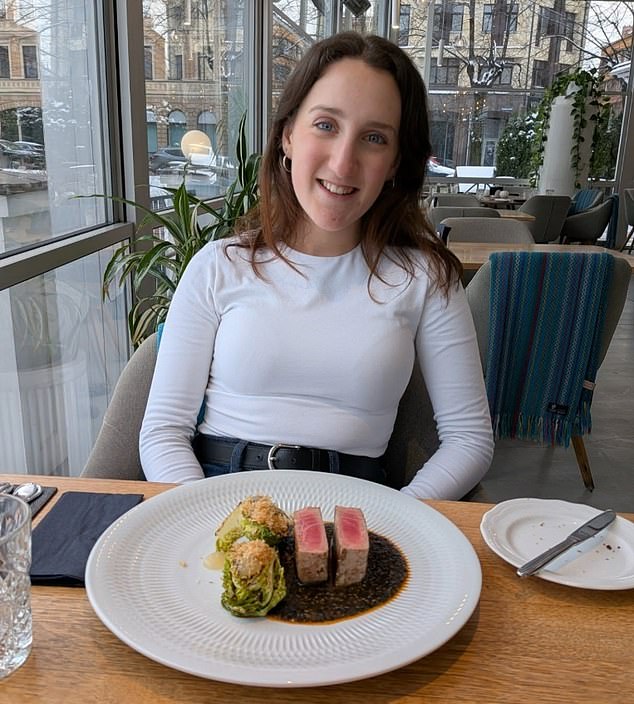
Searched tuna is featured at Kolonade Our Stories, while mushroom soup is served at Kalku Varti. For breakfast the following day, we choose croissants instead of chopped herring.
Moen and I review our experiences at the hotel on our last night in Riga. She starts talking about the kitchenware displays we saw at the museum.
"That apartment triggered memories. It stirred something within me," she says to me.
Then she breaks down: “My mother has been gone for 50 years. But today, I longed for her.”
Nevertheless, our exploration of these grandmother-granddaughter legacy studies is not yet complete.
In 1963, Marlene Samuelson encountered Michael Waks at a bus stop in Johannesburg. They got married four years later and raised three children.
In some way, we discover that the Waks and Samuelson/Trembatzki families, who met 10,000 miles away from Latvia in Johannesburg, actually come from cities only 125 miles apart: Riga and a location I'm unfamiliar with, Liepaja, a coastal town on the Baltic Sea.
BIG PROMO, BUY NOW!!!I possess a family photo from 1889 in Liepaja that features my great-great-great grandparents. Raitis takes us west for exploration.
It's a striking city. Lavish golden churches gleam behind unattractive gray apartment buildings that evoke the Soviet era.
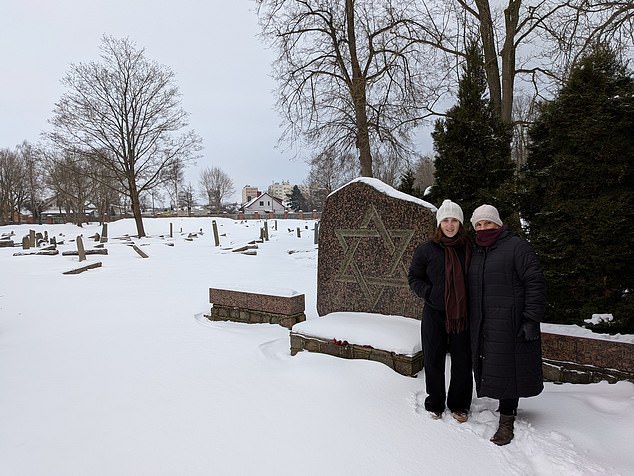
A guided tour leads us by houses that were once inhabited by Jewish families toward a Jewish graveyard. We are captivated while reviewing the list of interments - and several of our forebears are listed there.
My family endured the Holocaust by moving to South Africa, yet it's impossible for us to visit Latvia without acknowledging this tragic chapter of history.
We go to the Skede Holocaust Memorial, and I'm unsure if Moen's tears are due to the cold or something else. The mass graves require no explanation.
It's no surprise that the Jewish community in Latvia is significantly smaller now. The 1940s marked the end of a flourishing community, which, like my family, has since established new lives in London, Paris, Johannesburg, and other places.
But there is something compelling about revisiting my ancestors' journey - a completely distinct form of travel from anything I have encountered before.
To see the emotions unfold on my grandmother's face is quite something.
We come back to London emotionally drained, both of us sure we'll never do a heritage tour like this again - yet completely happy that we did.
zaianews.comWatch the Full Coverage