
It is among Britain's most recognizable dishes, consumed every day by millions and frequently promoted as the ideal 'healthy' snack.
Inexpensive, easy to carry, and inherently sweet, the simple banana is the top-selling fruit in the UK and US, and has been linked to fitness, cardiovascular well-being, improved digestion, and fast energy.
However, in recent years, they have also faced criticism – regarded as excessively sweet, overly starchy, or even detrimental to blood sugar levels.
Are bananas truly nutritious – or have we misinterpreted them as a fruit?
Originally cultivated in Southeast AsiaOver 7,000 years ago, bananas traveled around the globe via trade networks and were once seen as a rare and precious item.
BIG PROMO, BUY NOW!!!They became commonly accessible in the UK during the late 19th century, as steamships and refrigeration technology made imports more cost-effective.
Currently, the well-known yellow Cavendish banana is prevalent on supermarket shelves, with the typical British person consuming approximately 20 bananas annually.
However, even though they are common, their nutritional effects greatly depend on how and when they are consumed. To distinguish truth from myths, we consulted Dr. Duane Mellor, a Registered Dietitian and Senior Lecturer at Aston Medical School, to address the main questions.

Are bananas truly nutritious – or simply a form of sugar in disguise?
Bananas frequently face criticism due to their high sugar levels, especially when measured against fruits like berries or apples.
A medium-sized banana has approximately 14 grams of natural sugar and about 100 to 110 calories.
However, Dr. Mellor states that concentrating solely on sugar is deceptive.
"Bananas can be a great choice, as they provide a concentrated source of energy that is very handy to bring to the gym or along with lunch," he says.
In contrast to candies or sweetened beverages, the sugar found in bananas is accompanied by fiber, water, and essential nutrients, which helps slow down digestion and reduces sudden increases in blood sugar levels.
"As bananas mature, they may contain more sugar, but it's crucial to note that this is not free sugar, making it a beneficial option, particularly before physical activity," Dr. Mellor adds.
Extensive research indicates that consuming whole fruits, such as bananas, is linked to improved heart health and reduced risk of death, instead of causing weight increase or metabolic issues.


The connection between potassium and heart health – are bananas truly unique?
Bananas are well-known for their high potassium content, with approximately 350–400mg found in a medium-sized banana. Potassium is essential for nerve communication, muscle function, and ensuring a steady heart rhythm.
It also assists in managing blood pressure by neutralizing the impact of sodium, prompting the body to eliminate extra salt – a process associated with a reduced likelihood of heart attack and stroke.
Nevertheless, Dr. Mellor warns against exaggerating the significance of bananas.
"Although bananas provide a decent amount of potassium, they are not even close to being as rich a source as a large jacket potato or a small portion of raisins or apricots," he states.
That being said, potassium is essential.
Potassium plays a crucial role in maintaining good health, as it is associated with reduced blood pressure and improved cardiovascular well-being, with numerous studies highlighting its advantages when paired with decreased sodium (salt) consumption.
In other words, bananas support cardiovascular well-being – but they are neither the sole nor the most effective source.
Can bananas improve digestive health?
A medium-sized banana provides approximately 3 grams of fiber, which aids in digestion and promotes regular bowel movements. However, the most intriguing impact bananas have on the digestive system stems from a less familiar component: resistant starch.
Bananas that are green or not fully ripe have significant amounts of resistant starch—a kind of carbohydrate the body is unable to break down. Rather, it moves to the colon, where microorganisms in the gut ferment it.
"Green bananas are believed to have higher levels of resistant starch, which is beneficial for digestive health," explains Dr. Mellor.
This occurs because we are unable to digest this kind of starch, which functions similarly to fiber, and our gut bacteria subsequently ferment it.
The fermentation process generates substances associated with better digestive health and metabolic control.
This is believed to reduce the risk of colon cancer and may also assist in managing blood sugar levels and metabolism.
As bananas mature, resistant starch is slowly transformed into simple sugars, resulting in sweeter and more easily digestible fruit – however, this process diminishes their ability to nourish the gut.
WHAT CONSTITUTES A WELL-ROUNDED NUTRITIONAL PLAN?
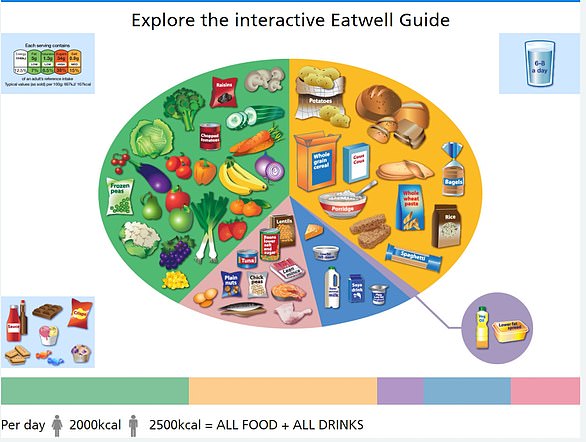
*Consume a minimum of 5 servings of different fruits and vegetables daily. Both fresh, frozen, dried, and canned fruits and vegetables are included.
*Use potatoes, bread, rice, pasta, or other starchy carbohydrates as the foundation of your meals, preferably wholegrain varieties*
*30 grams of fiber per day: This is equivalent to consuming the following: 5 servings of fruits and vegetables, 2 whole-wheat cereal biscuits, 2 thick slices of wholemeal bread, and a large baked potato with the skin intact.
*Consume some milk or milk substitutes (like soy beverages), opting for varieties with lower fat and lower sugar content*
*Consume some beans, legumes, fish, eggs, meat, and other sources of protein (including two servings of fish per week, one of which should be oily)
*Opt for unsaturated oils and spreads, and consume them in limited quantities*
*Consume 6-8 cups or glasses of water daily*
*Adults should consume no more than 6 grams of salt and 20 grams of saturated fat daily for women, or 30 grams for men*
Source: NHS Eatwell Guide
Does the level of ripeness affect the nutritional value of a banana?
Yes – significantly.
As a banana matures, its internal composition undergoes changes. In a green or newly ripened banana, a significant portion of the carbohydrates is present as starch. As the fruit becomes softer and turns yellow—eventually showing brown spots—natural enzymes convert this starch into simple sugars.
This is important because starch is broken down gradually, whereas sugar is taken in significantly faster.
Green bananas thus release their energy slowly, resulting in a more gradual increase in blood sugar levels and helping you feel satisfied for a longer period. Riper bananas, on the other hand, provide their energy more quickly, causing a faster rise in blood sugar but offering an immediate energy boost.
This is why the level of ripeness determines which individuals bananas are most suitable for.
For individuals aiming to control blood sugar levels or prevent energy dips, bananas that are slightly green or just turning yellow are typically a better option. They are digested at a slower rate and less likely to lead to sudden changes in energy levels.
For athletes, individuals who work out, or anyone requiring quick energy—such as prior to a workout or during prolonged physical activity—riper bananas can be beneficial since their sugars are more easily accessible.
There isn't one specific 'healthiest' banana. The optimal option varies based on what your body requires at any given moment—whether it's consistent, long-lasting energy or an immediate boost.
What is the recommended daily intake of bananas?
The NHS recommends that individuals aim to consume five servings of fruits and vegetables daily — and a medium banana (80g) counts as one of those servings.
However, before you consume a large amount, the health authority recommends limiting intake to one or two per day as part of a well-rounded, diverse diet.
Who needs to be cautious with bananas?
Bananas are generally safe for most individuals. However, there are certain cases where this may not be true.
Individuals suffering from severe kidney disease might need to restrict their intake of high-potassium foods, since impaired kidneys have difficulty eliminating potassium from the bloodstream.
Previously, it was believed that individuals with kidney disease should completely steer clear of bananas," Dr. Mellor explains, "but nowadays, the approach is to consume them in moderation based on the severity of kidney failure—perhaps one or two per week.
Bananas might also require attention in individuals using drugs that increase potassium levels, including ACE inhibitors or diuretics that retain potassium.
Certain individuals suffering from irritable bowel syndrome (IBS) might experience gas and discomfort after consuming ripe bananas, as they contain fermentable sugars.
Is it possible to consume an excessive number of bananas?
The concise response is... yes. Pop musician Peter Andre experienced intense pain while shooting a music video and was taken to the hospital, which he attributed to consuming too many bananas.
The 2010 episode required him to cancel a show on that particular night.
In 2021, Andre, who is now 50, mentioned: 'I fainted during a video shoot because I ate too many bananas. I realize that seems silly, but essentially I consumed too much potassium.'
It remains unclear how many bananas Andre has eaten. Nevertheless, the NHS recommends that adults take in approximately 3,500mg of potassium daily.

Research indicates that an excessive amount of potassium in the bloodstream may lead to a disorder known as hyperkalemia, which can cause symptoms such as heart palpitations, difficulty breathing, chest discomfort, feelings of nausea, and vomiting.
It typically happens due to issues with the kidneys.
In 2011, a research project conducted by the National Institute of Mental Health in the United States indicated that consuming more than 20 bananas daily could lead to it.
What is the most beneficial way to consume bananas?
A frequent error is considering bananas to be nutritionally the same as every other fruit.
Since bananas contain a bit more energy than other fruits, it may not be advisable to rely solely on bananas for your five-a-day," says Dr. Mellor. "The five-a-day guideline includes both vegetables and fruit.
So, consuming a range is preferable, perhaps for most people three to four bananas per week along with a wide selection of other fruits and vegetables.
Combining bananas with protein or beneficial fats, like yogurt, nuts, or seeds, helps slow down digestion and enhances blood sugar regulation, resulting in a more satisfying and metabolically stable meal.
zaianews.comWatch the Full Coverage