
Scientists have revealed that hundreds of thousands of individuals might gain from a 'smart T-shirt' capable of identifying concealed heart issues.
At present, individuals experiencing symptoms such as chest discomfort or lightheadedness are provided with a portable device that records their heart's electrical activity.
This examination uses precisely placed adhesive electrodes, linked via wires to a monitor worn around the waist, which must be gently taken off and put back on each time an individual takes a shower.
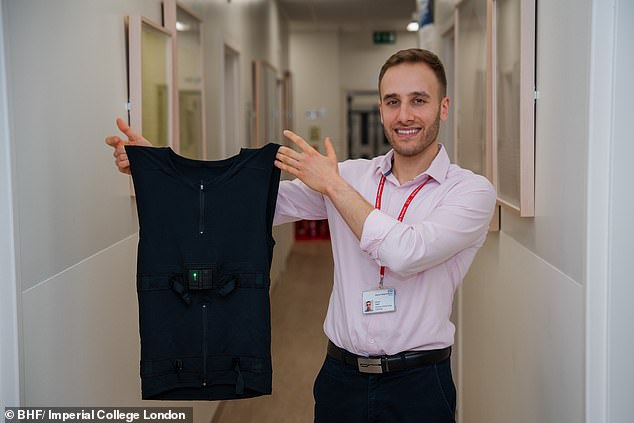
Currently, scientists have created a shirt containing as many as 50 sensors embedded in the material – and it may be much easier to operate.
The garment, born from a collaboration between the British Heart Foundation and Imperial CollegeLondon, is intended to identify uncommon, genetically passed heart disorders.
It can be worn for as long as a week, allowing more time to detect problems than portable ECGs, which are usually used for one or two days.

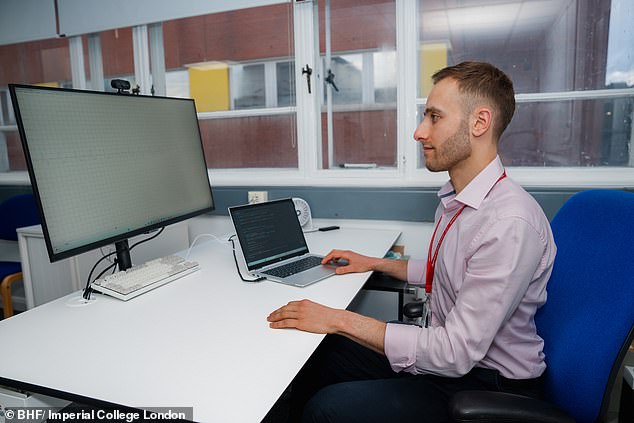
The gadget transmits data to a computer that employs a uniquely developed AI system to examine the details and highlight any problems for a physician.
It has the potential to assist approximately 340,000 individuals in the UK suffering from a hereditary heart condition that may lead to a life-threatening irregular heartbeat.
These genetic disorders may raise an individual's chance of sudden cardiac death if they remain undetected and untreated.
It is estimated that 12 young individuals under the age of 35 die in the UK every week.
Heart-related conditions passed down through genetics may lead to symptoms including shortness of breath or dizziness during regular tasks such as driving or physical activity.
Nevertheless, identifying these conditions within a hospital setting can be challenging, since heart rhythm evaluations and heart imaging frequently show no abnormalities.
Professor Zachary Whinnett from Imperial College London stated, "Too many individuals pass away due to genetic heart disorders that could be managed if detected sooner."
One of the difficulties in diagnosis nowadays is that abnormal heart rhythms do not always happen during standard 10-minute hospital ECGs or even during 48-hour home ECG monitoring.
We wish our AI-enhanced T-shirt offers a convenient and comfortable option, enabling us to perform extended scanning that may enhance diagnosis.
By utilizing the potential of AI, we aim for our research to enhance physicians' capacity to detect these conditions and improve the quality of life for individuals who are unaware they have a genetic heart disorder.
The T-shirt is being created with the assistance of Carly Benge, a 38-year-old educator from Watford.
Ms. Benge suffers from Brugada syndrome, a severe cardiac arrhythmia that scientists hope the T-shirt can identify.
Since the condition is hereditary, her two children, seven-year-old Imogen and ten-year-old Jake, are also at risk.
Youngsters such as Imogen and Jake might receive earlier intervention if detected early through the smart T–shirt.
Early detection is crucial for disorders such as Brugada syndrome, as failure to identify and manage them can raise the likelihood of unexpected heart-related fatalities.
A sample of the T–shirt will be provided to 200 patients and individuals participating in the Peart–Rose Research Unit at Hammersmith Hospital.
The study subjects will wear the T–shirt for a maximum of three months to assess its effectiveness in detecting severe heart conditions.
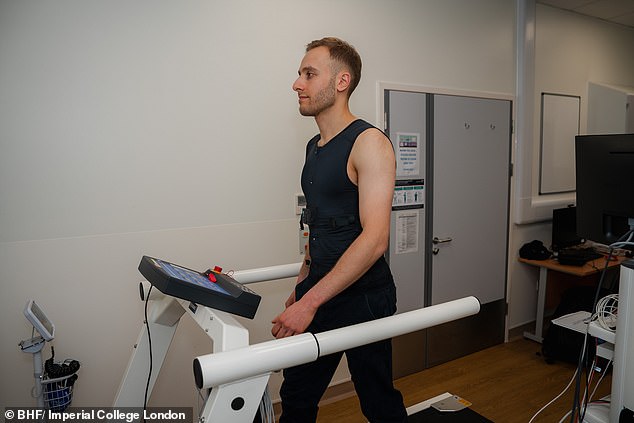
The T-shirt will be made from soft, athletic-style fabric that can be worn under other clothing during everyday tasks, such as sleeping, eating, and working.

It will include wires embedded in the material to detect electrical signals, enabling extended patient monitoring.
The scientists anticipate that the technology could be accessible to physicians within approximately five years.
Although the T–shirt will first be created and tested on adults, if it proves successful, it may offer a new method to enhance comfort during heart monitoring for children in the future.
Scientists also aim to provide access to it, aiding in the easier identification of individuals with various heart rhythm disorders, including atrial fibrillation.
Watch the Full Coverage