
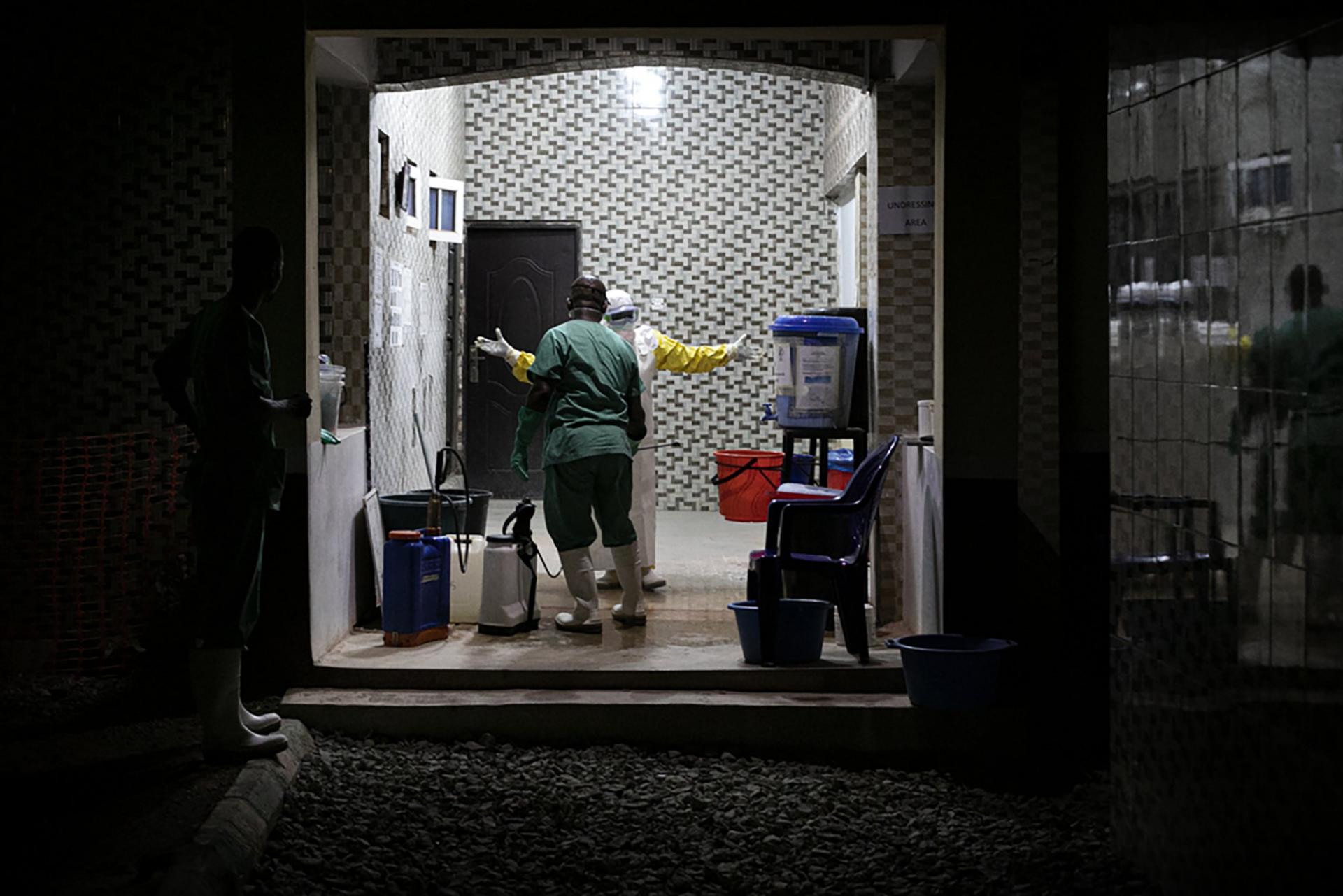
As Nigeria enters its yearly Lassa fever season, a concerning trend has arisen: the virus is now more frequently affecting those responsible for controlling it.
As per the Nigeria Centre for Disease Control (NCDC), over 15 medical professionals in several states have been infected with Lassa fever by the time of Epidemiological Week Seven, including two fatalities. In just the initial five weeks of the year, 31 individuals lost their lives due to the illness, with more than 754 probable cases documented across 33 local government areas in nine different states.
The information highlights not just the seasonal return of the virus but also ongoing weaknesses in healthcare institutions, where those on the front lines continue to face risks.
In a notice released in Abuja as case numbers increase, the NCDC Director-General, Dr Jide Idris, cautioned that strict adherence to Infection Prevention and Control (IPC) protocols is still the best way to prevent transmission within healthcare facilities.
He mentioned that the infections among medical staff highlight ongoing issues with clinical awareness and infection prevention measures in certain institutions.
"Strict compliance with IPC protocols, timely identification, and unified state-level efforts will preserve lives and curb additional spread," Idris stated, highlighting the loss of skilled healthcare workers as a serious issue that undermines the ability to respond effectively to an outbreak.

The NCDC has called on state governments and medical facilities to create effective isolation units, keep specialized treatment centers operational when possible, and guarantee well-defined referral processes for potential cases.
Understanding Lassa fever
Lassa fever is a sudden viral hemorrhagic illness caused by the Lassa virus, which belongs to the arenavirus group, as stated by the World Health Organization (WHO). The condition is zoonotic, indicating that it spreads from animals to people, mainly through contact with food or household objects that have been tainted by the urine or feces of infected Mastomys rats, often referred to as the African multimammate rat.
The disease is prevalent in Nigeria and various West African nations such as Benin, Ghana, Guinea, Liberia, Mali, Sierra Leone, and Togo. Specialists think it may also be present in other countries within the area where monitoring systems are less robust.
Although the primary mode of transmission is from rodents to humans, the World Health Organization has cautioned that human-to-human infection is possible, especially in healthcare environments where proper infection control protocols are not in place.
Following the significant outbreak in 2016, Nigeria has experienced periodic seasonal increases, usually occurring between November and April. The states most affected this year are Ondo, Edo, Bauchi, Taraba, Ebonyi, and Benue, with various local government areas designated as high-risk zones.
Healthcare professionals are seen as the initial barrier during such epidemics. Their contact not only diminishes the available workforce but also increases the chance of further spread if infections are not detected and contained quickly.
Voices from the frontline
For numerous healthcare professionals, the danger is no longer theoretical.
A nurse working at a federal medical facility in one of the impacted states, who asked to remain unidentified as she was not permitted to speak openly, explained the stress that has become part of everyday patient treatment.
"Every fever case now causes you to hesitate. You wonder, is this malaria, typhoid, or something else? Occasionally, the protective gear isn't sufficient, and you still need to care for the patient," she said.
A practicing physician, Godwin Ekweke, expressed comparable worries.
"The difficulty lies in the fact that initial signs of Lassa fever resemble typical diseases. By the time there is concern, multiple staff members might have already been in contact with the patient," Ekweke stated.
Healthcare professionals observe that the risk of exposure is not limited to physicians and nurses. Janitors, lab technicians, nursing assistants, and office staff might also be at risk if infection prevention measures are not consistently followed.
"It's not solely concerning the physicians. All individuals within the institution should be safeguarded, ranging from the janitor to the specialist," stated Ajasa Kehinde, the managing director of God Is Able Hospital in Kubwa, Abuja.
Why are infections increasing among healthcare professionals?
Health professionals link the increasing cases to a mix of seasonal, medical, and structural reasons.
A senior physician working at Kubwa General Hospital in Abuja, who prefers to remain unidentified, mentioned that the initial signs of Lassa fever, such as fever, fatigue, and head pain, are not unique and can be confused with malaria or other common fever-related conditions in Nigeria.
"In numerous primary and secondary healthcare centers, patients are first managed for malaria or other typical fever-causing conditions. This lag in considering Lassa fever can lead to several staff members being exposed before isolation measures are implemented," he mentioned.
He observed that the IPC guidelines are thoroughly recorded at the national level, but their execution differs considerably across different facilities.
In certain situations, failures in hand hygiene, incorrect usage of personal protective equipment, and improper waste management heighten the risk of occupational exposure. It is essential to follow standard precautions with all patients, regardless of whether they are suspected of having Lassa fever. "You shouldn't delay taking protective measures until a diagnosis is confirmed," he emphasized.
Dr. Hammed Alausa, another medical professional, highlighted issues with the supply chain. While national organizations provide protective equipment during outbreaks, occasional shortfalls at the local level can happen.
"Even short-term shortages of gloves, gowns, or disinfectants can raise susceptibility," Alausa stated, noting that processes involving blood or body fluids, like inserting intravenous lines, cleaning wounds, or managing lab samples, pose greater danger if safety protocols are not followed.
A doctor named Chukwudi Ifeanyi pointed out another issue: healthcare professionals delaying the reporting of their own symptoms.
"Stigma, professional pride, or fear of being isolated can lead to delayed presentation. This raises the risk of complications and possible spread," Ifeanyi stated.
Effects of a weakened first line
Public health experts have cautioned that the effects of healthcare workers becoming sick go well beyond isolated incidents.
Initially, a lack of staff increases the burden on already overworked facilities. At the height of the Lassa fever season, treatment centers frequently function at or beyond their maximum capacity. The loss of skilled workers can affect the quality of patient care and lead to longer wait times.
Second, motivation declines. The fear of contracting the illness might deter employees from offering to work in high-risk departments, especially in remote regions where the number of healthcare professionals is already minimal.
Third, public trust may decline. Should hospitals be viewed as hazardous, communities might postpone seeking medical attention, possibly leading to worse health results and increasing the spread of illness.
"If health professionals are not safeguarded, the whole healthcare system becomes vulnerable. Ensuring their protection is not a choice; it is a crucial move," Alausa stated.
These specialists caution that protecting medical staff should not be seen solely as a workplace concern but as a key element of pandemic readiness.
The way forward
Experts describe both short-term and extended measures to prevent infections among medical personnel.
They recommend consistent, required IPC training for every type of facility employee, both clinical and non-clinical, as crucial. They feel that simulation activities and in-job guidance can strengthen proper procedures. Likewise, strict compliance with hand hygiene is still vital. Alcohol-based hand sanitizers and working handwashing areas should be easily available throughout the facilities.
Experts also mentioned that facility-level stock monitoring systems can aid in avoiding shortages. Open reporting of inventory shortfalls enables quick reallocation before supplies run out. They also suggest maintaining decentralized reserve stocks during high transmission times.
Hospitals need to establish strong triage processes to detect and separate individuals suspected of having Lassa fever upon their initial arrival. Specialized isolation zones help minimize the chance of spreading the disease to other patients and healthcare workers. Well-defined referral procedures must be shared with lower-level medical facilities to avoid unnecessary contact.
Fast laboratory verification is essential. Delays lead to prolonged uncertainty and raise the risk of exposure. Enhanced sample transportation methods and increased lab capacity can greatly reduce processing times.
They also recommended that medical personnel require straightforward, non-stigmatizing procedures to report symptoms or exposure and obtain testing and care without delay. Psychological support services can assist in managing fear, exhaustion, and stress.
'Healthcare professionals should feel secure in reporting their symptoms. Prompt treatment increases survival rates and safeguards their coworkers,' Ifeanyi stated.
Provided by zaianews.com.