
Strategic Collaboration Between Hyundai and General Motors
Hyundai Motor and General Motors have formed a strategic alliance to co-develop five vehicle platforms for North and Latin American markets. This unusual partnership between two global automotive competitors highlights their response to increasing cost pressures, geopolitical risks, and the rapid rise of Chinese electric vehicle (EV) manufacturers.
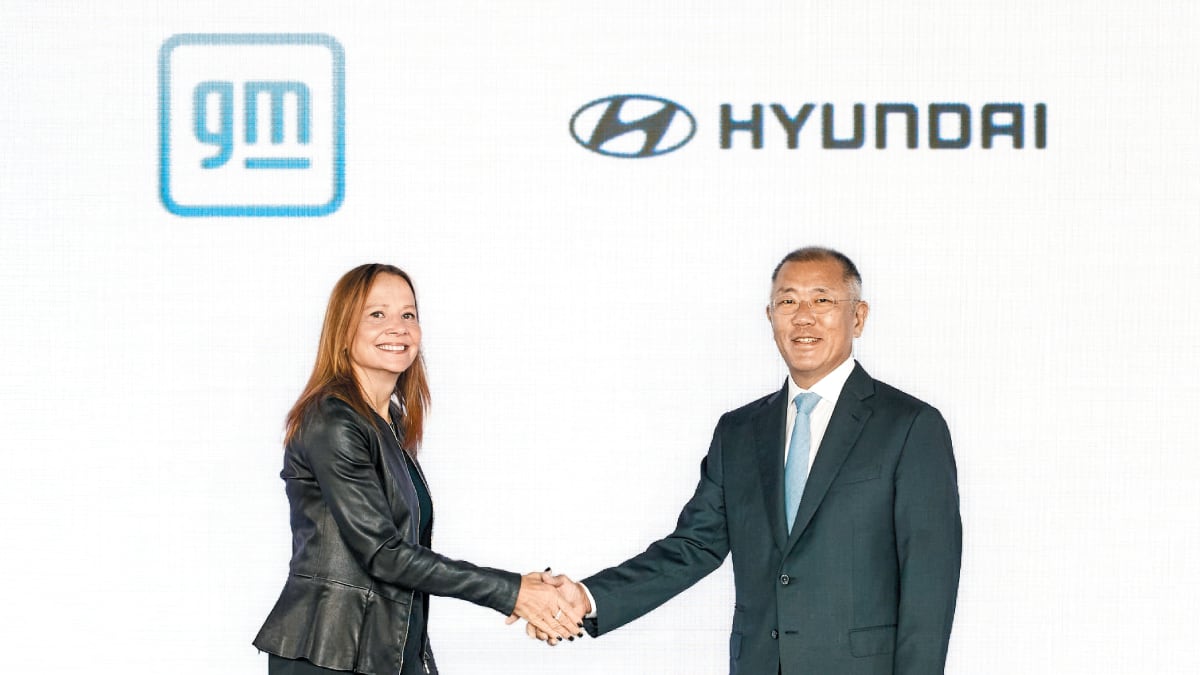
The agreement, announced on August 7, outlines Hyundai's leadership in developing four platforms, including electric vans, compact passenger vehicles, SUVs, and small pickups. Meanwhile, GM will focus on a mid-sized pickup platform tailored for Latin America. This collaboration follows a memorandum of understanding signed in September 2023 by Hyundai Motor Group chair Chung Eui-sun and GM CEO Mary Barra.
The primary objective of this partnership is to reduce platform development costs, which are estimated to range from 300 billion to 500 billion won ($220 million to $370 million) per platform. By combining R&D, supply chain, and logistics capabilities, the two companies aim to create regionally customized models that target competitive segments where both have faced underrepresentation or pressure.
This move reflects broader shifts in the global automotive industry, as Chinese EV makers like BYD gain market share and U.S. protectionism—driven by President Donald Trump’s renewed tariff agenda—threatens export prospects. Both Hyundai and GM are seeking scale advantages and local production strategies to navigate a fragmented trade landscape.
For GM, the alliance offers access to Hyundai’s advanced hybrid technology, a key area where the Korean automaker competes closely with Toyota. This allows GM to develop a mid-sized hybrid pickup aimed at maintaining demand during the transition to electric vehicles. On the other hand, Hyundai gains an opportunity to enter the U.S. mid-sized pickup segment—a 3 million-unit market dominated by American brands. Currently, Hyundai’s only offering in this category is the compact Santa Cruz, leaving a significant gap in its North American lineup.
The deal also enables GM to leverage Hyundai’s strengths in small vehicles, helping it expand its underrepresented compact car, SUV, and pickup lineup. Additionally, GM can benefit from Hyundai’s experience in electric commercial vehicles, including its modular ST1 platform launched for delivery fleets, police vehicles, and ambulances. For GM, which is relatively new to this segment, shared development reduces the financial burden of catching up.
Both companies hope the alliance will enhance their competitiveness in Latin America, particularly in Brazil, where Chinese manufacturers are rapidly expanding their market share. Hyundai also stands to benefit from GM’s well-established supply chain in the Americas, which includes component sourcing, materials, and logistics. This could help Hyundai mitigate rising input costs and tariff exposure.
A Hyundai official mentioned that the agreement could open new supply opportunities for South Korean small and mid-sized firms looking to enter GM’s vendor ecosystem. Analysts see the partnership as a calculated move to hedge against escalating U.S. trade barriers. Hyundai’s cooperation with GM on sourcing and regional production could offset some of the inflationary effects of Washington’s new tariff regime, introduced in April.
Hyundai has recently committed to building a 2.7 million-ton-per-year steel plant in Louisiana, with GM expected to be one of its anchor clients. Given the high U.S. steel tariffs, domestic production has become a strategic priority.
Despite these benefits, the alliance could pose challenges for GM Korea, the group’s traditional hub for compact vehicle development. As GM enhances its in-house capabilities through collaboration with Hyundai, questions arise about the long-term strategic role of its South Korean operations. Some industry observers warn that the Korean unit may see its development mandate reduced over time.