
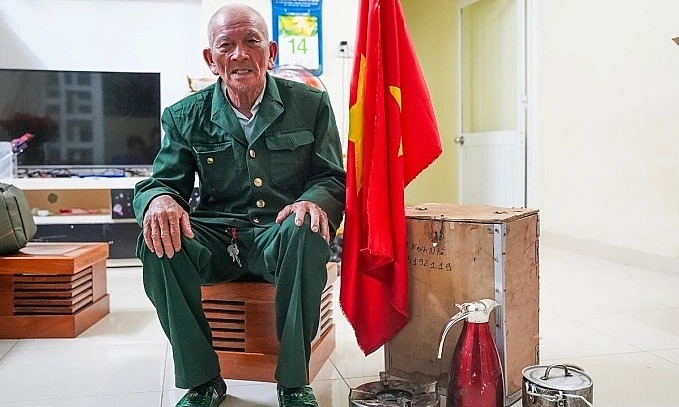
Veteran’s Determination to Attend National Day Parade Sparks Debate
Lieutenant Colonel Nguyen Huy Cac, 80, has made it clear that he will travel from Bac Ninh Province to Hanoi to witness the parade during the 80th National Day celebrations on September 2. This decision has caused concern among his family, particularly his daughter, who worries about his well-being in the sweltering heat of the event.
Cac has a long and distinguished military career, having served in battlefields across the North, South, Laos, and Cambodia between 1965 and 1988. He was wounded and received a 4/4 rating for his service, as well as serving as a former deputy head of training at the Military Zone 9 Officers School. Despite his age and health conditions, he remains determined to attend the parade.
“I want to see our nation’s strength to report to my fallen comrades,” he told his daughter. However, without an official invitation to enter Ba Dinh Square, the location of the grand celebration, Yen fears her father may not be able to withstand the intense heat and the crowded environment.
The family explored various options, such as booking hotels and cafes with views of the parade route, but most were either sold out or too expensive. They even sought advice from locals in Hanoi, but Cac refused to use his veteran status to gain special access. “I cannot use my veteran status to make demands. Let me watch the parade like everyone else.”
Another veteran, Le Nguyen Phuc, 87, from Hung Yen Province, is also eager to attend the celebrations. He fought in the southern battlefield and has long wished to see troops march through Ba Dinh Square. His granddaughter, Nguyen Trang, says he repeatedly asks about the parade schedule and insists on attending “on behalf of fallen comrades,” believing this could be his last chance.
However, the family is concerned about his health and the challenges of the journey. Traveling from Hung Yen to Hanoi, waiting in crowds, and moving through large groups of people pose significant risks for someone of his age. The family attempted to secure an official invitation through the commune veterans association, but the process was complicated and unsuccessful due to high demand.
Public interest in seating arrangements for veterans at the parade has grown in recent weeks, especially after an incident during the April 30 parade where two veterans were disrespected by younger spectators. Some suggest designated seating as a solution, while others argue that organizers face limitations in space and resources.
Many believe that providing seats for veterans is a meaningful way to honor them. “It does not have to be the central grandstand, just a dedicated area where they can watch with dignity,” one person noted. Psychologist Nguyen Thi Tam from HCMC explains that veterans’ desire to attend major events stems from a deep psychological need. For them, these moments are opportunities to relive their heroic past and reaffirm the value of their sacrifices.
“Watching the parade shows that their glorious past has helped shape the nation’s proud present,” she said. Many veterans feel it is their duty to live and witness the nation’s joyful days on behalf of their fallen comrades.
Bui Thi An, chairwoman of the Hanoi Association of Women Intellectuals and a former National Assembly member, acknowledges the challenges of accommodating all veterans. With three million veterans nationwide, it is impossible to seat them all in the 30,000-seat grandstand at Ba Dinh Square. She suggests alternative solutions, such as working with veterans associations to identify those who wish to attend and are healthy enough. Organizers could then set up priority viewing areas, including additional grandstands or separate seating sections along the parade route, with medical and volunteer support.
An alternative approach would be to use existing infrastructure, such as cultural centers or halls, to create live viewing locations. This would ensure safety and comfort for veterans in cool, sheltered spaces while preserving the solemn atmosphere of the ceremony. By implementing such strategies, organizers can better honor veterans and provide them with a dignified experience.