
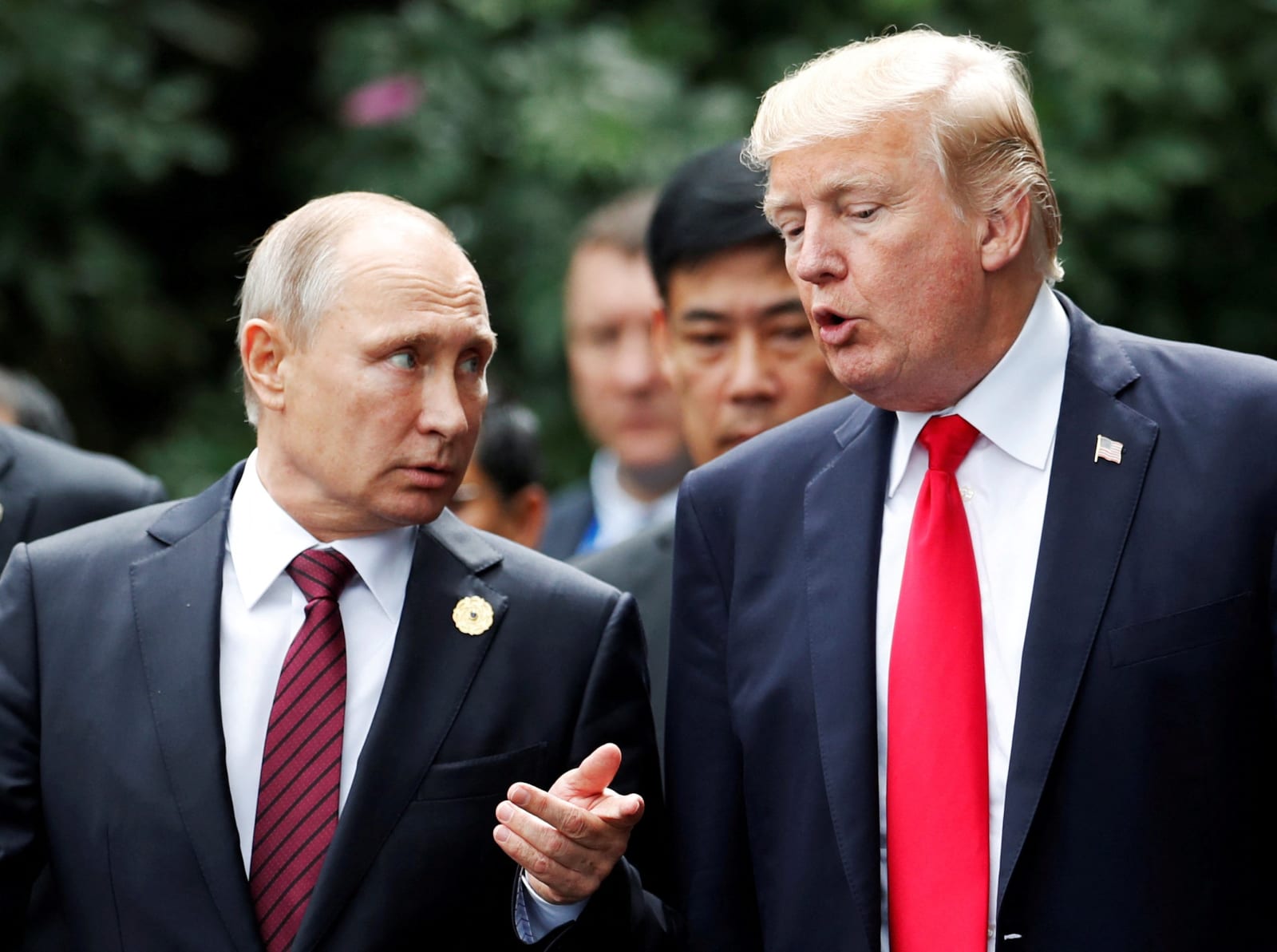
The Unconventional Summit: Trump and Putin in Alaska
A hastily arranged summit between former U.S. President Donald Trump and Russian President Vladimir Putin is scheduled for August 15, 2025, in Alaska. The meeting aims to address a potential peace deal between Russia and Ukraine. However, Ukrainian President Volodymyr Zelenskyy is not expected to attend, unless there is a last-minute change. Experts have weighed in on the significance of this unconventional gathering and its potential outcomes.
How Do Wars End?
Wars typically end for one of three reasons. First, both sides may become exhausted and decide to seek peace. Second, one side might become weary and signal readiness to negotiate. Third, external powers can intervene and impose their will on the conflicting parties. In the case of the Russia-Ukraine conflict, neither side has shown a genuine willingness to engage in meaningful negotiations or give up territory. This has led to ongoing hostilities, with the U.S. under Trump’s administration attempting to play the role of an external power imposing its will.
The Role of External Powers
Russia, despite being a former superpower, remains a significant global force with nuclear capabilities and a large military. Unlike smaller Middle Eastern nations, it cannot be easily dominated by the U.S. Therefore, the effectiveness of imposing peace through external intervention is questionable. The involvement of Trump and Putin in this scenario raises concerns about whether such an approach can lead to a real resolution.
Historical Comparisons and Lessons
Some analysts draw parallels between the upcoming Trump-Putin summit and the Munich Conference of 1938, where British Prime Minister Neville Chamberlain met with Adolf Hitler. While such comparisons are often avoided due to the gravity of the Holocaust and World War II, the diplomatic context offers insights. In 1938, Germany sought to annex German-speaking regions of Czechoslovakia, leading to an agreement that failed to prevent further aggression. Similarly, the current situation involves external actors attempting to broker peace without the direct involvement of the affected nation.
The Absence of Key Players
Ukraine's absence from the negotiation table mirrors the historical precedent set during the Munich Conference, where Czechoslovakia was excluded. This raises concerns about the legitimacy and enforceability of any agreements reached. Putin, as a strongman leader with a powerful military, shares similarities with historical figures like Hitler, albeit without the same level of atrocities. The West's failure to uphold security guarantees provided to Ukraine after it gave up its nuclear arsenal in 1994 further complicates the situation.
Expertise in Peace Negotiations
Successful peace negotiations require specialized expertise. Typically, political leaders set the goals, while career diplomats and military officials develop strategies to achieve them. However, the current U.S. administration has experienced significant personnel changes, leading to a lack of experienced staff. This has created challenges in maintaining the necessary expertise for effective diplomacy.
The Impact of Political Leadership
The sudden nature of the Trump-Putin summit poses additional challenges. Such high-level meetings usually occur after extensive preparation, involving detailed documents, discussions with counterparts, and thorough briefings. In contrast, the Alaska meeting lacks this structure, potentially leading to decisions driven more by political considerations than practical implementation.
Enforceability of a Peace Deal
Enforcing a peace deal remains uncertain, especially given the history of unfulfilled promises. Russia and Ukraine have deep historical ties, making the resolution of territorial disputes complex. Putin’s stance on Crimea and eastern Ukraine is unlikely to change, and Ukraine’s position on these areas is equally firm. Without mutual concessions, achieving a lasting peace seems improbable.
Perspectives from the Diplomatic Community
Diplomats and experts generally view the summit as an amateurish attempt at diplomacy. They anticipate minimal tangible results, with the meeting likely producing a photograph and a statement rather than a meaningful agreement. While some may believe in the potential for resolution, the likelihood of a successful outcome appears low.
Conclusion
The Trump-Putin summit in Alaska represents a significant moment in international relations, but its success remains uncertain. The absence of key players, lack of preparation, and historical precedents all contribute to doubts about its effectiveness. As the world watches, the true impact of this meeting will depend on the ability of both leaders to navigate the complexities of peace negotiations.