
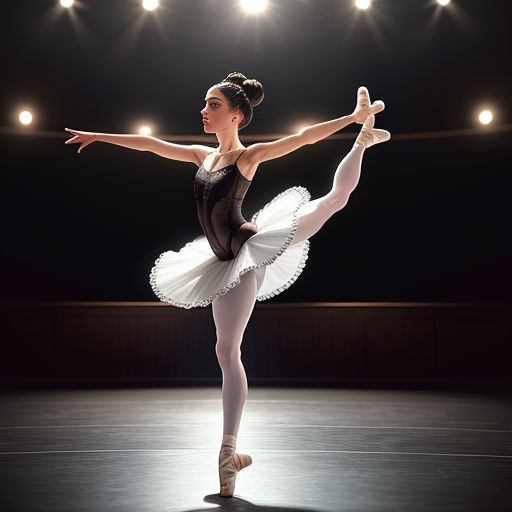
A Journey of Resilience and Passion
Lydia Booysen's life took an unexpected turn when she was just a baby. A violent incident left her paralyzed from the hips down, which could have marked the end of dreams for many. However, for Lydia, it became the beginning of a remarkable story defined by resilience, faith, and a deep love for dance.
"I was stabbed when I was three months old; my dad stabbed me," Lydia recalls quietly. "I lost complete feeling from my hips down. Growing up, I always loved dancing. Since I was a child, I would take part in talent shows at school. After school, my friends and I would go to the garage and practise dance routines."
As her friends moved on with their lives, Lydia found solace in her own room, where she danced alone. Her passion for dance never waned.
In addition to dance, Lydia discovered a love for swimming. "I started to swim as a disabled swimmer, and I loved the water," she says. "Swimming became a passion too. It was a big deal for me when I started competing in the big leagues. I even got gold for physically disabled sports."
Challenges and Renewal
However, years of strain on her back led to serious health issues. "I started having back pains and needed surgery," she explains. "I’ve had four or five operations on my spine. Because of that, I had to stop swimming. It was heartbreaking, but I reminded myself I couldn’t give up that easily."
After much thought, Lydia returned to dance in 2023 with renewed dedication. "This time I took it very seriously," she says. "I went to shows, entered talent competitions in Kimberley, and started teaching dance in Salt Lake for kids who are less fortunate. They absolutely loved dancing. This year, those same kids got to take part in a dance competition. It was amazing."
Her decision to work with both able-bodied dancers and people with disabilities was deeply personal. "In school, I loved sport. It was amazing for me to see how people’s legs work," she says. "When I was growing up, I thought about giving dance classes so I could show people what they can do with their legs. For people with disabilities, we might not be able to use our legs, but we still have our arms, and that can tell so many stories."
Dreams of Her Own Studio
Financial constraints remain a challenge. "I don’t charge the kids for classes," she says. "Most of them come from poor backgrounds, and I use my own Sassa money to help them. They can’t afford uniforms or transport, but I’ll do anything to keep them off the streets. My dream is to have my own dance studio where they can practise, perform, and compete."
Lydia’s competitive journey has been nothing short of remarkable. "I recently competed in Bloemfontein and won a gold medal," she says with pride. "I was the only disabled person there. Everyone looked at me like, 'What is she doing here?' But I didn’t care. When I was on stage, it was like a dream come true."
That victory earned her a place in an international competition in Johannesburg. "I don’t know what’s waiting for me there," she says. "I just hope I can win people’s hearts, change their perspective on life, and tell my story through dance."
Teaching and Inclusivity
Lydia’s teaching style is tailored to her students. "With wheelchair dancers, our wheels become our legs," she explains. "It’s beautiful in its own way. We focus on arms and upper body. With able-bodied dancers, I show them videos or demonstrate the moves. I believe everybody can dance; there’s no real difference, except in the way we adapt."
One of her most touching experiences was working with blind and deaf students. "That was a whole new challenge, but amazing," she says. "They felt like they were part of something. They didn’t feel left out, and they still practise today. Dancing gives them joy and makes them forget their problems or disability."
Faith and Purpose
When times get tough, Lydia leans on her faith. "God has given me this talent," she says firmly. "Where there is music, there is dance. When I dance, I forget about my struggles. It helps me with stress, anxiety, and depression. The people I dance with make me feel loved and remind me that I will get through it."
She believes her disability has shaped her in powerful ways. "It’s taught me to be creative, adaptable, and resilient," she says. "I focus on upper body movement, storytelling, and emotional expression. As a teacher, my disability has given me a unique perspective on inclusivity. I strive to create a safe space where students of all abilities can thrive. Dance should be for everyone."
Looking Ahead
On Women’s Day this year, Lydia danced at the Big Hole in Kimberley, using her performance to share her faith. "After becoming disabled, I felt stuck and lost, but through dance, I found purpose and freedom," she says. "God has opened so many doors for me. My faith has made me a new person. Yes, there are still storms in my life, but now I know how to handle them with God by my side."
Looking ahead, Lydia’s dreams are ambitious. "As a performer, I want to take my dance to the international stage," she says. "I’d love to collaborate with other artists and choreographers to create inclusive performances. As a teacher, I want to run a programme that empowers students of all abilities to reach their full potential. I want to use dance as a tool for self-expression, confidence, and social change."
But she knows she needs support to make these dreams a reality. "Financial backing would help me access training and opportunities," Lydia explains. "Having a proper venue and equipment would mean I can host more classes and performances. With the right support, we can change lives through dance."
From a life-altering tragedy to standing on stage with a gold medal, Lydia Booysen’s journey proves that disability is not the end of movement; it is simply the start of a different kind of dance, one that inspires everyone who sees it.