
A New Era of Manufacturing at Ford’s Louisville Plant
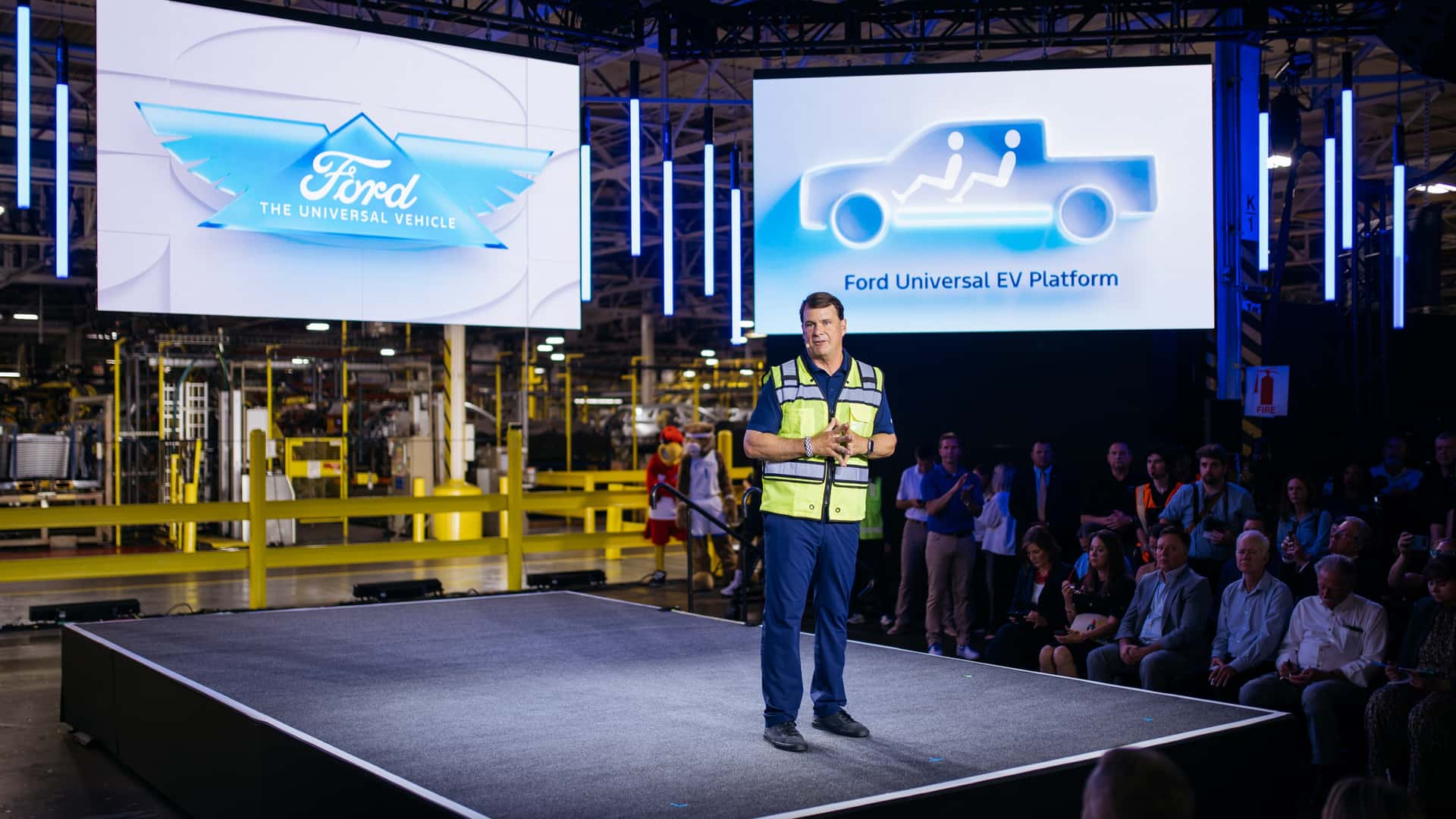
Ford’s Louisville, Kentucky, assembly plant is a place where the past and future collide. As workers wiped sweat from their brows, their yellow safety vests were stained with dirt and grease, reflecting the physical demands of traditional car manufacturing. The usual noise of machines, robots, and clanging metal had been replaced by the hum of fans as the line paused for a rare moment of silence—this time to hear from CEO Jim Farley.
Farley announced a $2 billion investment in the plant to retool it for the production of a $30,000 electric truck. This marks a significant shift in Ford’s approach to manufacturing, as the company moves toward a radically different process that aims to make the work less physically demanding for employees.
The Escape and Corsair, currently produced on the same line, will be phased out this year, making way for EV production starting in 2027. Ford has committed to securing 2,200 manufacturing jobs for the next phase, though this number is significantly lower than the 3,300+ workers currently employed at the plant. Approximately 600 workers will be offered buyouts or transferred to other Ford plants.
Those who remain will undergo retraining to adapt to the new EV production process. Ford and representatives from the United Auto Workers union believe this transition could lead to a healthier, more sustainable workplace. While automation has already simplified many aspects of car manufacturing, tasks such as installing dashboards, seats, and door panels still require physical effort. Crouching, kneeling, and repetitive motions are common, even with the help of robotic arms.
Now, Ford is taking a bold step forward with an innovative “assembly tree” system. This process involves building three subassemblies in parallel before joining them together. According to Bryce Currie, Ford’s vice president of Americas manufacturing, the vehicle will arrive in front of workers fully assembled, with components in the correct orientation. This should reduce the need for twisting, turning, and bending, making the job easier and safer.
The benefits of this new system are substantial. Ford projects that the Louisville line will operate 40% faster, use half the number of fasteners, and have a 20% reduction in part count compared to traditional vehicles. Doug Field, Ford’s chief EV, Digital and Design Officer, emphasized the goal: “The best part is no part.” If successful, workers will no longer have to maneuver large components like instrument panels or seats through tight door openings.
A key innovation behind this transformation is the use of “unicastings,” which differ from Tesla’s “gigacasting” method. While gigacasting uses massive die-casting machines to produce single-piece components, unicastings aim to create a vehicle in one shot, streamlining the entire process. Alan Clarke, Executive Director of Ford’s Advanced Electric Vehicle Development Program, described this as the industry’s next big step toward efficiency.
Other changes, while smaller, could have a meaningful impact on workers. For example, Ford is eliminating the “pop clamp,” a tool used to secure hoses in automotive applications. These clamps often caused frustration due to their inconsistent performance. In their place, Ford is using “quick connects,” which simplify the process and reduce the risk of errors.
InsideEVs writer Iulian Dnistran shared his firsthand experience working on an assembly line at a Ford factory in Europe in 2014. He recalled the challenges of installing carpet through a door opening, a task that could cause delays and stress for workers. With the new EV production process, Ford is aiming to eliminate such pain points.
Part of the $2 billion investment will go toward upskilling workers to adapt to these changes. While the long-term success of the project remains uncertain, some employees see clear benefits. Brandon Reisinger, chairperson of the United Auto Workers at the Louisville plant, expressed optimism about the potential for a healthier workforce.
“We should have a healthier workforce, and they should be able to go home to their families and not be sore at the end of the day,” he said.
As Ford continues to push the boundaries of EV manufacturing, the Louisville plant stands as a symbol of the company’s commitment to innovation and worker well-being. Whether this vision translates into reality remains to be seen, but the steps taken so far signal a promising direction for the future of automotive production.