
Government Intensifies Oversight of Cooperative Sector to Address FATF Concerns
The Nepalese government has taken significant steps to regulate the cooperative sector as part of its efforts to address concerns raised by the Financial Action Task Force (FATF). This move is aimed at removing the country from the FATF's grey list, a designation that could lead to increased scrutiny and restrictions on international financial transactions if not resolved.
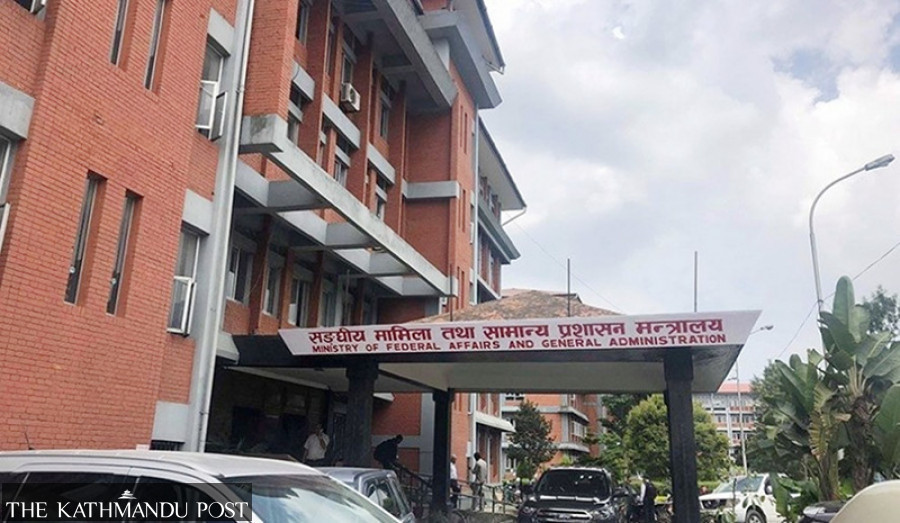
Authorities have issued directives for all cooperatives to submit detailed reports under anti-money laundering laws. The initiative comes in response to the FATF and the Asia/Pacific Group on Money Laundering's ongoing concerns about the country’s financial regulatory framework. The Ministry of Federal Affairs and General Administration has sent letters to local units across the country, requesting comprehensive information on cooperatives operating within their jurisdictions. The goal is to monitor these entities based on their risk of mismanagement.
This latest action follows an earlier directive from the Ministry of Land Management, Cooperatives and Poverty Alleviation, which asked cooperatives to submit their details via Google Forms by mid-August. The notice was distributed to all local governments, emphasizing the urgency of the situation.
According to the Ministry, the Department of Cooperatives has requested annual details for the fiscal year 2024/25 through Google Forms. This process aligns with Section 7(2) of the Asset (Money) Laundering Prevention Act, 2008. The section mandates that any entity, bank, or financial institution must report discrepancies or additional information to the Financial Information Unit immediately.
Raghunath Mahat, a spokesperson for the Department of Cooperatives, explained that the information sought includes quantitative data on both low- and high-turnover cooperatives. He noted that since the implementation of the 2008 Act, similar requests had been made to relevant offices. However, the recent focus on cooperatives is a direct response to Nepal’s placement on the FATF grey list.
Similar to banks maintaining 'know your customer' (KYC) details, cooperatives are now required to update their 'know your member' (KYM) data. Mahat emphasized that filling out this form will be mandatory before any deposits are made into a cooperative.
The Money Laundering Prevention Act requires banks, financial institutions, and non-financial institutions to maintain clear identities of individuals during business relations or when transacting amounts exceeding specified limits. Regular notices must be published to ensure compliance.
Given that most cooperatives are registered at the provincial level, the Ministry of Federal Affairs and General Administration has urged local units to act on behalf of the department.
Rameshore Khanal, chair of the High-Level Economic Reform Recommendation Commission and former finance secretary, highlighted the importance of regulating the cooperative sector. His commission's report, submitted in April, outlined 11 key recommendations for reform, including addressing cases where large sums were deposited without clear sources.
However, Khanal stressed that regulating cooperatives alone may not be sufficient to remove Nepal from the FATF grey list. He pointed out that non-profit organizations are also involved in money laundering activities. While the government has much to do, he acknowledged that regulating cooperatives is a positive step forward.
The government’s actions come amid growing concerns over the fate of millions of rupees deposited in hundreds of struggling cooperatives. Studies, including those by the Special Parliamentary Probe Committee, have indicated that billions of rupees are at risk due to mismanagement and embezzlement.
Nepal was placed on the FATF grey list after failing to meet several obligations. The FATF meeting held in Paris from February 17 to 21 decided to keep the country on the list. Nepal was previously on the list from 2008 to 2014, and the country must implement necessary reforms within two years to avoid being placed on the black list.
The current placement on the grey list stems from the failure to fully implement legal and structural reforms to combat money laundering and terrorist financing. The Asia/Pacific Group on Money Laundering (APG) highlighted weaknesses in enforcement, investigation, and prosecution of financial crimes, as well as inadequate regulation of high-risk sectors like cooperatives and real estate.
Nepal was given until October 2024 to meet FATF standards following an extension in July 2023. However, the international body found that the country had not sufficiently addressed these deficiencies by the deadline, leading to its second consecutive placement on the grey list.