
Evolution of Rest Stop Cuisine
The 2025 Highway Rest Stop Food Festa took place on July 15 at the Korea Expressway Corporation in Gimcheon, North Gyeongsang Province. This event, now in its second year, brought together over 300 participants, including local residents and children. Fifteen dishes, chosen through regional preliminaries and final judging, competed for top honors. The competition focused on how well each dish represented the theme of “signature rest stop foods using domestic agricultural and marine products.” Criteria included taste, quality, use of local ingredients, presentation, creativity, and price.
Judging panels included experts such as Chosun Ilbo reporter Kim Sung-yoon, Professors Keum Na-na of Dongguk University and Bae In-ho of Chungwoon University, and Song Eun-chan, operator of the food YouTube channel Foodman. Their scores were combined with on-site evaluations from Korea Expressway staff and local residents to determine the grand prize, excellence awards, and encouragement prizes. Judges noted that rest stop food quality has significantly improved and offers excellent value.
According to the Michelin Guide, one star denotes a good restaurant, two stars indicate excellent cooking worth a detour, and three stars signify exceptional cuisine worth a special journey. By these standards, all 15 dishes could easily qualify for two stars—worthy of a highway stop just to try them.
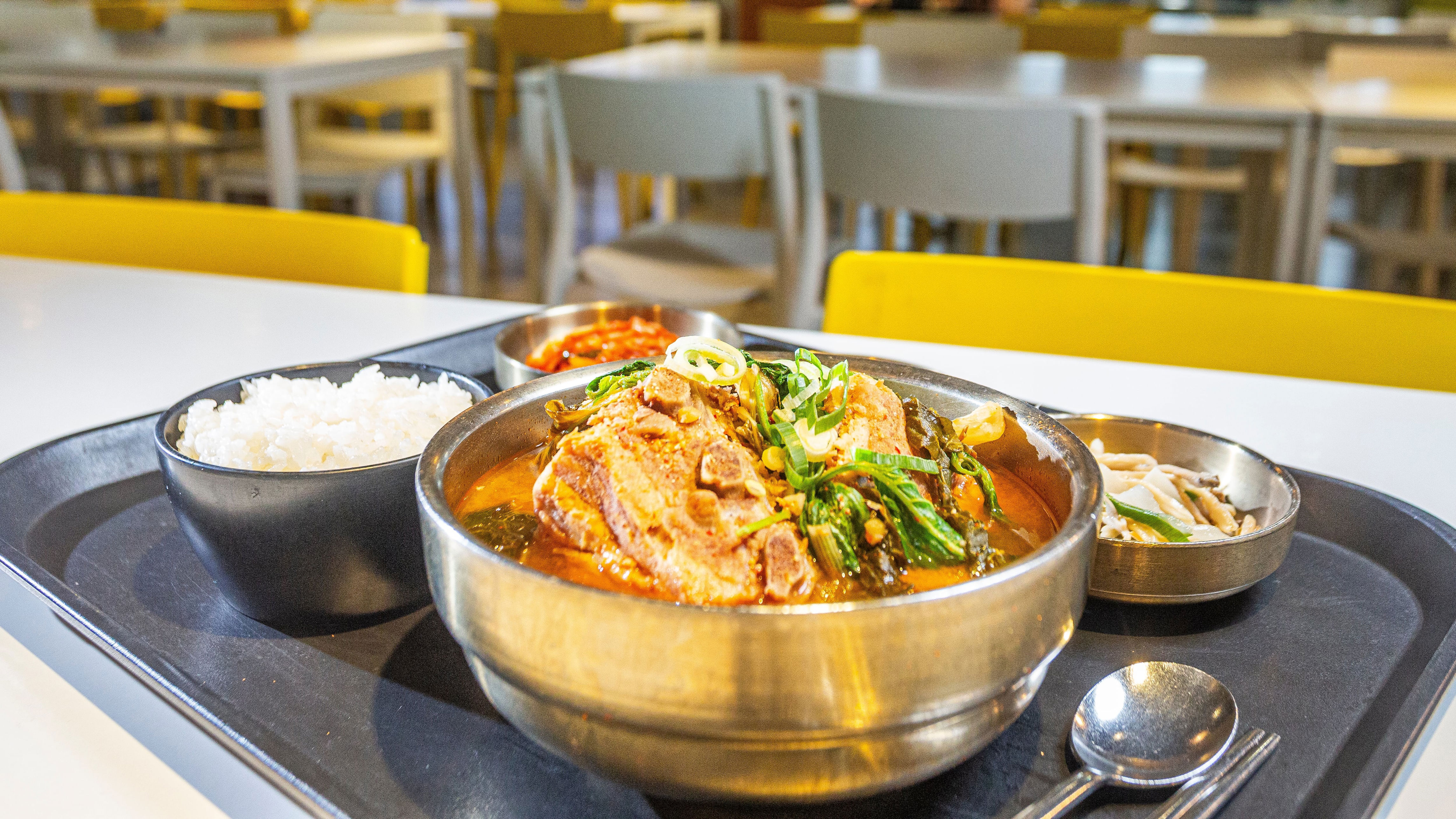
Top Award Goes to Herbal Pork Backbone Haejangguk
The grand prize went to the Yongin Seongsan Korean pork backbone haejangguk (hangover soup) from Jukjeon rest stop on the Seoul-bound Gyeongbu Expressway. The broth was spicy and refreshing, with no off-flavors and mild seasoning. Generous portions of meaty pork backbone came with potatoes and outer cabbage leaves. The soy mustard dipping sauce added a savory note, making it feel like a bonus serving of boiled pork.
Seongsan hanbang pork from Yongin is raised on a diet of over 30 medicinal herbs, including ginseng, angelica, and deer antler, fed for 90 days. The side dishes featured oiji (pickled cucumber) and mushroom muchim made with local specialties: Sunji cucumbers from Yongin’s Sunji Village and oyster mushrooms from Wonsam-myeon, known for their crisp and chewy textures.
Kim Dae-seok, head chef at Jukjeon rest stop, said, “Since winning the grand prize, customer visits have increased, but we can only prepare 30 to 40 servings a day due to kitchen constraints. Please come early if you want to try it.”
Excellence Awards for Regional Delicacies
Excellence awards went to Mama tendong, a tempura rice bowl from Iksan Mireuksaji (Mireuksa Temple Site) rest stop headed to Cheonan, and Waegwan handmade sausage budaejjigae, a handmade sausage army stew from Chilgok rest stop on the way to Busan.
Mama tendong highlights local specialties such as yam from Seodong, sweet potato from Nangsan, and onion from Yesan. It features crispy fried shrimp, pumpkin, enoki mushrooms, and shishito peppers, served over steaming white rice with gim (seaweed) and boiled egg. The towering tempura creates an impressive visual impact.
Waegwan handmade sausage budaejjigae is notable for its backstory. The sausages come from Bundo Food, operated by the Benedictine Waegwan Abbey, founded by German monks 70 years ago. Renowned among German expats and gourmets for authentic flavor, the sausages use only pork slaughtered the same day and exclude common additives like soy protein or starch. Chilgok’s history as a major Korean War battleground adds fitting context to this army stew.
Nourishing Soups and Cool Refreshments
Encouragement awards went to nine dishes that narrowly missed higher honors but impressed the judges.
Ansan rest stop’s Daebudo grape gochujang bojagi bibimbap stood out for its presentation. Wrapped neatly with green vegetable stems and topped with edible flowers and golden egg strips, it reveals fragrant greens and savory beef brisket. The dish is mixed with a special Daebudo grape chili paste, patented in 2012.
Hongcheongang rest stop heading to Chuncheon serves Hongcheon soybean sundubu jjolmyeon, chewy noodles in a tangy, sweet, and spicy sauce, popular especially among female travelers. It is accompanied by soft tofu made from Hongcheon soybeans and crispy fried dumplings for extra richness and heartiness.
Chiaksan rest stop on the way to Busan features Chiaksan mulberry leaf big pine mushroom rice, a healthy bibimbap highlighting firm pine mushrooms and fragrant mulberry leaves, lightly seasoned with soy sauce.
At Jinan Maisan rest stop, the spicy smoky aroma of the Jinan soybean sundubu jjamppong hits you even before the first sip. This comforting soup features silky tofu made from locally grown soybeans, simmered in a light duck bone broth with tender Korean black pork.
Gimcheon rest stop offers a plum heukdon rice bowl, pairing local black pork with a refreshing plum syrup salad. Cheonan Samgeori (three-way intersection) rest stop serves gangdoenjang walnut bibimbap, combining nutty walnuts with savory soybean paste.
Along the Namhae Expressway, Munsan rest stop in Jinju stands out for its Nongae zucchini jjageuli, known for its sweet zucchini and pleasant texture. A rest stop official said the zucchini’s freshness comes from greenhouses located right behind the facility.
Jinju is South Korea’s largest zucchini producer, accounting for 60% of the nation’s output. The city added the name “Nongae” to promote the zucchini brand. This honors Nongae, a local heroine who sacrificed herself during the Imjin War by embracing a Japanese general at Jinju Fortress. The hearty jjageuli stew is less watery than typical jjigae and is packed with zucchini, pork, and tofu.
For those drained by the summer heat, Jangheung Jeongnamjin rest stop (Busan bound) offers a refreshing half-chicken soup called heotgae maesaengi bangyetang, made with hovenia fruit and seaweed. Gyeongju rest stop serves a local specialty, Gyeongju Hanwoo mulhoe, a cold raw fish soup featuring tender, lean Korean beef in a tangy, sweet broth garnished with pear and cucumber. Gyeongju is renowned as one of the top producers of Hanwoo cattle in the country.
Sweet Endings with Local Flavors
No meal is complete without a sweet finish. The festival featured desserts made from local specialties.
Hongcheongang rest stop offers Hongcheon bean sundubu ice cream, a healthy, creamy treat made with soybean water. Mungyeong rest stop serves Mungyeong omija yogurt smoothie, a trendy twist on the traditional five-flavor berry.
Geumwang rest stop’s Maengdong sweet watermelon juice uses high-sugar watermelons from Eumseong County, served with chunks of fresh fruit. Seoul’s Ipjang Geobong Podo rest stop presents Geobong grape whipped cream bread, shaped and colored like grapes, filled with grape jam and whipped cream.
Wachon rest stop’s Gyeongsan daechu latte blends sweet, fragrant jujubes with milk, while Oedong rest stop’s shiitake mushroom gangjeong (crunch snack) combines crispy sweetness with a chewy texture.
Though not part of the festival, other popular rest stop snacks include Chungju’s apple-shaped red bean bread, Ginseng Land’s ginseng fries, Hongcheon’s squid-shaped cream-filled bread, Yesan’s Jeonju bibim bread filled with assorted vegetables and rice seasoned with gochujang, and Gongju’s chestnut-shaped chestnut and red bean bread, available at multiple locations nationwide.