
The Struggle for Coolness in UK Attic Bedrooms
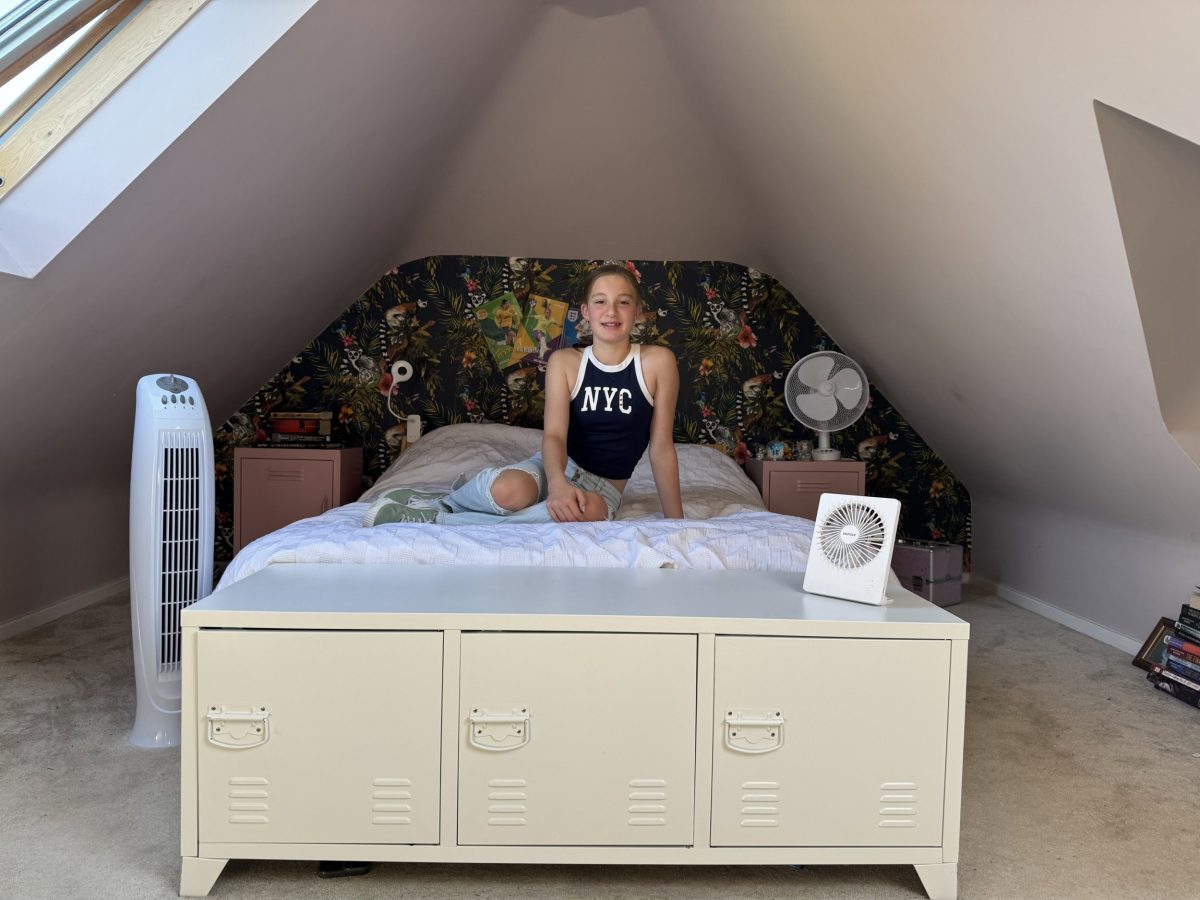
On many hot evenings this summer, my 12-year-old daughter and I have had heated discussions about the devices she uses to stay cool. It's not her smartphone or tablet that's causing the debate, but rather the collection of fans and tangled extension cables she has around her bed—a setup that poses a fire risk and consumes a lot of energy, yet she insists on keeping it running all night long.
Last September, at the start of year 7, Aggy (Agatha) moved into the converted attic, which features two bedrooms under the pitched roof and a bathroom in the center. Her old room on the first floor is now a study overlooking the street. Painted in Little Greene’s “China Clay Dark” with a jungle scene feature wall behind the bed, I thought she would enjoy her stylish new space away from her two brothers. However, like many attic bedrooms across the UK’s aging housing stock, her room becomes unbearably hot during July and August. In fact, even before the peak of summer, the temperature has been disrupting her sleep.
For Aggy, leaving the Velux windows open at night with a light on invites in bugs that bite and, even worse, clothes moths. This has led to an increase in noisy fans. We were not alone in overlooking the functionality of the attic space when we bought our 1930s house in Haslemere, Surrey. Like many buyers, we focused on having enough bedrooms rather than the quality of those spaces across different seasons. After all, most people only view a property at one fixed time of the year.
Sarah, who lives with her family in a new-build house in Berkshire, is considering selling because the whole house, particularly the attic bedrooms, gets too hot during the summer. "Our home was built five years ago and truly feels like it cannot breathe. The sheer quantity of glass heats up the rooms to such an extent it is often still 28 or 29 degrees downstairs—let alone upstairs—at 10pm. I think all new-build homes should come with air conditioning as standard," she says.
This is a sentiment that is becoming more common. A recent study from Loughborough University estimates that one in five homes are unfit to handle the rising temperatures caused by climate change. Factors such as a lack of air conditioning, modern love for glazing, poor insulation, and insufficient air vents contribute to this issue. As Britain enters its fourth heat wave of 2025, those planning a loft conversion are likely to incorporate temperature regulation into their designs.
Harriet Vine, founder of the cult jewellery brand Tatty Devine, recently renovated her tall Victorian terraced house in Upper Clapton, adding a loft extension for her 17-year-old daughter. She considered heat when designing the space. "It does get very hot up there, but she has a big Velux window right over her bed, so on hot nights it’s like sleeping under the stars," she says. "I don’t think the black color has any bearing on how hot it is, but the windows have blackout blinds, which she leaves closed in the daytime to keep the sun out when she’s not there."
According to high-end buyer Roarie Scarisbrick of Property Vision, air conditioning is now firmly on the house hunter wishlist in the luxury property market in central London. "It used to be an exotic quirk, demanded by a handful of wealthy international buyers. Very few properties had it. Now it is one of the most requested items. A 30-degree summer day in a sixth-floor London flat is no joke," he says.
However, air conditioning is expensive (from £1,000 to £4,000 for one room, plus labor and any decorating needed to hide the retrofit). It is difficult to install and energy-guzzling, to boot. "It is fine if you own a freehold house with a garden to hide the condensers, but a nightmare if you own your own flat in the middle of a building with no outside space, and worse if it is listed," Scarisbrick continues. "It is worth finding this out before you buy. It might not bother you, but a lack of air conditioning could make it harder to sell."
Air conditioning is divisive, as estate agent Peter Wetherell warns. "Let us not forget that a lot of buyers and tenants do not like air conditioning. They can’t sleep with the noise and the draft makes them unwell," he says.
Marion Baeli, who sits on the Government’s Retrofit System Reform Advisory Panel and is a partner at the global architecture practice 10 Design, believes air conditioning should be a last resort. "While air conditioning is effective, it should be a final measure due to its energy use and environmental impact," she says. To reduce the need for mechanical cooling, she suggests embracing seasonal migration. "Long before air conditioning, households adapted to seasonal changes by moving between rooms. If your layout allows it, consider spending the hottest months in cooler, lower-level rooms—this is the simplest, lower cost approach," says Baeli.
External shading, such as external shutters or blinds, stops the sun’s rays before they hit the glass. Where possible in an attic, create airflow by opening windows on both sides of the roof. Good roof insulation is a must too. "Good insulation slows down heat transfer, keeping attic rooms cooler in the summer and warmer in the winter, and especially effective when paired with reflective roofing materials," she says. In fact, reflective roof tiles are becoming more popular for this very reason.
While this year’s Apprentice winner, Dean Franklin, who runs a company installing air conditioning units in residential properties, is hoping the series of heat waves leads to a boom in business for him, there is also a swell in other, innovative products coming out. For the sophisticated gadget-lover, Venetia Rudebeck, co-founder of Studio Vero, recommends the Eight Sleep Pod smart mattress which actively regulates temperature during the night (from £2,998). It’s said to help with snoring too.
However, for the rest of us, there are a host of much cheaper DIY options: putting socks in the freezer and putting them on at night, along with your pillow, swapping old light bulbs that emit heat for LEDs, and not using the oven on hot days to cool the house down.
As for Aggy, she now has a relatively quiet, rechargeable, portable desktop fan from Amazon (TriPole, £14.99). In the long run, I might turn the north-facing study into a flexi space with a day bed for really scorching nights. I wonder whether tidying her bedroom might help restore a feeling of calm, too.