
Colorado's Wolf Reintroduction Efforts Show Early Success
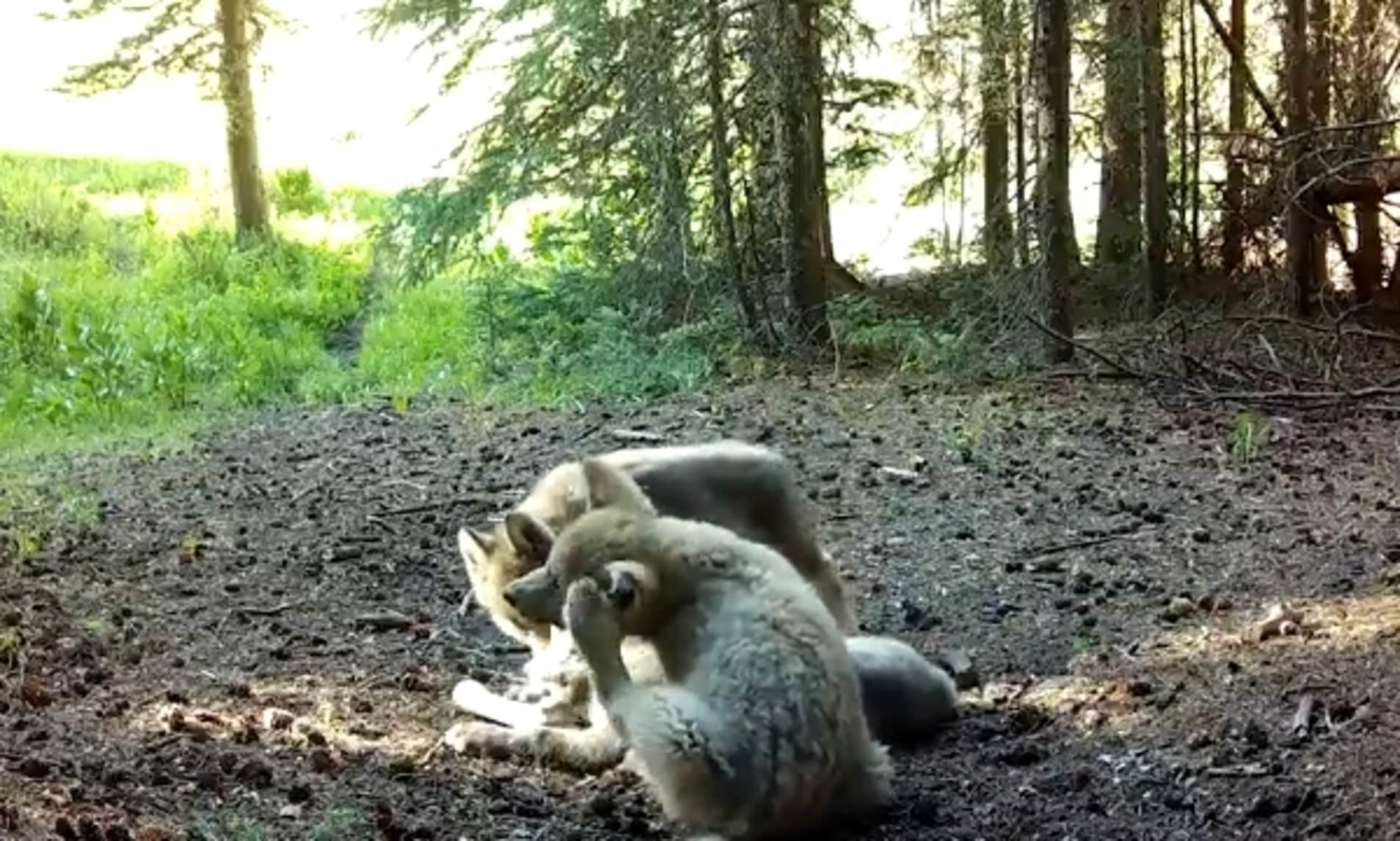
Colorado's ambitious plan to bring back gray wolves has taken a significant step forward with the arrival of the first litters of wolf pups. The Colorado Parks and Wildlife (CPW) recently shared trail camera footage capturing three small wolf pups playing in the grass in Routt County, marking an important milestone in the state’s restoration efforts.
Although staff have observed young wolves at several dens, the exact number of pups across all packs is still being verified. A CPW spokesperson emphasized the importance of successful pack formation, stating that it is crucial for both increasing the wolf population and establishing clear territories. According to CPW, a wolf pack is defined as a group where a breeding pair has successfully produced offspring.
The reintroduction of wolves marks a return after an 80-year absence in the state. Voters approved the initiative in 2020, and the first group of 10 wolves was released in December 2023. Another batch of 15 wolves followed in January. Experts believe the return of wolves could bring similar ecological benefits seen in Yellowstone National Park during the 1990s, where wolves helped restore balance to elk populations, promote vegetation regrowth, and increase biodiversity.
Joanna Lambert, a professor of wildlife ecology at the University of Colorado Boulder, explained that denser vegetation can provide nesting areas for birds and create ideal conditions for beavers to build dams, which can alter river and stream hydrology.
Gray wolves were eliminated in Colorado in the 1940s due to aggressive hunting campaigns aimed at protecting livestock. The appearance of the pups is a positive development for CPW, which has used trail cameras to monitor the animals without causing disturbance. These heartwarming images are expected to help change the perception of skeptics who oppose the program.
However, the project has faced criticism over how the reintroduction has been managed. Ranchers in Garfield, Eagle, and Pitkin counties accuse the state of being secretive about the release locations. In January, 15 wolves from British Columbia were transported to Eagle County Airport under strict secrecy. CPW claims the locations were withheld to protect both the wolves and their staff.
Garfield County Commissioner Perry Will expressed frustration, stating that people are more upset about the secrecy than the presence of wolves. Howard Cooper, a rancher and member of the Colorado Conservation Alliance, also criticized the lack of transparency.
Wolves in Colorado are federally protected, but this protection ends if they cross into Wyoming’s "predator zone," where they can be shot on sight. CPW data indicates that wolves can travel up to 140 miles from their release point. Already, some have been spotted just 20 miles from the Wyoming border, and one has reportedly been killed after crossing over—though Wyoming officials have not confirmed this due to privacy rules.
Sheep rancher Jim Magagna said that if any wolves enter Wyoming, they lose their protection and can be removed. Despite these challenges, CPW remains committed to fulfilling Proposition 114, the voter-approved initiative that requires restoring a self-sustaining wolf population.
The plan involves introducing 10 to 15 wolves annually for up to five years. Each wolf undergoes veterinary checks, vaccinations, parasite treatment, and is fitted with a GPS collar before being released at least 60 miles from the nearest state or tribal border. Officials carefully select animals from regions without conflicts with livestock to minimize potential issues.
Eric Odell, CPW Wolf Conservation Program Manager, noted that this new population will add genetic diversity to Colorado’s wolves. For ecologists like Lambert, the pup footage represents progress in a time of widespread biodiversity loss.
“This is a moment of re-wilding,” she said. “And it’s a source of hope for our younger generations as well.”