
The Impact of Tariffs on U.S. Manufacturing
A prominent U.S. manufacturing leader is expressing concerns about the recent steel and aluminum tariffs introduced by President Trump. These tariffs, which can reach up to 50 percent on foreign imports, have raised alarms among domestic manufacturers who fear they may be harming American businesses while giving foreign competitors an unfair edge.
In June, the White House implemented new tariffs on steel and aluminum, aiming to protect American industries from what it described as unfair trade practices by other countries. This move was part of a broader effort to negotiate trade deals with nations that were perceived to be disadvantaging the United States.
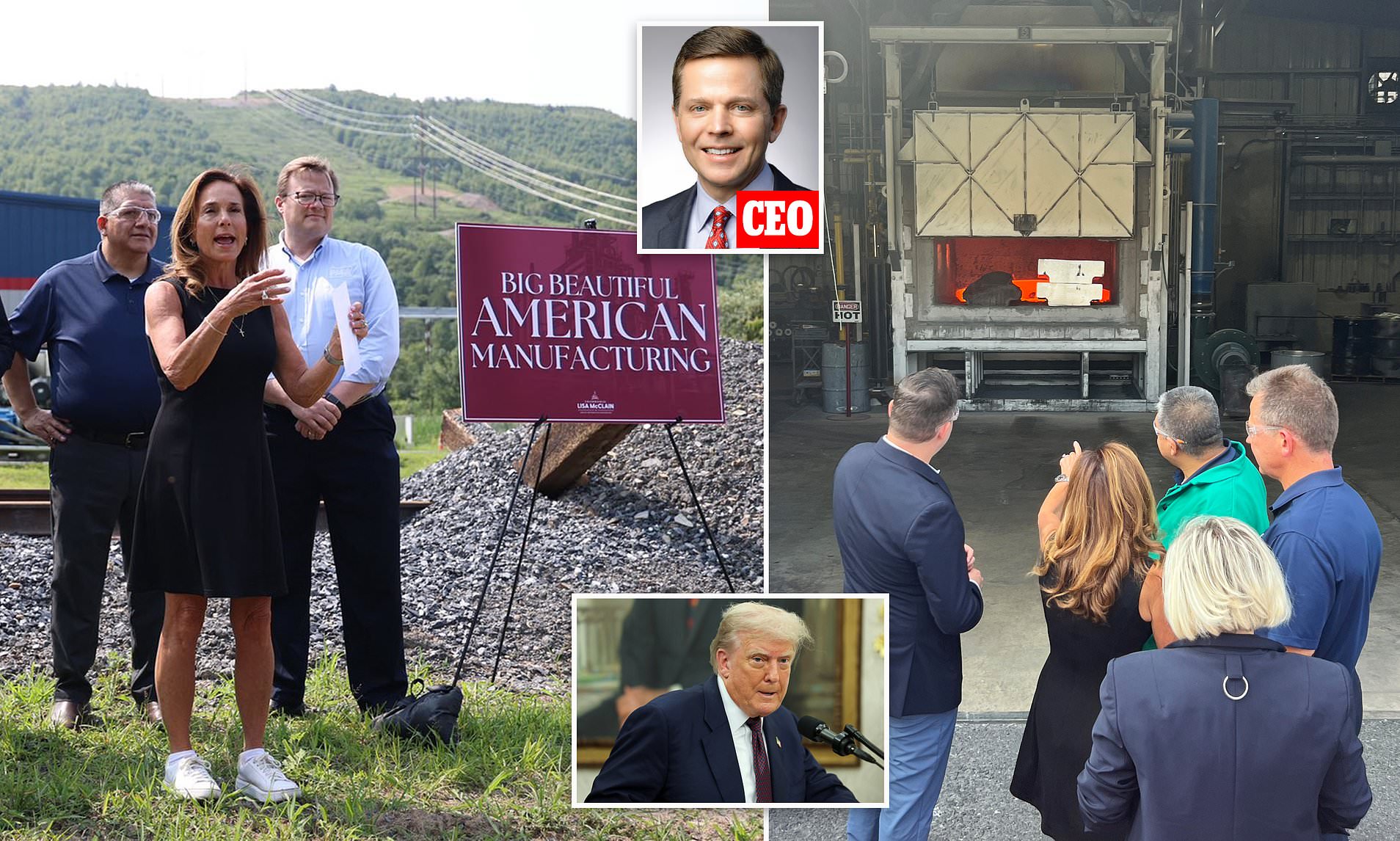
The impact of these tariffs has already begun to affect American steel manufacturers, potentially leading to higher costs for consumers. Eric Degenfelder, CEO of U.S. Metal Powders, a company based in rural Carbon County, Pennsylvania, shared his concerns with the Daily Mail. He stated that the 50 percent tariffs are putting U.S. manufacturers at a significant disadvantage.
According to Degenfelder, the tariffs have caused a sharp increase in aluminum prices in the U.S., rising from approximately $1.25 to $1.80 within just a few months. He explained that this has led some customers to seek cheaper aluminum from other regions, process it into aluminum powder, and then import it back into the U.S.
Despite these initial challenges, many believe the tariffs could offer long-term benefits for the U.S. economy. Trump has consistently highlighted Pennsylvania, a crucial swing state in his presidential campaigns, as a place where he understands the needs of everyday Americans. Recently, he visited the state to announce new investments aimed at creating a future where American workers can lead in steel production, energy generation, and factory construction.
David N. Taylor, President and CEO of the Pennsylvania Manufacturers' Association, supports the tariffs as a necessary step to create a fairer global market. He pointed out that Chinese bids on international manufacturing contracts often come in lower than the cost of raw materials in the U.S., suggesting that such pricing is only possible through unfair practices.
With rising material costs, domestic policymakers have looked for ways to support business leaders. This led to a visit by House GOP Conference Chairwoman Lisa McClain to the U.S. Metal Powders facility in Palmerton, Pennsylvania. She toured the plant alongside freshman Republican Rep. Ryan Mackenzie, who represents a key district in the narrow GOP House majority.
Mackenzie's district, which includes the U.S. Metal Powders location, is critical for Republicans to maintain control of the House in the upcoming 2026 midterm elections. Mackenzie narrowly won his seat last year, highlighting the importance of such districts in the political landscape.
During the tour, Degenfelder emphasized a tax provision that allows businesses to deduct the full cost of new equipment purchases immediately. This has enabled companies like his to expand rapidly. McClain acknowledged the short-term difficulties of transitioning to more domestic steel and aluminum production but believes the long-term benefits of securing supply chains are worth it.
‘If it was just easy to flip the switch, we would do... We can't flip that switch, but this is the first step in that transition process to begin to have more steel and aluminum right here in the USA,’ McClain said.
The U.S. Metal Powders facility in Palmerton has recently completed its fourth production line, which will go online later this month. Degenfelder also plans to hire 15 more employees from the local community, increasing his total workforce to 65. Entry-level positions at the facility start at $22.50 per hour, offering on-the-job training and requiring only a GED.