
Addressing Safety Concerns in the Running Boom
With the rise of a running culture that has seen over 10 million runners, the Sports Safety Foundation recently convened its first meeting focused on 'Safety Running' in response to the surge in marathon events. Over 350 marathons are now held continuously, highlighting the need for comprehensive safety measures.
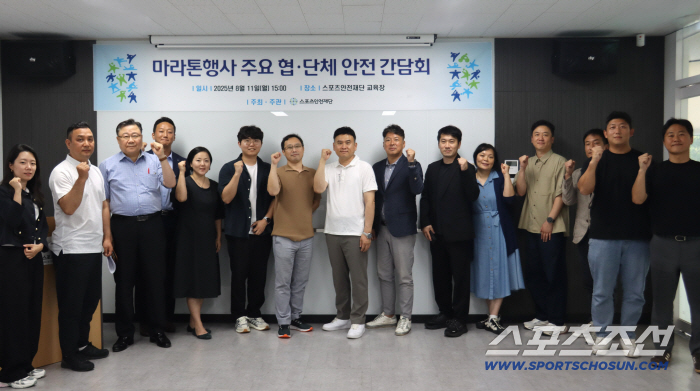
On the 11th, the Sports Safety Foundation hosted a significant event titled 'MARATON Event Major Cooperation and Group Safety Meeting' at its Education Center in Songpa-gu, Seoul. This gathering took place following the implementation of Article 13-2 of the National Sports Promotion Act, which outlines safety management measures for sports events. Attendees included officials from the Ministry of Culture, Sports and Tourism, representatives from the Sports Safety Foundation, and various local government officials.
Park Hyung-joon, head of the Dong-A Ilbo, emphasized the importance of administrative oversight in ensuring safety at events organized by local governments. However, he noted that private-led events face structural challenges in implementing similar safety protocols. He called for a consensus on the roles and responsibilities of organizers, local governments, and the National Police Agency.
Jeong Il-jong, CEO of Lee Sang Communications, highlighted the need for a revised system that considers the specific requirements of each event host. He suggested differentiating safety management standards based on the nature of the event. Additionally, he stressed the importance of spreading deduction insurance systems and related educational programs provided by the foundation.
Cho Won-jae, deputy director of the Korea Association of Athletics Federations, pointed out the disparities in safety management conditions depending on the size of the event. He advocated for creating a tailored safety manual that addresses both large-scale and small-to-medium-sized events. Cho also emphasized the need for campaigns and safety education targeting both participants and organizers.
The meeting also addressed the dual structure problem, where different administrative application standards exist between sports events under the National Sports Promotion Act and local festivals under the Framework Act on Disasters. Kang Tae-gyu, responsible for the Daegu International Marathon, mentioned the confusion caused by these differing standards. He called for clearer boundaries between laws and regulations and the unification of administrative windows.
Kim Bong-joo, director of the sports industry department at the Ministry of Culture, Sports and Tourism, listened to expert opinions and outlined future directions for revising the National Sports Promotion Act. Plans include notifying local governments about safety management plans during events and promoting system improvements to allow for supplementary requests if needed. A practical support system will be established through the Sports Safety Foundation's special corporation and the introduction of an event safety information system.
Lee Jun-hwa, head of the Safety Management Division at the Sports Safety Foundation, stated that the foundation offers various safety services such as education, on-site inspections, certification, mutual aid insurance, and heat wave response manuals. Through this meeting, the foundation aims to strengthen institutional linkage that reflects field needs.
Park Jang-soon, chairman of the Sports Safety Foundation, expressed hope for further improvements in marathon event safety management based on the meeting's discussions. He emphasized the foundation's commitment to actively promoting its special incorporation and continuing cooperation with related organizations, including the Ministry of Culture, Sports and Tourism, to develop effective systems and support safe sports events.