
A New Deal Between Tech Giant and US Government
A major development has emerged between a leading tech company and the US government, involving the sale of semiconductors in China. This unusual agreement highlights the complex interplay between national security concerns and economic interests. The deal involves the tech giant providing a portion of its sales revenue from specific chips to the US government, signaling a shift in how export controls are being handled.
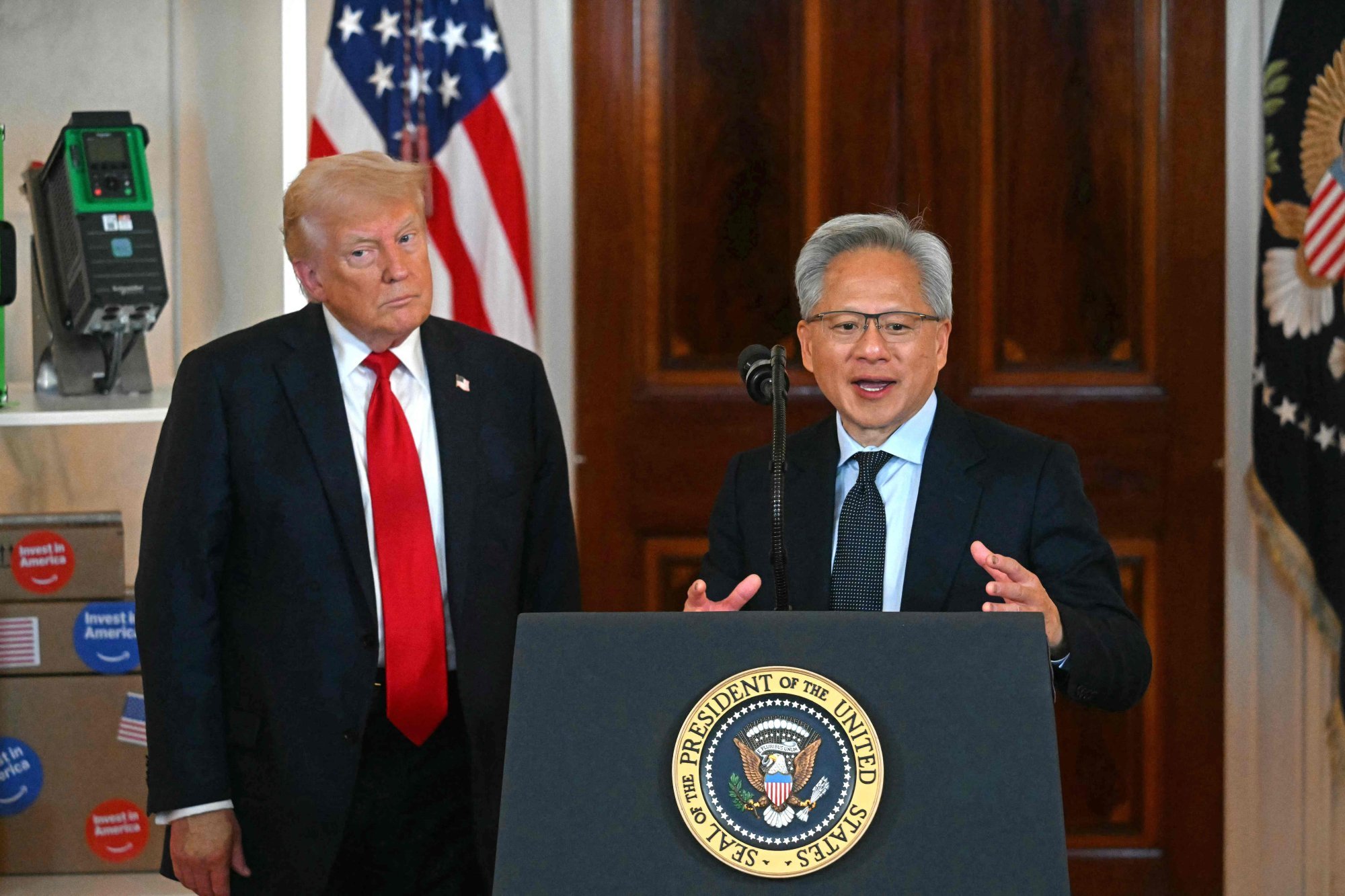
The arrangement was reportedly negotiated by former President Donald Trump, who claimed to have personally spoken with the CEO of the tech company, Jensen Huang. According to Trump, this deal allows the company to sell a less-advanced chip in China, with a percentage of the sales revenue going back to the US government. This move comes amid ongoing tensions between the US and China over access to advanced technology.
Trump emphasized that the agreement focused on the H20 chip, which he described as "obsolete" but still commercially viable. He mentioned that the negotiation involved a 20% revenue share, which was eventually reduced to 15% after some discussion. The president also suggested that similar deals could be considered for other chips, including more advanced models like the Blackwell chip.
This development raises questions about the broader implications for US policy on semiconductor exports. Experts have pointed out that such arrangements are unprecedented, as export controls are typically meant to protect national security rather than generate revenue. Christopher Padilla, a former Commerce Department official, highlighted that there has never been a case where a company paid the government for a license to export a controlled item.
The situation has sparked debate among lawmakers and analysts. Kelsey Quinn, an expert on emerging technologies, expressed concern about where the administration draws the line between legitimate security concerns and enabling profit for US companies. She noted that each new exception weakens the overall export control regime and sends a message to Beijing about the administration's priorities.
In April, Trump had initially banned the sale of the H20 chip, which was designed to bypass restrictions on high-tech chips imposed by the previous administration. However, he later rescinded this decision after meeting with Huang. The recent deal was confirmed following another meeting at the White House, where Huang secured the necessary licenses for the chip.
The political landscape surrounding these decisions is complex. Representative John Moolenaar, a Republican, raised concerns about the potential impact on AI leadership and national security. On the other hand, Representative Raja Krishnamoorthi criticized the deal, arguing that it undermines national security by turning export controls into a bargaining tool.
In addition to the discussions with Nvidia, Trump also met with Intel CEO Lip-Bu Tan. During this meeting, Trump addressed concerns about Tan's investments in Chinese chip companies, labeling him "conflicted." Despite this, the president described the meeting as "very interesting" and indicated that further discussions would follow.
As the tech industry continues to navigate these challenges, the implications of such deals will likely shape future policies and international relations. The balance between economic interests and national security remains a critical issue, with ongoing debates about the best way to manage the flow of advanced technology across borders.