
The Role of International Education in Bridging Geopolitical Divides
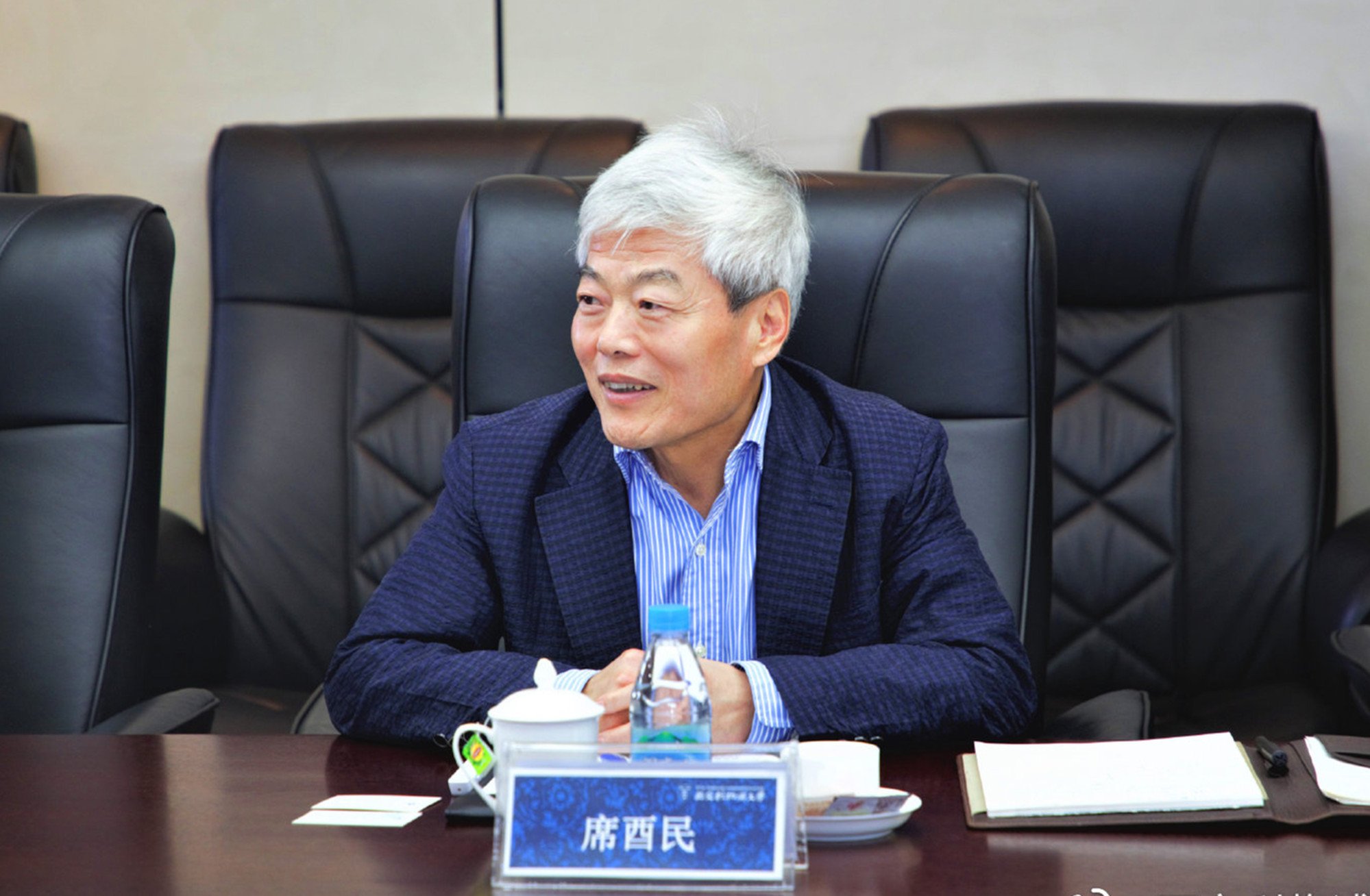
Geopolitical tensions are increasingly affecting academic freedom and scientific research around the world. However, some university leaders believe that opening up to more foreign students and visitors could be a way to foster greater understanding between nations. Xi Youmin, president of Xian Jiaotong-Liverpool University (XJTLU) in Suzhou, Jiangsu province, argues that easing visa restrictions for international students and visitors can help improve mutual understanding of China.
Xi highlighted the current global situation, where wars, geopolitical conflicts, and trade disputes have created a climate of uncertainty. He pointed out that this environment has left many people feeling confused and disoriented. "Such uncertainty leaves people feeling confused and lost," he said.
The closure of joint venture universities in China and investigations into scientists of Chinese descent in the United States have been described as shocks to the global scientific community. These events have raised concerns about the impact of geopolitics on academic collaboration. "People used to believe that science and knowledge transcend national borders," Xi said. "But now, geopolitics is restructuring the world order, and its influence has already reached universities and the scientific realm."
Under pressure from the U.S. government, which has targeted diversity, equity, and inclusion initiatives with threats of funding cuts, some universities have made concessions under political pressure. This trend, according to Xi, is abnormal and could hinder academic freedom. "Academic and scientific collaborations should not be restricted by political considerations," he emphasized.
Challenges Faced by International Universities
XJTLU, a Chinese-British joint venture established in 2006 by Xian Jiaotong University and the University of Liverpool, has faced scrutiny over its collaborations with entities sanctioned by the West. A report by the Australian Strategic Policy Institute (ASPI) highlighted several partnerships involving XJTLU, including research collaborations with the National Supercomputing Centre in Wuxi and the Shanghai Institute of Microsystem and Information Technology. Both organizations are listed on the U.S. entity list.
The report also pointed to XJTLU's Centre for China-Russia Humanitarian Cooperation and Development, noting that one of its co-directors is associated with a Russian state agency sanctioned by the European Union. Additionally, the university invited an adviser to the Moscow regional government, who had been sanctioned by Britain, to its opening ceremony.
Xi responded to these allegations by stating that XJTLU operates in accordance with Chinese law and is not bound by the U.S. entity list. However, he acknowledged that research projects involving collaborators on the UK sanctions list could face scrutiny from the British government. "Such restrictions on academic and scientific collaborations are unreasonable for the scientific community," he said.
The Impact of Geopolitical Tensions on International Students
Geopolitical tensions have also affected the flow of international students. According to Xi, XJTLU has seen a decline in enrollment from the U.S. and Europe compared to pre-pandemic levels. However, the university has managed to double its international student numbers to around 1,100 by attracting students from other countries.
This shift reflects broader trends in higher education. American universities such as Georgia Tech, the University of Michigan, and the University of California, Berkeley, have scaled back or ended their partnerships in China. In contrast, Xi expects British institutions to continue their collaborations, albeit with increased scrutiny.
"International students benefit the British economy significantly, making it difficult for them to turn away all Chinese students despite political pressures," Xi noted. He added that Britain is likely to expand its due diligence on international education, particularly regarding collaborations with China.
Economic and Cultural Impacts of International Students
International students play a vital role in the economies of many countries. In the UK, they contributed GBP37 billion in net economic benefits in 2021. Over 730,000 international students were enrolled in the UK in the 2023 academic year, with around 13% coming from China.
In the U.S., there were a record 1.1 million international students in 2023, with a quarter of them from China. However, uncertainties surrounding U.S. policies, including threats by former President Donald Trump to defund universities and revoke visas, may lead students to reconsider their choices.
China has become the third-largest host country for international students, with 500,000 enrolled in 2023. A study by Tsinghua University found that economic factors, such as low living costs and career opportunities, are key drivers of student mobility to China. However, cultural differences remain a challenge for some international students.
Looking Ahead: Building a Global Academic Future
Despite the challenges, Xi remains optimistic about the future of international education. He believes that XJTLU, as a young and international university, can leverage its late-mover advantage to build a strong global network. "We showcase Chinese culture while representing educational directions for future global developments," he said.
Xi called for the Chinese government to consider relaxing visa restrictions to promote cultural exchanges. "True cultural confidence means allowing the world to understand the essence of our culture and the living standards of our people," he concluded. He emphasized the need for China to address internal social and economic issues with smart and rational solutions to continue its rise in the coming decade.