
Southeast Asian Nations Celebrate Reduced US Tariffs, But Concerns Remain
Southeast Asian governments have expressed relief over the reduced US tariffs on their goods, which they view as a diplomatic success. However, many in the region’s poorest communities are still expected to face significant challenges from the ongoing trade conflict, and the positive sentiment may not last.
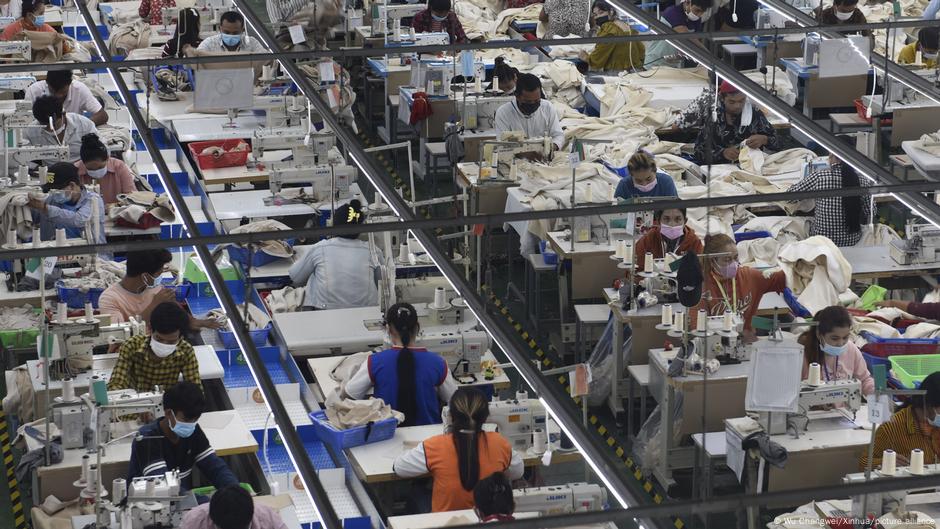
The Trump administration initially threatened steep tariffs on imports from various countries, but it later scaled back its demands. While the US did impose some trade penalties, Southeast Asian nations managed to negotiate significantly lower rates compared to other regions. For example, Cambodia secured a 19% tariff rate, down from an initially proposed 49%, which would have severely impacted its garment industry—a sector that employs around 800,000 workers, most of whom are women from rural areas. Similarly, Vietnam saw its tariffs reduced to 20% from 46%, while Thailand, Malaysia, Indonesia, and the Philippines negotiated 19% levies. Singapore was granted the baseline 10% rate. In contrast, Myanmar and Laos faced higher tariffs of 40%, making them among the hardest-hit countries globally.
The situation has also created a sense of schadenfreude among some Southeast Asian nations, as India recently faced a 50% tariff on certain goods. This has led to concerns that some manufacturers may consider relocating to Southeast Asia, potentially boosting the region's manufacturing base.
Despite these developments, experts warn that the long-term effects of the revised tariffs on ordinary households remain uncertain. Most Southeast Asian countries agreed to reduce their taxes on US imports to nearly zero, which could benefit the wealthy by allowing easier access to luxury goods. However, for the broader population, particularly the poor, the impact is likely to be negative. According to Budy Resosudarmo, a developmental economist at the Australian National University, Trump’s policies will have adverse effects on people in Southeast Asia, including those living in poverty.
Shift in Economic Focus: From Labor-Intensive Sectors to Technology
The latest US tariffs may also influence the region’s economic structure. Southeast Asia has experienced decades of strong growth, but concerns about wealth distribution persist. The new trade policies could lead to a shift from labor-intensive sectors like garment manufacturing to technology industries, which typically employ fewer workers. Wannaphong Durongkaveroj, an economics professor at Thailand’s Ramkhamhaeng University, suggests that if this transition occurs smoothly, the damage may be limited. However, if the shift is abrupt or poorly managed, lower-skilled workers—who make up the majority of the workforce—could suffer further.
Malaysia, a major exporter of semiconductors, faces particular concerns. Last week, Trump announced 100% penalties on imported semiconductor chips, with exceptions for companies that commit to manufacturing in the US. Malaysia exported approximately $14 billion worth of semiconductors to the US in 2023, and its semiconductor industry employs around 80,000 people. Although Kuala Lumpur claims its chips are exempt from the 19% reciprocal tariff, it remains unclear whether the US will apply exemptions consistently.
China’s Role and the Threat of Transshipment Tariffs
Another growing concern is the impact of Chinese imports on local industries. Analysts warn that an increase in cheap goods from China could lead to higher unemployment or suppressed wage growth in Southeast Asian countries. Before Trump’s return to the White House, there were already fears that China was flooding the region with surplus goods, reducing demand for locally produced items. Recent data shows that China’s exports to Southeast Asia increased by 16.6% in July, while shipments to the US fell by more than 20%.
Additionally, there are fears over how the US defines “transshipment.” This refers to goods that are rebranded or slightly modified in an intermediate country before being sent to the final destination. The US plans to impose 40% tariffs on such goods, particularly those originating from China and passing through Southeast Asian countries. If the definition is broad, entire industries in the region could be affected. The New York Times reported that the White House will release specific rules on transshipment in the coming weeks, leaving many businesses in uncertainty.
As the situation unfolds, Southeast Asian nations continue to navigate the complex web of trade policies, hoping to protect their economies while adapting to the shifting global landscape.