
At midday, a loud pounding noise and angry voices rang out through the dim corridor of a nursing home in Hoang Mai District, Hanoi.
Behind a partially closed door, an elderly woman with a weak frame kicked the mattress, speaking harsh words to herself. On three beds nearby, others remained motionless, their eyes wide open, silently bearing everything.
One level above, the atmosphere was different. Upon a nurse's call, a group of elderly individuals moved toward the dining room for afternoon treats. Laughter and conversation echoed through the hallway, creating a cheerful and vibrant setting similar to that of a kindergarten classroom.
The upper floor, designated for VIPs, seemed like a different realm. Each room accommodated just one to three individuals and featured a TV, refrigerator, private bathroom, and a window that let in natural light and offered a nice view. Many of the people staying there were still awake, enjoying a lifestyle similar to a vacation getaway.
"Each stair in aretirement community offers a different perspective on aging," Tran Thi Thuy Nga, a social work specialist and deputy director of a northern nursing home system, said. "A retirement home is like a small society with its own secluded areas, and not every senior can easily adjust to it."
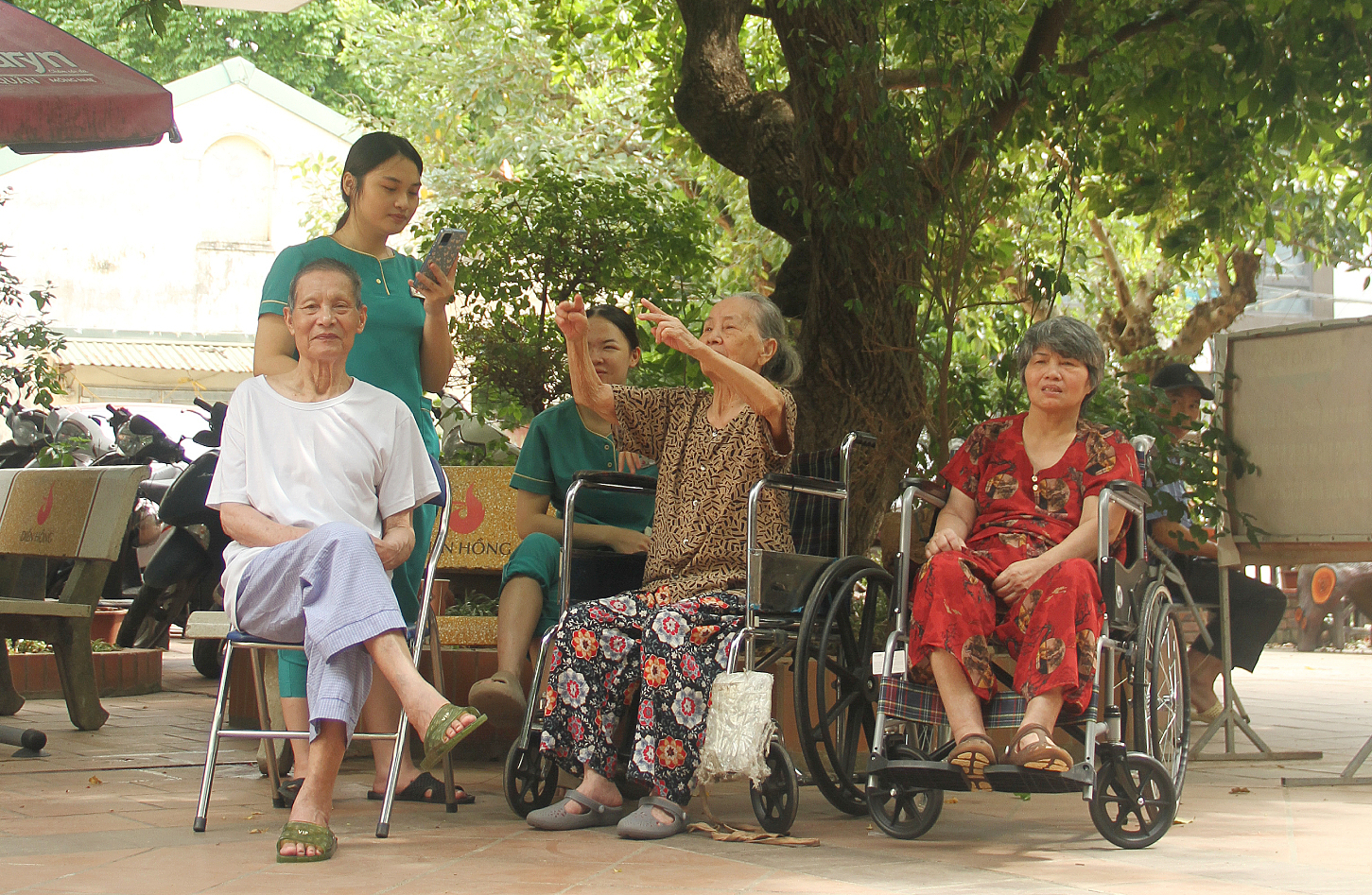 |
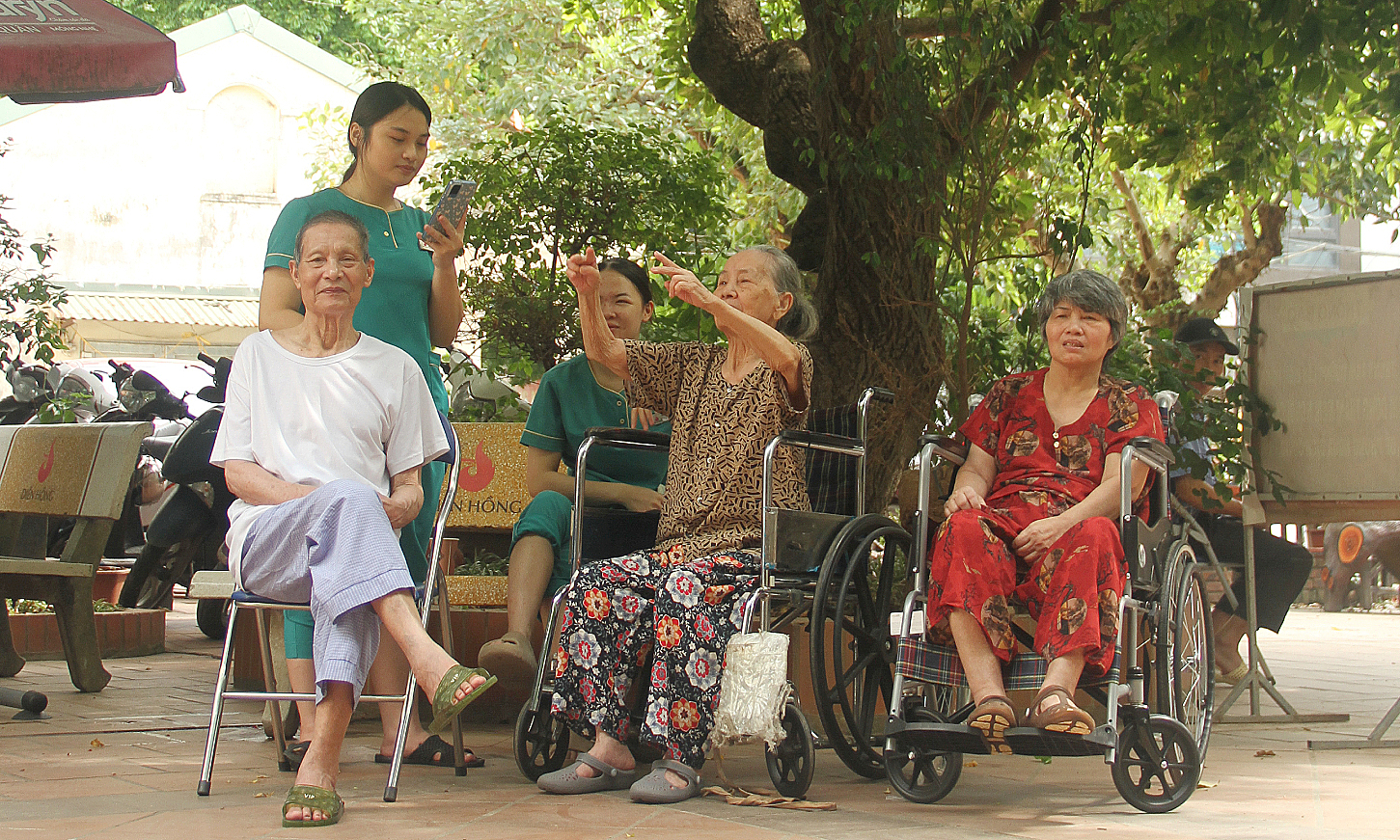
| Senior citizens are basking in the sun and engaging in gentle workouts at a nursing home in Hoang Mai District, Hanoi, during September 2025. Photo by VnExpress/ Phan Duong |
Having spent a year at the Hoang Mai assisted living facility, 88-year-old Thuy Ha mentions that she appreciates the meals, the daily schedule, and the presence of fellow residents along with young staff members, which is a significant contrast to her previously solitary life with a caretaker. "However, living in a community can be challenging."
A four-bedroom shared area has a woman exhibiting symptoms of Alzheimer's, who avoids physical interaction and becomes aggressive during bathing. Her preferred activity is playing with water, often locking herself in the bathroom and leaving the faucet running for extended periods.
Ha says: "We have raised concerns multiple times. The staff informed her, even locked the faucet, but she continues to do it."
Others wanted to transfer her to the dementia care section, but her family declined. At another facility in Tay Ho District, 93-year-old Dang Thi Ngoc Bao remembers her first week as a "shock." "Elderly people would argue about seating during meals. Occasionally, one person would cough and the entire room would start coughing in unison, like an orchestra."
She once lived in a room with a highly "determined" woman who insisted on turning off the lights by 8 p.m. and assigned tasks like switching on the fan, closing the curtains, and regulating the air conditioner.
One night, Bao returned late following assistance with the elevator and was reprimanded: "Where have you been? It's sweltering in here!"
These stories highlight that conflict and adjustment are likely the most significant "unseen aspects" for elderly individuals in retirement homes, as mentioned by Nga. Many find themselves needing to coexist with strangers after years of living with family, a task that appears minor but leads to growing stress as they age.
Social workers and caregivers now have two-fold responsibilities: tending to physical needs and addressing emotional well-being, while also acting as listeners, mediators, and restorers of self-respect. In addition to everyday challenges, disparities in financial stability and emotional support lead to more subtle separations: some individuals have strong financial backing, while others depend on weak pensions or the savings of their children.
The expenses vary between VND8 million and 30 million per month. Nga, who has worked in this area for more than a decade, has witnessed numerous elderly individuals wishing to remain but being sent back home due to their families' inability to cover the costs.
Certain facilities such as Thien Duc, Dien Hong, and Tam Phuc now assist individuals who exhaust their financial resources during their stay. One of them is 82-year-old Le Ha, who resides in a center located in Xuan Mai Town.
Once prosperous, she lost everything when her only son spent the family's wealth. With no place to go, she moved into a retirement home, but when fees increased, her five-million-dong pension was no longer sufficient.
Anxiety loomed over me like a shroud," she said. "I even considered leasing a budget-friendly room with students simply to have someone to converse with and assist me when I became unwell.
Fortunately, her center established a more cost-effective branch outside the city, which lowered her charges. For the past two years, she has been living peacefully in a new facility that meets Japanese standards, surrounded by trees and considerate neighbors.
Some, such as Nguyen Thi Hoan, 82, from Linh Nam, are financially secure yet emotionally isolated.
Separated for many years, with two children residing in the Czech Republic, she had once dreamed of spending her later years overseas. However, following a stroke and legal issues, she was forced to return to Vietnam.
Even though family members come to visit and her kids call, she still experiences a gentle sorrow. "Of course I worry," she says gently, eyes filled with tears. "I'm becoming weaker, and my children are so far away."
As Nga explains, closing these emotional and financial gaps demands a compassionate and respectful setting—where every senior's life history and experiences are appreciated, rather than solely focusing on their payments or medical condition. Frequent social events can be beneficial, yet the presence of family and friends is unmatched, she notes. "Some families don't visit often due to distance or hectic schedules. We make calls to remind them."
Another concern is the decline in self-esteem. Over half of individuals in nursing homes are no longer capable of managing their own needs. Some continue to hold the view that "in youth we depend on parents, in old age on children." Relocating to a care facility can often be perceived as being forsaken.
Nguyen Tuan Ngoc, the creator of Vietnam's first private nursing home, remembers that 10–20 years ago, sending parents to such places was considered disrespectful. "Today, with smaller families, children living far away, and people living longer, people have a more practical view."
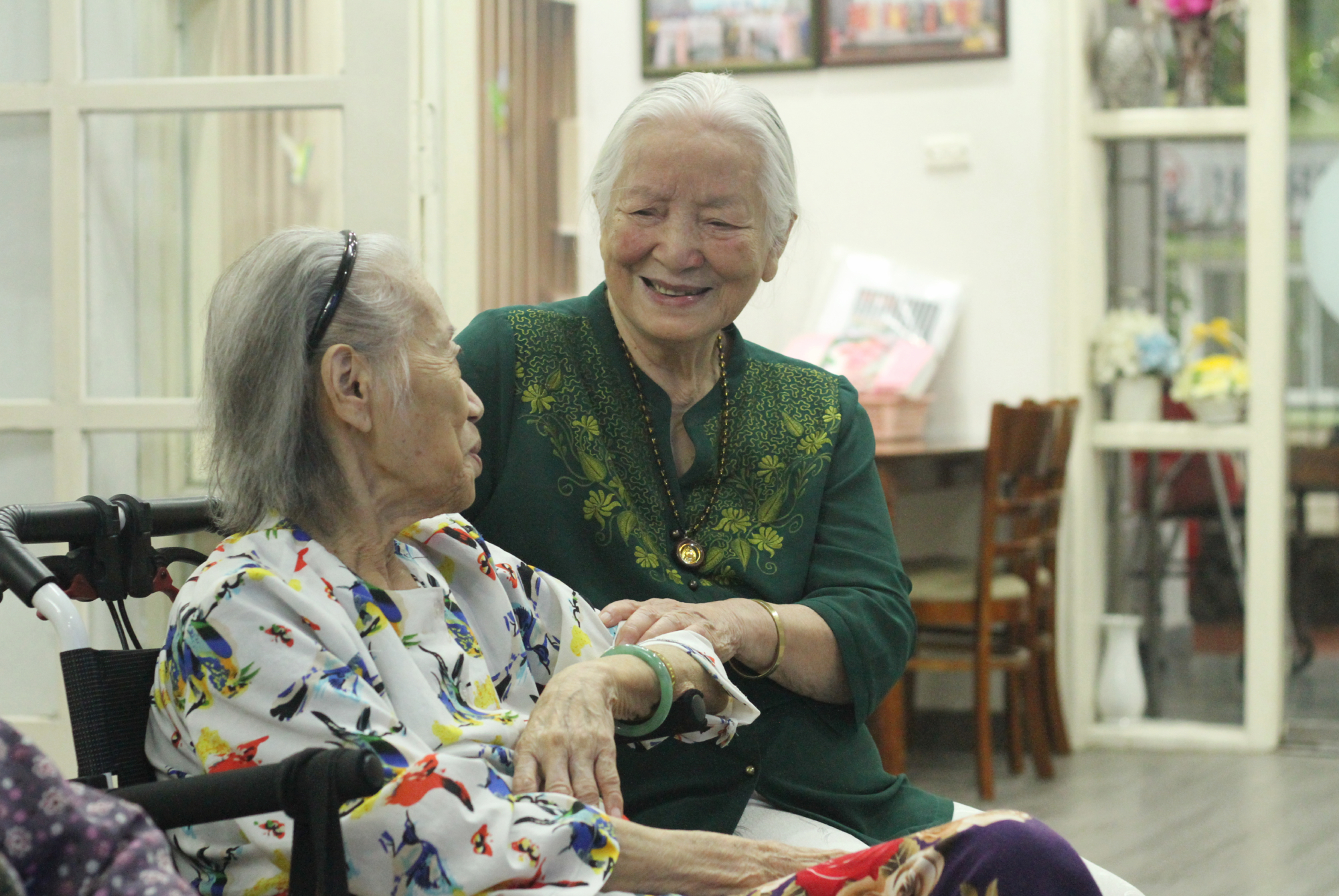 |
| Ngoc Bao, 93 (right), converses with another resident at a nursing home in Hanoi in late September 2025. Photo by VnExpress/ Phan Duong |
However, acceptance frequently equates to surrender rather than contentment. For Bao, this understanding emerged following the passing of her sole son due to cancer in 2023.
Heartbroken, she once watched a show about elderly people enjoying life in care facilities, which encouraged her to try it out.
There, amidst the struggles of others, she claims she gained a new outlook. "I've undergone two breast surgeries and three brain operations due to falls, yet I remain clear-minded. Observing those less fortunate, I feel thankful."
Slowly, she found meaning once more. She says with a smile: "A bottle of medicated oil, a walking stick, a simple greeting, or holding someone's hand while descending the stairs, these small gestures bring us comfort."
The center has appeared to gradually become warmer since she arrived, with even a solitary woman from the VIP floor now descending to mingle.
After two years, Bao feels she has gained more than she has lost. Her family frequently brings her back home, yet she always comes back after a few days to what she refers to as "my real home." "Now I feel valuable," says the 93-year-old, "even in a place many consider just the final stage of life."